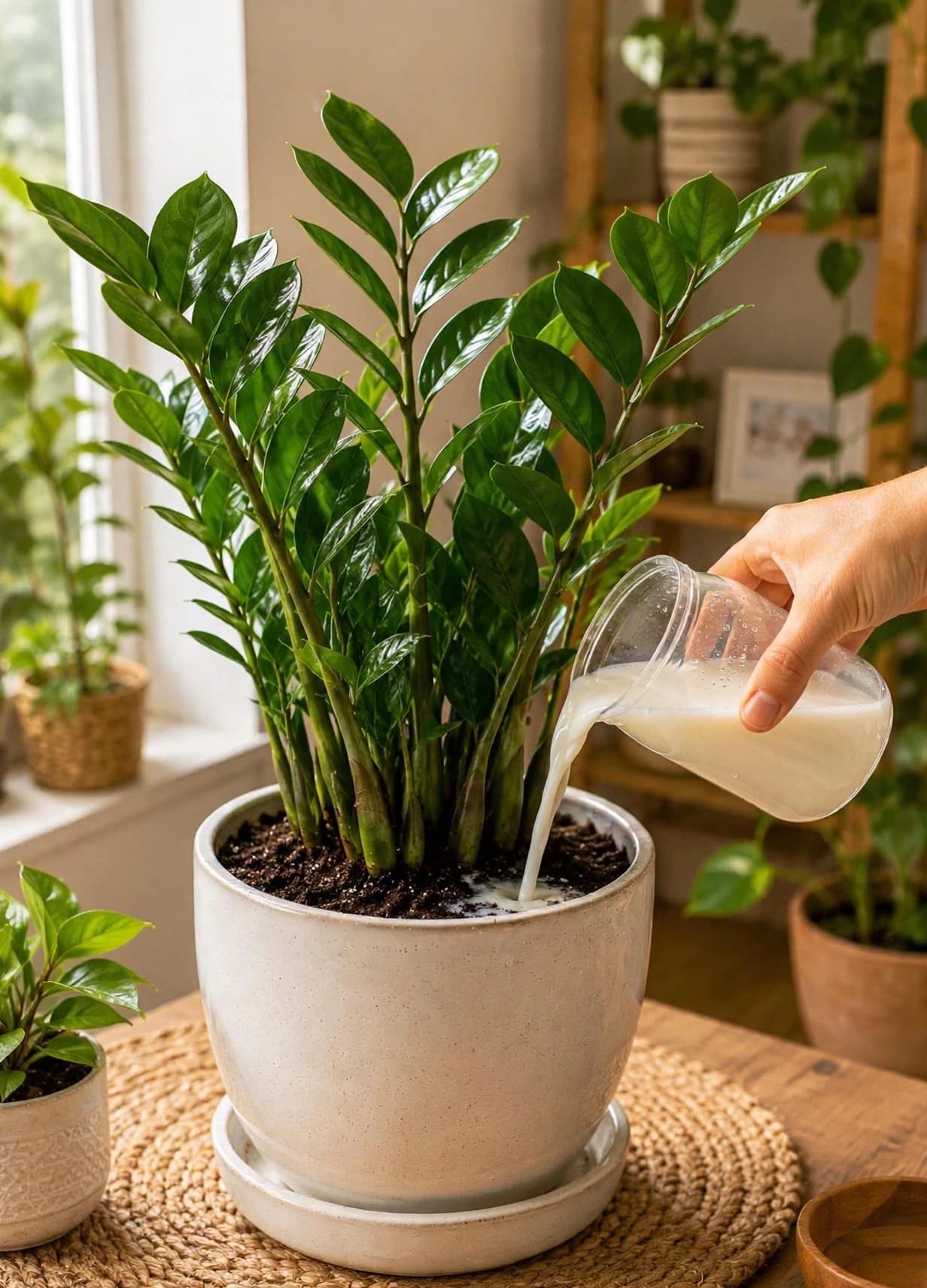
The ZZ plant is one of the easiest indoor plants to grow when it receives the right care. Its upright stems and shiny dark-green leaves make it a beautiful choice for living rooms, bedrooms, offices, entryways, and low-maintenance plant displays. It is often recommended for beginners because it tolerates missed watering better than many common houseplants.
However, the ZZ plant is not indestructible. Yellow leaves, soft stems, wrinkled leaflets, slow growth, and leaning branches can all appear when its basic needs are not met. The most common issue is too much water, followed by poor drainage and insufficient light.
Photos online sometimes show milk being poured into a ZZ plant pot. Milk is not a safe fertilizer for indoor plants. It can sour in the soil, encourage mold and bacteria, create odors, and attract fungus gnats. The best way to support a ZZ plant is much simpler: use a draining pot, water only after the soil dries well, give it bright indirect light, and fertilize lightly with a labeled houseplant product during active growth.
What Is a ZZ Plant?
The ZZ plant is commonly known by its botanical name, Zamioculcas zamiifolia. It has thick underground rhizomes that store water, which is why it can handle dry periods better than many tropical houseplants.
Its leaf stalks grow upright from the soil, with smooth oval leaflets arranged along each stem. Healthy leaves are naturally glossy and deep green. New shoots may begin as lighter green and slowly deepen in color as they mature.
The ZZ plant grows slowly indoors, especially in lower light. Slow growth is normal. A healthy plant does not need to grow quickly to be doing well.
Why Milk Should Not Be Poured into ZZ Plant Soil
Milk contains fats, proteins, and sugars. These ingredients are not balanced plant nutrients, and they can break down inside the potting mix.
In a closed indoor pot, milk can encourage microbial growth, mold, and unpleasant smells. It may also attract fungus gnats and make soil problems worse, especially if the pot has poor drainage.
Milk will not fix root rot, yellow leaves, lack of light, or overwatering. It also does not provide a controlled balance of nitrogen, phosphorus, potassium, and trace nutrients.
If your ZZ plant needs feeding, use a diluted fertilizer labeled for houseplants. This gives the plant predictable nutrients without leaving food residue in the soil.
Avoid pouring coffee, tea, soda, sugary water, banana blends, garlic water, lemon water, or milk into the pot. These homemade mixtures can create more problems than benefits.
The Best Light for a ZZ Plant
ZZ plants tolerate low light, but they grow best in bright indirect light. A spot a few feet from a bright window is ideal.
They can survive in an office or room with moderate light, but growth will be slower. If the plant is kept in a very dark corner for a long time, its stems may stretch, lean, or become less full.
Avoid strong direct afternoon sunlight. Intense rays can scorch the leaves and leave pale or brown patches. Soft morning light is generally safer.
Rotate the pot every few weeks. This helps the plant grow more evenly and prevents the stems from leaning toward one direction.
The Most Important ZZ Plant Rule: Let the Soil Dry
ZZ plants store water in their rhizomes, so they do not need frequent watering. In fact, overwatering is the fastest way to damage one.
Before watering, push a finger a few inches into the soil. If it still feels damp, wait. The pot should become mostly dry before you water again.
In many homes, watering every two to four weeks is enough during spring and summer. In winter, you may only need to water every four to six weeks. These are only general guidelines, so always check the soil first.
When it is time to water, slowly soak the soil until a little water drains from the bottom of the pot. Let the pot drain completely, then empty the saucer.
Never leave a ZZ plant sitting in water. Wet soil with no airflow around the roots can lead to rhizome rot.
Use a Pot with Proper Drainage
A ZZ plant should always grow in a pot with drainage holes. A decorative pot without a hole can trap water at the bottom and create root problems.
If you like using a decorative planter, keep the ZZ plant in its plastic nursery pot inside the larger container. Take it out for watering and let it drain fully before placing it back.
Terracotta pots are a helpful option because they allow moisture to evaporate through the sides. This can reduce the risk of overwatering, especially for new plant owners.
Choose a pot that is only slightly larger than the root ball. A very large pot contains extra soil, which stays wet longer and can make the roots struggle.
Choose a Fast-Draining Soil Mix
ZZ plants prefer loose soil that drains quickly. A cactus or succulent mix often works well. You can also improve regular houseplant soil by mixing in perlite or orchid bark.
The goal is to create soil that holds enough moisture for the roots but does not become muddy and compacted.
Avoid heavy garden soil in containers. It can become dense and suffocate the roots. If your current potting mix remains wet for many days, replace it with a lighter mix.
Fresh potting mix can also help a plant that has been in the same soil for years. Old soil may become compacted and stop draining well.
Fertilizing a ZZ Plant Safely
ZZ plants are light feeders. They do not need frequent fertilizer to look good.
During spring and summer, feed the plant once or twice with a balanced liquid fertilizer for houseplants. Follow the label directions, or use a half-strength dilution if you want a gentle approach.
Apply fertilizer only when the plant is actively growing and the soil is slightly moist. Never fertilize a stressed plant with dry roots, root rot, or yellowing caused by overwatering.
Do not fertilize in winter unless the plant is actively growing under strong light. Most ZZ plants slow down during cooler, darker months.
Too much fertilizer can cause brown leaf edges, damaged roots, and mineral buildup in the soil. A gentle routine is much safer than frequent feeding.
How to Clean ZZ Plant Leaves
The glossy leaves of a ZZ plant can collect dust over time. Dust reduces the amount of light reaching the leaf surface and makes the plant look dull.
Use a soft cloth dampened with plain water. Gently wipe each leaflet while supporting the stem with your other hand.
Do not use milk, oil, lemon juice, mayonnaise, or leaf-shine products. These can leave residue, block the leaf surface, or attract dust.
Cleaning the leaves every few weeks helps the plant look polished and healthy, especially when it is displayed in a bright room.
Common ZZ Plant Problems
Yellow Leaves
Yellow leaves are most often caused by overwatering. Check whether the soil is staying wet too long or whether the pot lacks drainage holes.
Remove fully yellow leaves at the base using clean scissors. Then allow the soil to dry more thoroughly before watering again.
A single older leaf turning yellow is not always serious. Repeated yellowing usually means the watering routine needs adjustment.
Soft or Mushy Stems
Soft stems may be a sign of root or rhizome rot. Stop watering immediately and inspect the soil.
Remove the plant from the pot and check the roots. Healthy roots and rhizomes are firm. Soft, dark, foul-smelling sections should be removed with clean scissors.
Repot the healthy sections in fresh dry, well-draining soil. Wait several days before watering if roots were damaged or trimmed.
Wrinkled Leaves
Wrinkled leaflets can indicate that the plant has been dry for too long. Check the soil and water slowly if it is fully dry.
Do not suddenly flood the plant every day after a drought. Return to a balanced watering routine and let the soil dry again between waterings.
Leaning Stems
Leaning can happen when the plant is receiving uneven light. Rotate the pot regularly and move it to a brighter indirect-light location.
Very long, weak stems can also be a sign of low light. Give the plant better light, but avoid direct harsh sun.
Brown Tips
Brown tips may be caused by inconsistent watering, excess fertilizer salts, very dry air, or physical damage. Trim only the dry portion with clean scissors, following the natural shape of the leaflet.
How to Repot a ZZ Plant
ZZ plants do not need frequent repotting. Repot every two to three years, or when the rhizomes have filled the container.
Signs it may be time to repot include roots growing through drainage holes, a cracked pot, soil that dries unusually fast, or crowded stems pushing against the sides of the pot.
Choose a new container only one or two inches wider. A pot that is too large may hold excess moisture.
Gently remove the plant, shake away loose old soil, and check the roots. Remove any clearly rotten sections. Place the plant at the same depth in fresh fast-draining mix.
Do not water immediately if you have damaged the roots during repotting. Give the plant a few days to settle first.
How to Propagate a ZZ Plant
The easiest propagation method is division. When repotting, gently separate a healthy section that has roots, rhizomes, and stems of its own.
Plant each division in a small pot with drainage holes and a fast-draining soil mix. Keep the soil only lightly moist until the division begins settling in.
ZZ plants can also be propagated with leaf cuttings, but it takes much longer. Place a healthy leaflet or small stem cutting into a well-draining medium and be patient. New rhizomes can take several months to form.
Best Places to Display a ZZ Plant
A tall ZZ plant looks elegant beside a sofa, in an entryway, or near a desk. Its upright shape adds height and structure without making a room look crowded.
A medium-sized plant works well on a plant stand near a bright window. Its deep green leaves look especially attractive beside cream walls, wood furniture, woven baskets, and neutral ceramic pots.
Smaller ZZ plants can be used on office shelves, bedside tables, kitchen counters with indirect light, or bookshelves near windows.
Avoid placing the plant directly beside a heater, air conditioner, or cold draft. Stable room temperatures help it stay healthy.
ZZ Plant Safety Around Pets
ZZ plants can irritate the mouth and stomach if chewed by pets or children. Keep the plant out of reach of cats, dogs, and young children.
Wear gloves if you have sensitive skin when pruning or repotting, then wash your hands afterward.
If a pet eats part of the plant, contact a veterinarian for advice.
Frequently Asked Questions
Can I water a ZZ plant with milk?
No. Milk is not recommended for ZZ plants. It can spoil in the soil, cause odors, and encourage mold or pests. Use plain water and a labeled houseplant fertilizer if feeding is needed.
How often should I water my ZZ plant?
Water only after the soil has dried mostly or completely. This may be every two to four weeks in warm months and less often in winter.
Does a ZZ plant need sunlight?
It grows best in bright indirect light, but it can tolerate moderate or lower light. Avoid intense direct afternoon sun.
Why is my ZZ plant not growing?
ZZ plants grow slowly by nature. Check whether it has enough indirect light, well-draining soil, and a careful watering routine. Feed lightly only in the active growing season.
Can I use a pot without drainage holes?
It is not recommended. Drainage holes are important for preventing root rot. Use a draining nursery pot inside a decorative outer container if needed.
Final Thoughts
A ZZ plant stays strongest when its care is simple. Give it bright indirect light, allow the soil to dry well, use a pot with drainage holes, and fertilize lightly only during active growth.
Avoid milk and other homemade liquids in the soil. They are not a substitute for proper plant nutrition and can create unnecessary problems. With patient care and a steady routine, your ZZ plant can stay glossy, upright, and beautiful for years.