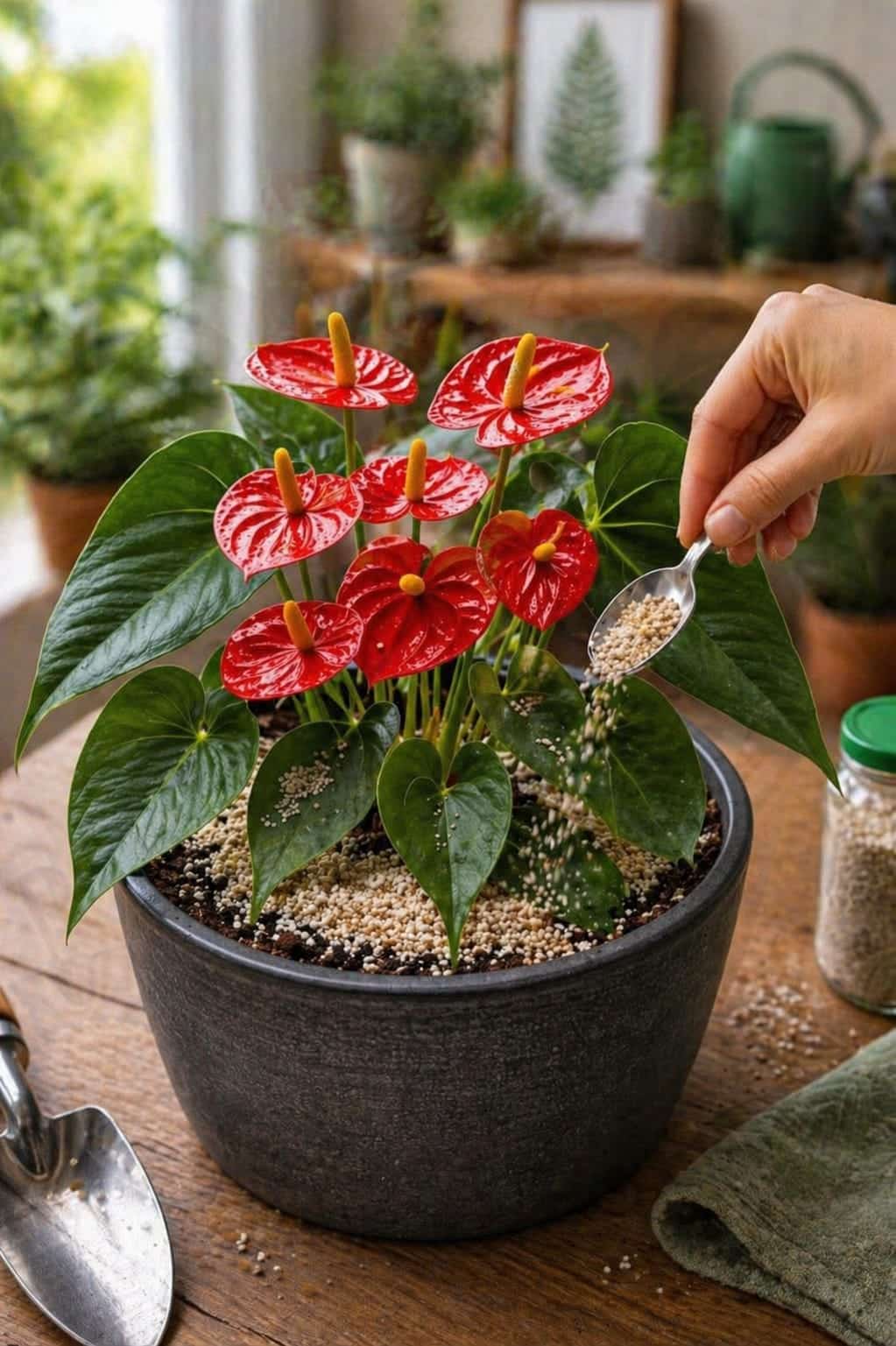
How to Use the “Granule Trick” Safely (Step‑by‑Step)
If you want to try slow‑release granules, follow these guidelines for safe, effective use.
Step 1 – Choose the Right Product
Look for a slow‑release fertilizer labeled for houseplants, flowering plants, or aroids. Avoid high‑nitrogen formulas (e.g., 30‑10‑10), which promote leaves over flowers. A balanced 10‑10‑10 or bloom‑booster 10‑20‑10 is ideal.
Step 2 – Apply at the Right Time
Apply granules in early spring (March) and again in early summer (June). Do not apply in fall or winter.
Step 3 – Use the Correct Amount
For a 6‑inch pot, use about 1 teaspoon of granules. For larger pots, follow label directions. Do not overdo it — more is not better.
Step 4 – Sprinkle on Soil Surface
Sprinkle the granules evenly over the soil, avoiding the base of the plant.
Step 5 – Water Lightly
Water the plant normally. The moisture will start dissolving the granules. Do not flood the pot.
Step 6 – Do Not Reapply Too Soon
Slow‑release fertilizers last 2–3 months. Wait at least that long before adding more.
Step 7 – Observe Your Plant
After 4–6 weeks, look for signs of improvement: new leaves, stronger stems, and eventually flower buds. If you see yellowing or brown tips, you may have over‑fertilized. Flush the soil with plain water.
Common Mistakes to Avoid (Even with Slow‑Release Fertilizer)
Many people go wrong by misusing granules. Avoid these errors.
Adding Too Much Fertilizer
Too much fertilizer burns roots, causing brown leaf tips and stunted growth. A teaspoon per 6‑inch pot is plenty.
Using Unknown Powders
Never use random powders (cinnamon, baking soda, aspirin) in place of fertilizer. They are not nutrients and can harm the soil balance.
Ignoring Light and Humidity
No amount of fertilizer will make an anthurium bloom in a dark, dry corner. Fix light and humidity first.
Expecting Instant Results
Slow‑release fertilizer takes weeks to show results. Do not keep adding more because you do not see immediate change.
Fertilizing a Stressed Plant
If your anthurium has root rot, yellow leaves, or pest problems, do not fertilize. Fix the issue first.
A Complete Year‑Round Anthurium Care Routine for Maximum Blooms
Use this simple schedule to keep your anthurium healthy and flowering.
Weekly
· Check soil moisture. Water when top inch is dry.
· Wipe leaves with a damp cloth to remove dust.
· Remove any yellow or dead leaves.
Monthly
· Flush the soil with plain water to prevent salt buildup.
· Inspect for pests (mealybugs, spider mites, aphids).
· Rotate the pot for even light.
Spring & Summer (Active Growth)
· Bright indirect light (10–12 hours).
· Water every 5–7 days (when top inch dries).
· Apply slow‑release granules once in spring and once in summer (or use liquid fertilizer every 2–4 weeks).
· Maintain high humidity (60–80%).
· Watch for flower buds.
Fall & Winter (Resting Period)
· Still bright light, but days are shorter — consider a grow light.
· Water less often (every 10–14 days).
· Stop fertilizing.
· Maintain moderate humidity (50–60%).
· Keep away from cold drafts (below 60°F / 15°C).
Annually
· Repot every 1–2 years with fresh, well‑draining aroid mix.
· Divide if the plant is overcrowded.
· Trim any dead or brown roots.
Frequently Asked Questions (Anthurium Blooms and Fertilizer)
Can I use slow‑release fertilizer on anthuriums year‑round?
No. Fertilize only during spring and summer. The plant rests in fall and winter; feeding during this time can cause weak growth.
What is the best NPK ratio for anthurium blooms?
A balanced 10‑10‑10 or a bloom‑booster 10‑20‑10 works well. The higher phosphorus (middle number) encourages flower production.
How do I know if my anthurium needs fertilizer?
Signs of nutrient need: pale leaves, very slow growth (no new leaves in over a year), small or absent blooms despite good light and water. If the plant has been in the same pot for over a year, a light feeding may help.
Can I use coffee grounds on anthuriums?
Not recommended. Coffee grounds can compact the soil and acidify it. They are not a balanced fertilizer. Stick to slow‑release granules or liquid anthurium fertilizer.
Why are my anthurium leaves turning yellow after adding granules?
Over‑fertilization or the granules were placed too close to the roots. Flush the soil with plain water and do not feed again for at least 3 months.
Is Epsom salt good for anthurium blooms?
Epsom salt provides magnesium. If your plant has a magnesium deficiency (yellowing between leaf veins), a diluted solution (1 teaspoon per gallon) once a month may help overall health. It is not a direct bloom booster.
How often does anthurium bloom indoors?
With good care, anthuriums can bloom 2–4 times per year. Each flower (spathe) lasts 6–8 weeks. Between bloom cycles, the plant rests for 2–3 months.
Can I use this granule trick on other houseplants?
Yes, slow‑release fertilizer is safe for most houseplants. However, succulents and cacti prefer very low nutrients; use a formula made for them.
The Real Secret Behind That Beautiful Plant
The anthurium in the viral image is not thriving just because of the granules. It is thriving because of:
· Proper light – Bright indirect light, not a dark corner.
· Consistent care – Regular watering, humidity, and cleaning.
· Healthy roots – From well‑draining soil and a pot with drainage holes.
· Balanced feeding – The granules provide a final support, not the main reason.
The fertilizer is just the final touch — not the entire story. If you skip the basics, the granules will not help. If you master the basics, the granules can give your anthurium an extra edge.
Why This “Simple Trick” Is Worth Trying (With Realistic Expectations)
The granule trick is not magic, but it is a useful tool. Slow‑release fertilizer is convenient, safe, and effective when used correctly. It removes the guesswork of remembering to feed your plant every few weeks. One application lasts for months.
However, set realistic expectations. You will not see blooms overnight. Give the plant 4–8 weeks after feeding to show improvement. And always combine feeding with good light, proper watering, and adequate humidity.
When those pieces come together, your anthurium will reward you with stronger growth and stunning blooms.
Final Thoughts
This “simple trick” — sprinkling slow‑release granules on the soil — can help your anthurium produce more flowers, but it is not a shortcut. Think of it as a boost, not a cure.
To get the most beautiful, long‑lasting blooms, focus on the fundamentals: bright indirect light, proper watering, high humidity, well‑draining soil, and gentle feeding. Then, and only then, add the granules as a support.
Skip the mystery powders and unproven hacks. Use a plant‑safe, slow‑release fertilizer, follow the label directions, and be patient. Your anthurium will reward you with glossy leaves and those iconic, heart‑shaped flowers that make it one of the most stunning plants in your home.
Have you tried slow‑release fertilizer on your anthurium? Share your experience in the comments below. And if you found this guide helpful, save it for later or send it to a friend who wants more blooms without the guesswork.
This article is for informational purposes only. Always follow fertilizer label directions. When in doubt, focus on light, water, and humidity before any supplement.