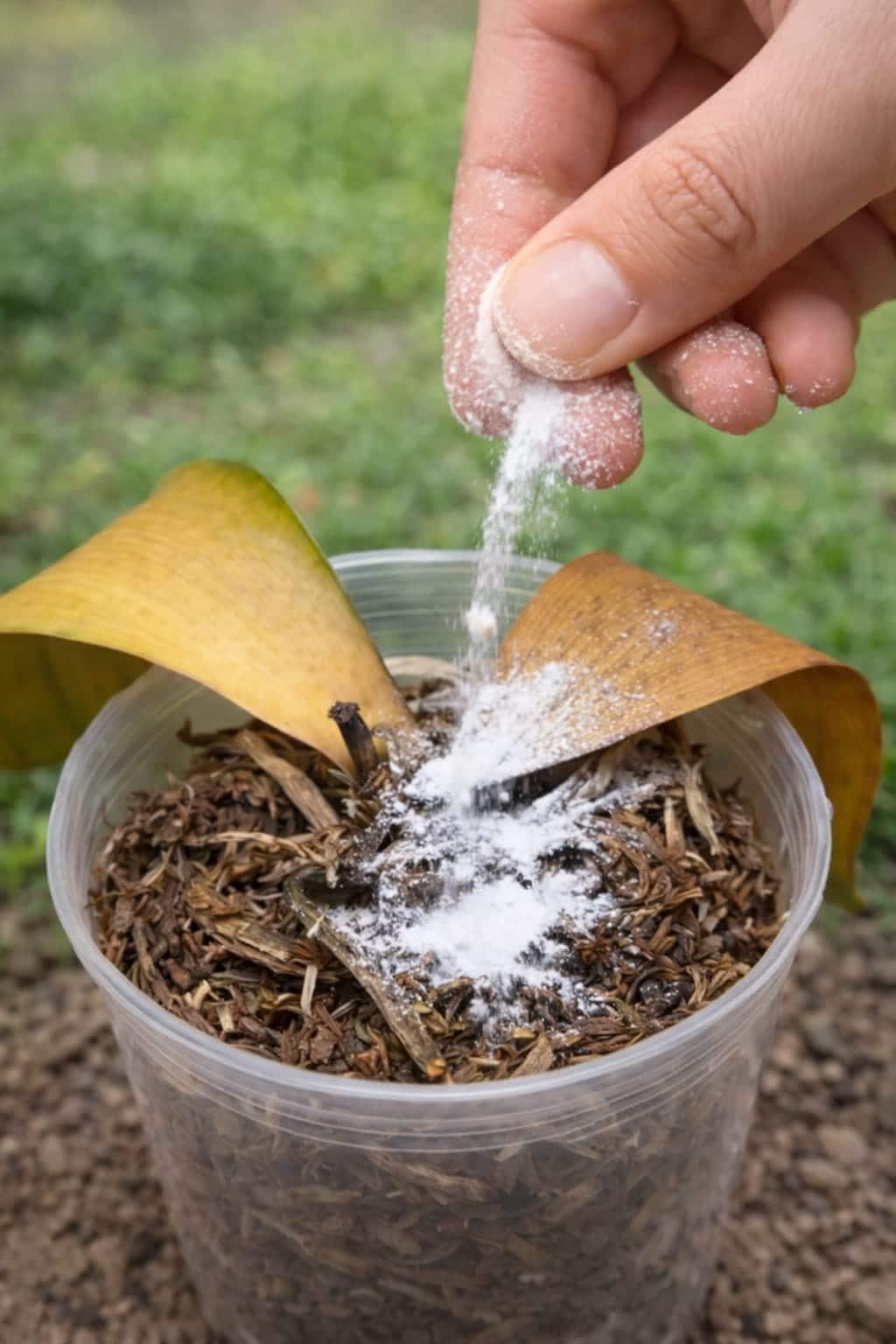
Why People Think the Powder Saved the Orchid
Sometimes the orchid improves after the powder is added — but not because the powder did all the work. Usually, other changes happened at the same time:
· The plant was repotted into fresh bark.
· Dead roots were removed.
· Watering was reduced.
· The orchid was moved to better light.
· The owner started paying closer attention.
The improvement comes from the full care reset. The powder gets the credit because it looks dramatic in the video, but the real hero is the corrected environment.
When Powder Can Actually Be Harmful
A weak orchid is already under stress, so random treatments can make recovery slower or even cause new problems.
Too much powder may:
· Dry the root area too aggressively – Cinnamon, for example, is drying. Too much on healthy roots can desiccate them.
· Leave residue in the bark – Powders can cake and block airflow.
· Block airflow at the surface – A thick layer of any powder on the bark surface reduces air exchange.
· Create buildup – Over time, salts and residues accumulate.
· Irritate living roots – Some powders (like baking soda or undiluted fungicides) can burn.
Orchids do best with clean, airy conditions. Thick layers of anything usually work against that.
Signs Your Orchid Is Really Recovering
Forget the dramatic “overnight transformation” claims. Real recovery looks like this over several weeks:
· New green root tips – Bright green, active growth emerging from the base or from existing roots.
· Firmer leaves – Leaves become turgid, not wrinkled or limp.
· Improved leaf color – Medium green, not pale or yellow.
· Less wrinkling over time – Old wrinkles slowly fill out.
· Stable new growth – New leaves emerging from the center.
· Better hydration after watering – Roots turn green, leaves feel plump.
These are the signs that the orchid is actually coming back. If you see new root tips, you have succeeded.
The Most Important Lesson
If your orchid is weak, the real question is not: “What powder should I use?”
It is:
· Are the roots alive? (Firm, not mushy?)
· Is the bark still good? (Fresh, airy, not broken down?)
· Am I watering too often? (Let the bark dry between waterings?)
· Does the pot drain well? (Holes, no standing water?)
· Is the orchid getting enough light? (Bright indirect, 10–12 hours?)
That is what determines recovery. A powder might support the process in a small way, but it will never replace good culture.
A Simple Orchid Root Care Routine (No Gimmicks)
Here is a routine you can follow for long‑term root health.
Weekly
· Check bark moisture. Water only when nearly dry.
· Inspect roots through clear pot (if using).
· Wipe leaves with a damp cloth to remove dust.
Monthly
· Flush the pot with plain water to remove mineral buildup.
· Inspect for pests (mealybugs, scale, spider mites).
· Remove any dead or yellow leaves.
Annually
· Repot with fresh orchid bark.
· Trim dead roots.
· Choose a pot only 1–2 inches larger.
When to Avoid Powders Entirely
· If roots are healthy and the plant is growing well, do not add anything.
· If you just repotted, wait 4–6 weeks.
· If the orchid is blooming, enjoy the flowers — no treatments needed.
· If you are unsure what the powder is, skip it.
Frequently Asked Questions (Orchid Root Treatment)
Can I use cinnamon on orchid roots?
Yes, but only on cut ends after trimming rot. Dust lightly. Do not put cinnamon on healthy roots or into the crown. It is antifungal, not a fertilizer.
Is rooting hormone good for a weak orchid?
Rooting hormone is for cuttings and keikis, not for mature orchids with established roots. Using it on a weak mature orchid will not help.
How do I know if my orchid has root rot?
Signs: soft, brown, mushy roots; leaves turning yellow or wrinkled; a sour smell from the pot. Unpot and inspect.
Can I use Epsom salt on my orchid?
Only if the plant shows signs of magnesium deficiency (yellowing between leaf veins). Use 1 teaspoon per gallon of water once a month. It is not a general root treatment.
What is the best way to encourage new orchid roots?
Fresh bark, bright indirect light, proper watering (dry between), and patience. A humidity dome can help, but do not keep the roots constantly wet.
Why are my orchid roots turning black?
Black roots usually indicate rot from overwatering or old, broken‑down bark. Unpot, trim black roots, and repot in fresh bark.
Can I save an orchid with no roots?
Yes, but it is difficult. If the crown is still firm and green, place the orchid in a humid environment (like a clear plastic bag with damp sphagnum moss) and wait. New roots may take 2–3 months. This is advanced; for most home growers, starting with a healthy plant is easier.
How long does it take for orchid roots to grow back after trimming?
New root growth can appear in 4–8 weeks under good conditions. Full root recovery may take 6 months.
Final Thoughts
Before you treat your orchid roots again, remember this: a powder may sometimes help in a small, specific way. But it is never the main reason an orchid recovers.
Healthy orchids come back because they get:
· Better airflow – Fresh bark, proper pot, good ventilation.
· Fresher bark – Repot every 1–2 years.
· Smarter watering – Let the bark dry between waterings.
· Brighter indirect light – Energy for new growth.
· Healthier root conditions – No rot, no salt buildup, no stagnation.
That is what truly saves them.
Because in orchid care, the best treatment is rarely the one that looks the most dramatic. It is the one that gives the roots a chance to breathe again.
So next time you see a viral video of someone sprinkling white powder on a dying orchid, do not rush to copy it. Instead, unpot your orchid. Check the roots. Trim the rot. Repot in fresh bark. Water less. Give it more light. And then wait.
Your orchid will thank you — with firm leaves, active roots, and eventually, those beautiful blooms that made you fall in love with orchids in the first place.
No magic powder required. Just good care.
Have you tried a powder treatment on your orchid roots? Share your experience in the comments below. And if you found this guide helpful, save it for later or send it to a friend who is struggling with orchid care.