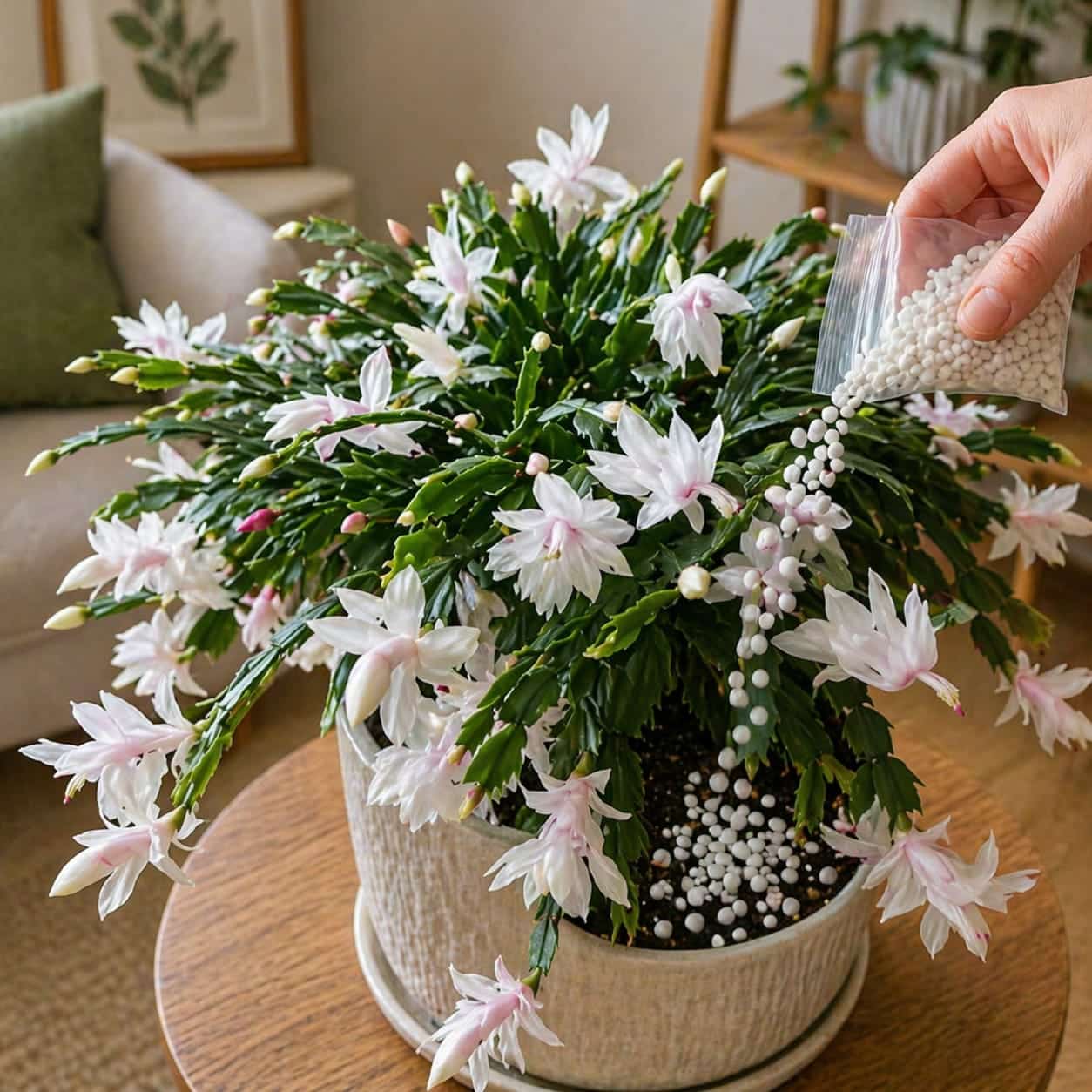
Why Pills Often Get False Credit (The Real Reason Plants Bloom)
Sometimes a plant blooms after someone drops tablets into the soil, but that does not mean the tablets caused it. More likely, the plant also received:
· Cooler nights – Because it was near a window in autumn.
· Shorter days – Natural seasonal change.
· Less water – The owner started paying attention.
· Brighter light – The plant was moved to a better spot.
· Normal seasonal cues – The plant’s internal clock.
The blooming was already in progress because the environment was right. The pills just happened to be there for the photo. In controlled experiments, no pill has been shown to trigger Christmas cactus blooming on its own without the proper environmental conditions.
What to Use Instead of Random Tablets (Safe Alternatives)
If your Christmas cactus needs support, safer options include:
· Proper cactus or houseplant fertilizer – Use a balanced, water‑soluble fertilizer (20‑20‑20) diluted to half strength during the active growing season (spring and summer). Do not fertilize during bloom prep.
· Fresh, well‑draining soil – Repot every 2–3 years with a cactus or succulent mix.
· A pot with drainage holes – Essential for root health.
· Bright indirect light – An east window or south/west with a sheer curtain.
· Careful watering – Let the top inch of soil dry between waterings.
Feed lightly during the growing season (spring/summer), not heavily during the moment you are trying to trigger blooms. Overfeeding in fall can actually inhibit flowering.
Signs Your Plant Is Getting Ready to Bloom (No Pills Needed)
You may notice these natural signs that your Christmas cactus is preparing to flower:
· Tiny buds forming at segment tips – Small pink, red, or green bumps.
· Firmer, healthier growth – Segments feel plump and firm.
· Fuller branching – More segments, more potential bloom points.
· Improved color and vigor – Rich green color, no yellowing.
Once buds appear, the most important thing is stability. Do not change anything.
Common Mistakes That Stop Blooms (Even with Pills)
If your Christmas cactus does not bloom, the usual reasons are:
· Too much artificial light at night – Even a few hours of lamp light can reset the plant’s internal clock.
· Not enough dark hours – Less than 12 hours of darkness prevents bud set.
· Warm nights for too long – Night temperatures above 65°F (18°C) inhibit blooming.
· Overwatering – Soggy soil stresses the plant and can cause bud drop.
· Moving the plant once buds begin – Even turning the pot can cause buds to fall.
· Chasing quick fixes instead of seasonal care – No pill replaces proper environment.
A Complete Year‑Round Christmas Cactus Care Calendar
Here is a simple monthly guide to keep your plant healthy and blooming on time.
Spring (March – May)
· Light: Bright indirect light.
· Water: When top inch of soil is dry.
· Fertilizer: Begin feeding with half‑strength balanced fertilizer every 2–4 weeks.
· Other: Prune back leggy segments. Repot if needed.
Summer (June – August)
· Light: Bright indirect light. You can move outdoors to a shaded patio.
· Water: Water more frequently (1–2 times per week) but still let soil dry between.
· Fertilizer: Continue feeding every 2–4 weeks.
· Other: Pinch back tips for fullness.
Early Fall (September – October) – Bloom Prep
· Light: Bright indirect light during the day.
· Darkness: 12–14 hours of complete darkness each night.
· Temperature: Cool nights (50–65°F / 10–18°C).
· Water: Reduce slightly. Let soil dry a bit more.
· Fertilizer: Stop feeding completely.
· Do not repot or move the plant.
Late Fall (November – December) – Budding & Blooming
· Light: Bright indirect light (no darkness treatment once buds are visible).
· Water: Keep soil lightly moist. Do not let it dry completely or stay soggy.
· Fertilizer: None.
· Temperature: Stable, avoid drafts and heat vents.
· Do not move the plant. Do not rotate.
Winter (January – February) – Rest
· Light: Still bright light, but days are shorter — consider a grow light.
· Water: Reduce watering (once every 2–3 weeks).
· Fertilizer: None.
· Other: Remove spent flowers. Let the plant rest.
Late Winter (February – March)
· Gradually increase watering and resume fertilizer as new growth appears.
· Prepare for the next growth cycle.
Frequently Asked Questions (Christmas Cactus Blooms)
Can I use aspirin to make my Christmas cactus bloom?
There is no reliable evidence that aspirin triggers blooming in Christmas cactus. Aspirin (salicylic acid) is sometimes used to boost plant immunity, but it is not a bloom inducer. Stick to proper light and temperature.
How long does it take for a Christmas cactus to bloom after starting the darkness treatment?
You should see tiny buds within 4–6 weeks of consistent 12–14 hour dark nights and cool temperatures. Full blooms appear 2–4 weeks later.
Why are my Christmas cactus buds falling off?
Bud drop is usually caused by:
· Moving the plant
· Temperature fluctuations (drafts or heat vents)
· Overwatering or underwatering
· Too much light at night
· Low humidity
Can I use Epsom salt to help my Christmas cactus bloom?
Epsom salt provides magnesium. If your plant shows signs of magnesium deficiency (yellowing between leaf veins), a diluted solution (1 teaspoon per gallon) once a month during growth may help overall health. It is not a direct bloom trigger.
How often should I water my Christmas cactus when it is blooming?
Water when the top inch of soil feels slightly dry. In most homes, this is every 5–7 days. Always check the soil first; do not water on a schedule.
What is the best fertilizer for Christmas cactus?
A balanced, water‑soluble fertilizer (20‑20‑20) diluted to half strength, applied every 2–4 weeks during spring and summer. Do not fertilize in fall and winter.
Can I force my Christmas cactus to bloom in time for Christmas?
Yes, by starting the darkness/cool night treatment in late September. This will trigger bud set for blooms around late November to December. For Thanksgiving blooms, start earlier in September.
Is it safe to put human vitamins in the soil?
No. Human vitamins are not formulated for plants and can contain binders, sugars, and dosages that harm roots. Use only plant‑specific products.
The Emotional Reward of a Blooming Christmas Cactus
There is a special joy in watching a Christmas cactus come to life during the darkest days of the year. When the first tiny bud appears at the tip of a green segment, it feels like a promise. Then, day by day, the bud swells. Finally, it opens into a stunning, delicate flower that seems to glow.
That is the reward of good care — not a pill, but the satisfaction of giving your plant the right environment and watching it respond.
Final Thoughts
Dropping pills at the root of a Christmas cactus is not the real secret to holiday flowers. The plant blooms on time when it gets the right signals: longer nights, slightly cooler temperatures, careful watering, and steady conditions.
So if you want a Christmas cactus covered in blooms before the holidays, skip the mystery tablets. The best way to make it flower is not a shortcut. It is helping the plant recognize that the season has changed.
Give it dark nights. Keep it cool. Water less. Then wait. And when those beautiful buds finally open, you will know you earned them — the right way.
Have you tried a pill trick on your Christmas cactus? Share your experience in the comments below. And if you found this guide helpful, save it for later or send it to a friend who wants a stunning holiday bloom display.
This article is for informational purposes only. Always use plant‑specific products as directed. When in doubt, focus on light, temperature, and water before any supplement.