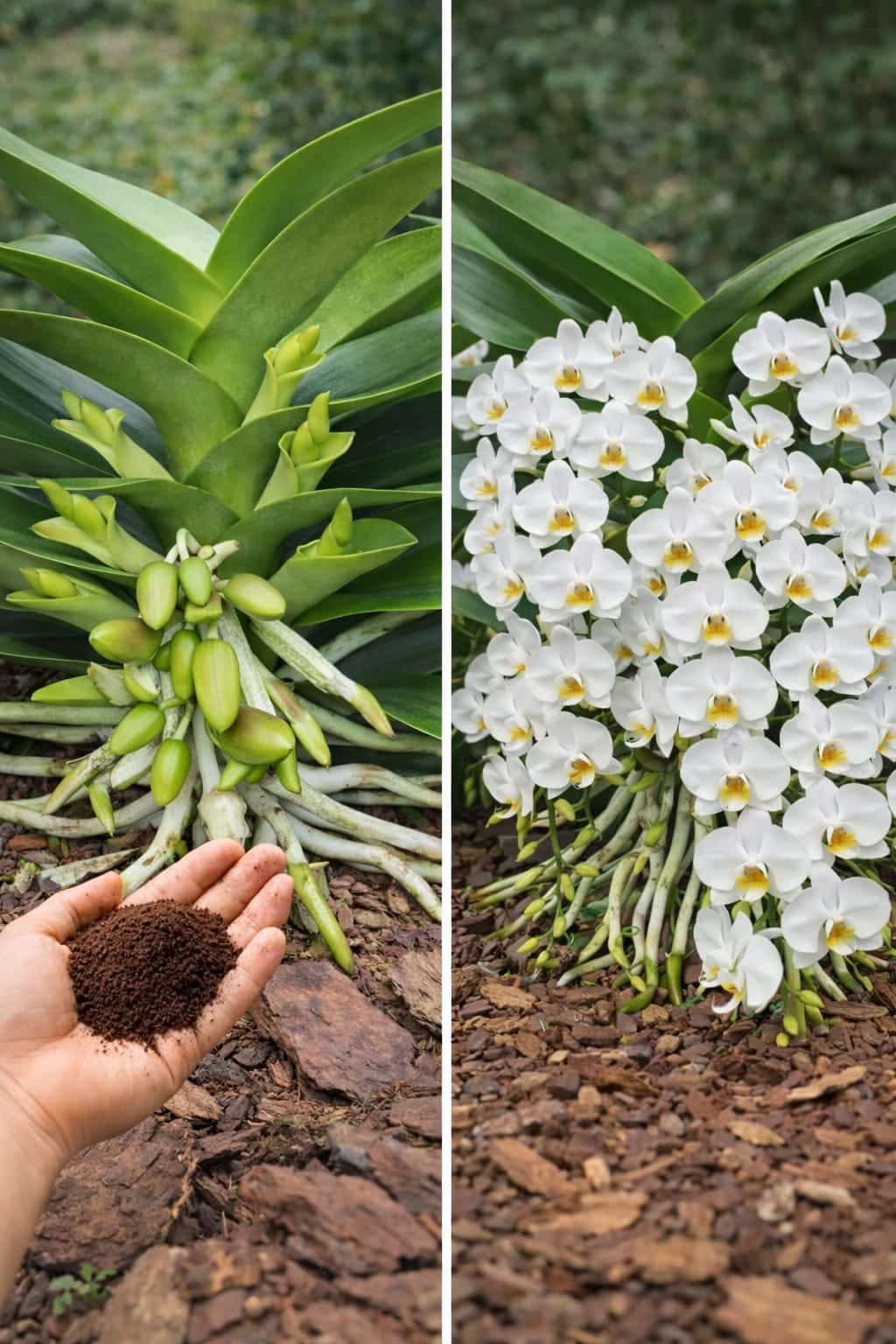
Orchid growers love a good home trick, and coffee is one of the most talked-about ones. You have probably seen dramatic posts claiming that a little coffee can make orchids explode with blooms, push stronger spikes, and flower more often than ever.
It sounds exciting. It sounds easy. And because coffee is already in the kitchen, it feels like a secret worth trying.
But here is the honest truth:
👉 Coffee is not a miracle orchid fertilizer.
👉 Used carefully, it may help a little. Used the wrong way, it can stress the plant.
If you want healthier orchids and better blooming, the real secret is understanding what coffee can do, what it cannot do, and how to use it without harming the roots.
In this guide, we will break down the science, the myths, and the safe way to experiment with coffee on your orchids. You will also learn the real factors that trigger those stunning, long‑lasting blooms.
Why People Use Coffee on Orchids
Coffee grounds and diluted coffee are often used on plants because people believe they provide:
· small amounts of nitrogen
· trace minerals (magnesium, potassium, phosphorus)
· organic matter that slowly breaks down
· a slight acidity effect that some plants enjoy
That is why some gardeners think coffee can help orchids grow stronger and bloom more. The idea is simple: give the plant a gentle nutrient boost and slightly adjust the environment around the roots.
For orchids, especially Phalaenopsis (moth orchids) and similar epiphytic types, that sounds appealing because flowering often depends on plant strength, healthy roots, and a good growing environment.
But orchids are not ordinary potted plants. Their roots are much more sensitive.
The Biggest Thing Most People Forget
Orchids do not grow in regular potting soil. Most are grown in bark, sphagnum moss, or another airy medium because their roots need oxygen as much as they need moisture.
That means any homemade feeding trick has to be handled carefully.
If coffee is too strong, too frequent, or used in a way that leaves residue behind, it can:
· sour the potting medium
· keep the roots too wet
· create buildup around the bark particles
· attract mold or fungus gnats
· stress delicate orchid roots
So the first rule is simple:
👉 Never treat coffee like a normal fertilizer drench.
Can Diluted Coffee Help Orchids Bloom?
Sometimes, in a very limited way.
A weak, diluted coffee solution may offer a small nutrient boost, and some growers feel it helps support greener growth or a slightly more active plant. If the orchid is already healthy, that extra support might contribute to better future blooming.
But coffee does not directly force blooms.
Orchid blooming still depends much more on:
· proper light
· healthy roots
· correct watering
· good air flow
· stable temperatures
· slight temperature shifts for spike initiation in some orchids
So if an orchid blooms after a coffee trick, it is usually because the plant was already close to blooming and the overall care routine was good. The coffee was, at best, a tiny helper — not the cause.
What Actually Makes Orchids Flower More
Before using any homemade trick, make sure these basics are already working. Without them, no amount of coffee will help.
- Bright Indirect Light
This is one of the biggest bloom triggers. Orchids need enough energy to produce spikes and flowers.
· A south or east‑facing window with a sheer curtain is ideal.
· Leaves should be medium green (not dark green, which indicates too little light, and not reddish, which indicates too much).
· If your orchid has not bloomed in over a year, low light is often the culprit.
- Healthy Roots
Firm, silvery‑green roots are the foundation of everything. Weak roots mean weak blooming.
· Healthy roots are plump, firm, and either silvery (dry) or bright green (wet).
· Rotten roots are brown, mushy, and hollow.
· Without good roots, the plant cannot absorb water or nutrients.
- Proper Watering
Orchids hate sitting in soggy medium. Water thoroughly, then let the bark approach dryness before watering again.
· For bark‑grown orchids, water about once every 7–10 days depending on humidity.
· For moss‑grown orchids, water less often (every 10–14 days).
· Always water in the morning so leaves dry by evening.
- Airy Potting Mix
Old, broken‑down bark can suffocate roots and reduce plant strength over time.
· Repot every 1–2 years with fresh orchid bark mix.
· Look for mixes that contain bark, perlite, and charcoal.
· Do not use regular potting soil — it will kill orchid roots.
- Light Feeding
A balanced orchid fertilizer used gently is usually more reliable than random kitchen hacks.
· Use a fertilizer labeled for orchids (like 20‑20‑20 or 10‑10‑10).
· Dilute to half or quarter strength.
· Fertilize every other week during active growth (spring and summer).
· Flush with plain water once a month to prevent salt buildup.
Coffee can only ever be a small extra. It cannot replace these five essentials.
Continue to Page 2
Continue to page 2 for more details about this article and the key points many readers miss on the first page.