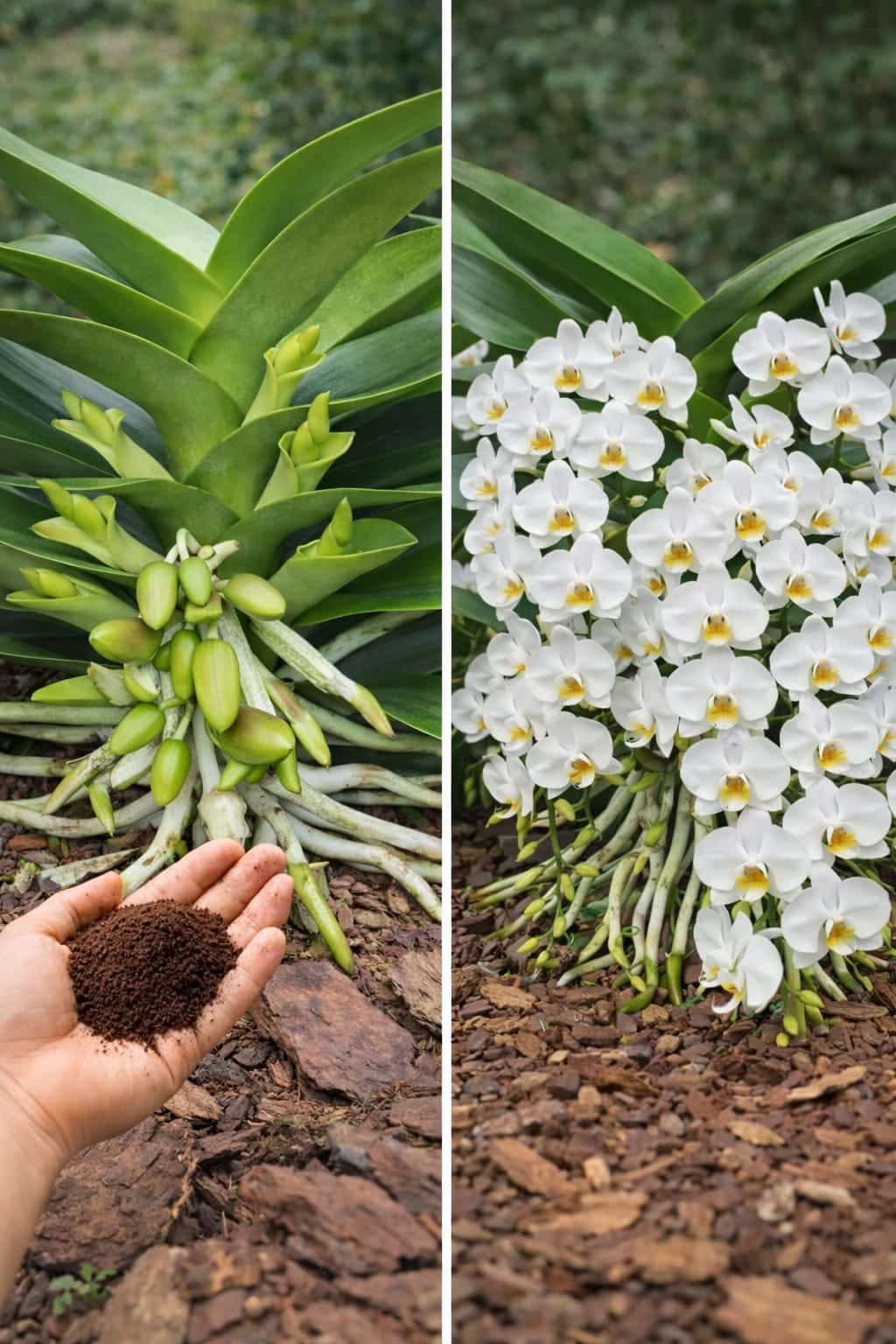
If You Still Want to Try Coffee, Do It the Safe Way
If you want to experiment, keep it mild.
Safer Method
· Use very diluted plain black coffee
· No sugar
· No milk or cream
· No flavored syrups
· Apply only a small amount (a few tablespoons for a standard pot)
· Use it rarely (once a month at most)
Think of it as a weak occasional tonic, not part of every watering.
Better Than Pouring Strong Coffee
· Diluted cooled black coffee (1 part coffee to 3–4 parts water)
· Occasional use only (every 4–6 weeks)
· Followed by normal orchid care (do not let it sit in the pot)
Less is always better.
Coffee Grounds Are Riskier Than People Think
A lot of people assume used coffee grounds are ideal for orchids. Usually, they are more trouble than help.
Coffee grounds can:
· compact around the roots
· stay wet too long
· reduce airflow through the bark
· encourage mold growth in bark mixes
· raise the temperature around roots as they decompose
That is the opposite of what orchid roots want.
So if your orchid is in bark, a loose, airy medium is far more important than adding grounds. If you absolutely want to try grounds, sprinkle a tiny amount on the top of the bark — never mix them in — and only if your orchid is very healthy.
Why the “1000 Blooms” Claim Is Exaggerated
Headlines like “Feed Your Orchids Coffee for 1000 Blooms” are made to get attention, but they are not realistic.
Coffee may support a healthier plant if used gently and if everything else is already right. But it will not suddenly transform a weak orchid into a nonstop blooming machine.
Orchids flower according to:
· maturity (young orchids may not bloom at all)
· root health
· seasonal signals (cooler nights for Phalaenopsis)
· stored energy
· stable care
That is why real success with orchids usually comes from patience, not shortcuts.
Signs Your Orchid Is Actually Improving
If your orchid likes its care routine — with or without a coffee experiment — you may notice:
· firmer, more upright leaves
· active root tips (bright green or silvery with green ends)
· brighter green foliage (not dark, not yellow)
· stronger leaf growth
· spike formation later on (a small “mitten” emerging from between leaves)
· buds developing more confidently without blasting (dropping)
Those are the real signs of progress. Not overnight dramatic bloom explosions.
Common Mistakes to Avoid
If you want to keep your orchid healthy, avoid these coffee‑related errors.
Using Strong Coffee
Brewed coffee that you would drink is far too strong for orchids. It can burn root tips and leave behind acidic residues. Always dilute heavily.
Using Coffee Too Often
Orchid roots do not want constant homemade treatments. Once a month is plenty. More often can cause salt and acid buildup.
Adding Sugar or Milk
Sugar can spoil in the pot, feeding bacteria and fungus. Milk can turn rancid and create a foul smell. Never add anything except plain black coffee.
Using Coffee Grounds in Bark
As explained, grounds reduce airflow and hold too much moisture. Skip them.
Ignoring the Real Cause of Poor Blooming
Low light, weak roots, and bad watering are much more important than coffee. Do not use coffee as a bandage for bad care.
The Better Way to Think About This Trick
Coffee is not really a bloom secret.
It is more like a small optional experiment for an already healthy orchid.
If you want more flowers, focus first on:
· bright indirect light
· healthy roots
· fresh bark mix
· careful watering
· light regular orchid feeding
· patience
Then, if you still want to try a very diluted coffee rinse once in a while, do it lightly and watch the plant carefully. If the orchid seems stressed (yellowing leaves, root loss), stop immediately.
A Step‑by‑Step Orchid Blooming Routine (No Coffee Required)
Here is a simple, proven routine to maximize blooms without any risky hacks.
Daily
· Ensure your orchid gets 10–12 hours of bright indirect light.
· Check that no water is sitting in the crown (center of leaves).
Weekly
· Check the potting medium. If it is dry, water thoroughly.
· Inspect roots. Trim any that are brown and mushy.
· Wipe leaves with a damp cloth to remove dust.
Every 2 Weeks (Spring and Summer)
· Feed with a diluted orchid fertilizer (half strength).
· Alternate fertilizer with plain water to prevent salt buildup.
Every Month
· Flush the pot with plain water to remove any accumulated salts.
· Check for pests (mealybugs, scale, spider mites).
Seasonal (Fall and Winter)
· Reduce watering slightly.
· Stop fertilizing or reduce to once a month.
· For Phalaenopsis, provide cooler nights (55–65°F / 13–18°C) for 2–4 weeks to trigger spikes.
Annually
· Repot with fresh orchid bark mix.
· Trim dead roots.
· Choose a pot with plenty of drainage holes.
Frequently Asked Questions (Coffee and Orchids)
Can I water my orchid with leftover morning coffee?
Only if it is black, unsweetened, and heavily diluted (1 part coffee to 3–4 parts water). Even then, use it only once a month at most.
Will coffee make my orchid grow more spikes?
No. Spikes are triggered by light, temperature changes, and plant maturity. Coffee does not cause spikes.
Can I put coffee grounds in my orchid pot?
Not recommended. Grounds decompose and can suffocate orchid roots. If you must, put a tiny pinch on the very top of the bark, away from the crown.
What kind of coffee is best for orchids?
Plain, black, unsweetened, and weak. No flavored coffees. No instant coffee with additives. Organic is preferable.
How do I know if coffee is hurting my orchid?
Look for yellowing leaves, blackening root tips, mold on the bark surface, or a foul smell from the pot. If you see any of these, stop using coffee and flush the pot with plain water.
Is there a better natural fertilizer for orchids?
Yes. Diluted fish emulsion, seaweed extract, or a balanced orchid fertilizer are all more reliable than coffee. They provide a complete nutrient profile without the risks.
Can coffee prevent orchid diseases?
There is no evidence that coffee prevents orchid diseases. Good air circulation and proper watering are much more effective.
My orchid bloomed after I used coffee. Was it the coffee?
Probably not. More likely, the orchid was already healthy and the blooming season arrived. Coffee may have been a neutral addition, not the cause.
The Science: What Coffee Actually Contains
Let us look at what is in a cup of black coffee (no additives).
· Nitrogen – Small amount (about 0.1–0.3% by volume). Useful for leaf growth.
· Potassium and magnesium – Trace amounts. Helpful for overall health.
· Caffeine – Mildly allelopathic (can suppress other plants’ growth in high concentrations). Orchids are not particularly sensitive to caffeine, but high doses are not studied.
· Acidity – Fresh coffee has a pH around 5.0–5.5. Orchids prefer slightly acidic to neutral (5.5–6.5). Over time, coffee can lower pH too much.
· Organic compounds – Some may feed beneficial soil microbes, but in bark mixes, this effect is minimal.
So yes, coffee has a few nutrients. But a proper orchid fertilizer is much more balanced and predictable.
Final Thoughts
So, can coffee help orchids bloom?
Yes, a little — but only as a gentle support, not as the reason blooms happen.
The real reason orchids flower well is because they are healthy, well‑rooted, properly lit, and carefully watered. Coffee may add a tiny extra boost for some growers, but it is not the magic behind massive flowering.
The best orchid routine is still the simple one:
· airy roots
· bright filtered light
· balanced moisture
· light feeding
· stable care
That is what gives you stronger spikes, better buds, and blooms worth waiting for.
And honestly, that is even better than a viral trick — because it actually works.
So go ahead. Skip the coffee if you want. Or try a very weak, occasional rinse if you are curious. But never forget: your orchid’s health comes first. Everything else is just a footnote.
Have you ever tried coffee on your orchids? Share your experience in the comments below. And if you found this guide helpful, save it for later or send it to a fellow orchid lover who needs some bloom‑boosting truth.