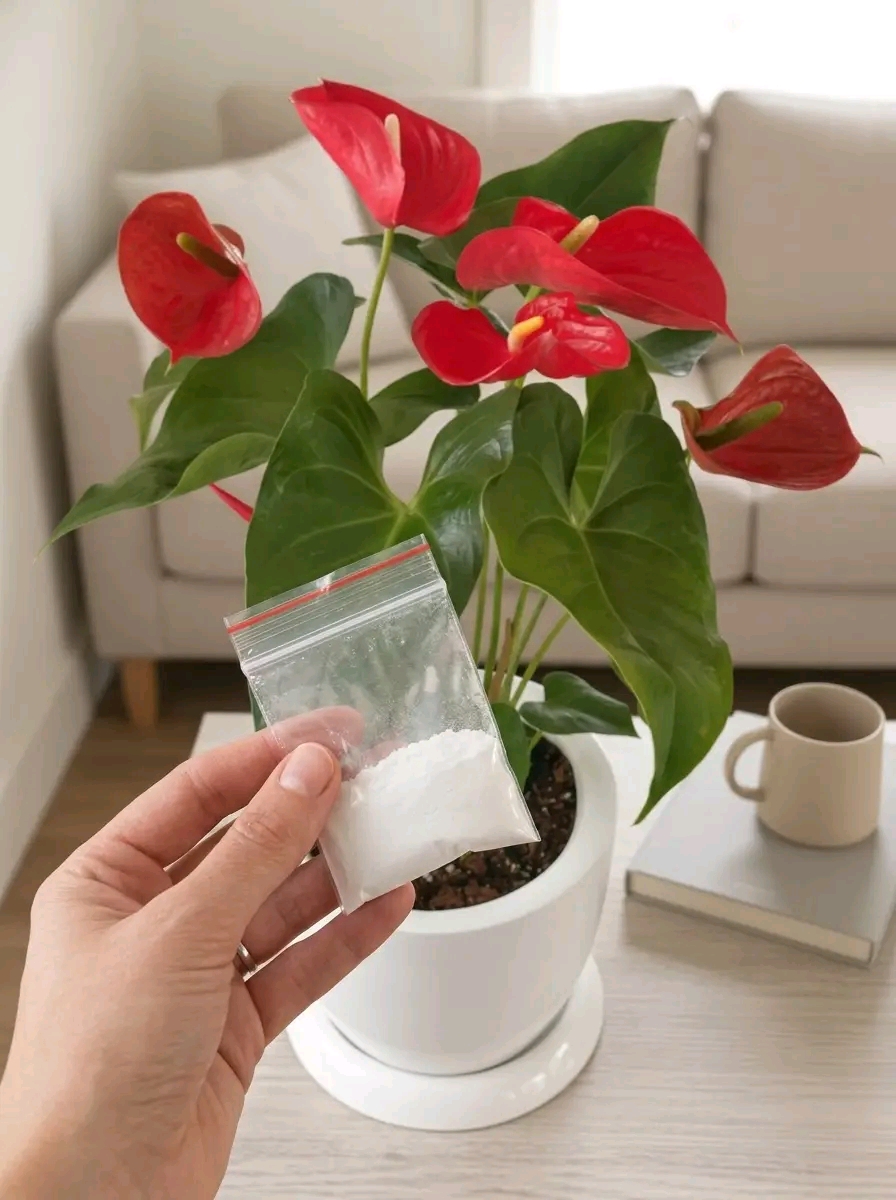
Anthuriums are some of the most beautiful indoor plants you can grow. Their glossy green leaves, heart-shaped flowers, and tropical style make them perfect for living rooms, bedrooms, bright bathrooms, plant shelves, entry tables, and cozy indoor corners. A healthy anthurium can produce shiny leaves and colorful red, pink, white, or purple spathes that look like flowers for weeks at a time.
Many home gardeners look for simple ways to make anthuriums grow faster, bloom longer, and stay greener. One popular idea is using a small amount of white powder around the plant. In many plant-care posts, this “secret powder” is shown as a miracle trick for lush leaves and bright flowers. But with anthuriums, you must be careful. Not every white powder is safe. Some powders can help when diluted properly, while others can damage the roots, change the soil balance, or stop the plant from blooming.
The safest way to understand this trick is simple: anthuriums do not need a strong mystery powder. They need the right light, loose soil, warm temperatures, humidity, gentle watering, and mild feeding. A small mineral boost can help only when the plant is already healthy. If the plant is sitting in soggy soil, low light, or a pot without drainage, no powder will fix the problem.
This complete guide explains the safest “white powder” options for anthuriums, how to use them without hurting your plant, what powders to avoid, how to encourage vibrant growth, how to get more blooms, how to water correctly, how to prevent root rot, and how to keep your anthurium looking glossy and tropical indoors.
What Is the Anthurium White Powder Secret?
The white powder trick usually refers to a small amount of a plant-safe mineral or natural powder added to the soil or diluted in water. Some gardeners use Epsom salt, crushed eggshell powder, or a gentle balanced fertilizer. Others use unknown powders, which can be risky.
For anthuriums, the safest option is not to sprinkle random powder directly onto the soil. Anthurium roots are thick, fleshy, and sensitive. They need oxygen and a loose potting mix. Strong dry powders can burn roots or cause mineral buildup.
If you want to use a white powder safely, the best beginner-friendly method is a weak Epsom salt solution used rarely. Epsom salt contains magnesium and sulfur. Magnesium supports green leaf color because it is connected to chlorophyll production. But it must be diluted. Too much can cause salt buildup in the pot.
Important Warning Before You Try Any Powder
Never use a powder unless you know exactly what it is. The image may show a white powder in a small bag, but the plant cannot tell the difference between a useful mineral and a harmful household chemical. Anthuriums can be damaged by table salt, cleaning powder, laundry powder, baking soda in large amounts, borax, sugar, flour, or unknown garden chemicals.
Do not copy a powder trick blindly. Anthuriums prefer slightly acidic, airy soil. Some household powders can make the soil too alkaline or too salty. This can lead to yellow leaves, brown tips, weak roots, and fewer flowers.
White Powders You Should Never Use on Anthuriums
- Table salt
- Laundry detergent
- Cleaning powder
- Borax
- Baking soda as a regular soil treatment
- Powdered sugar
- Flour
- Bleach powder
- Unknown white powder
- Strong fertilizer granules applied heavily
If the powder is not clearly plant-safe, keep it away from your anthurium.
Safe Option 1: Diluted Epsom Salt for Greener Leaves
Epsom salt is one of the most common white powders used in houseplant care. It may help if the plant needs a small magnesium boost. Magnesium can support strong green leaves, but anthuriums do not need Epsom salt often.
Safe Epsom Salt Ratio
- 1/4 teaspoon Epsom salt
- 1 liter clean water
Stir until the powder is fully dissolved. Use this mixture only when the plant already needs watering. Pour gently around the soil, not directly into the crown. Let the pot drain fully. Use plain water for the next several waterings.
Do not use Epsom salt every week. Once every 6 to 8 weeks during active growth is enough. If your plant is already growing well, you may not need it at all.
Safe Option 2: Crushed Eggshell Powder for Slow Calcium Support
Eggshell powder can provide slow calcium support over time. It is not an instant growth booster. It breaks down slowly, so it should be used lightly.
How to Prepare Eggshell Powder
- Rinse eggshells well.
- Remove egg residue.
- Let shells dry completely.
- Crush or grind them into a fine powder.
- Store in a clean dry jar.
How to Use It
Sprinkle a tiny amount on the soil surface, about 1/4 teaspoon for a small pot or 1/2 teaspoon for a medium pot. Mix it gently into the top layer of soil. Do not pile it against the stems.
Use eggshell powder only every few months. Too much powder can form a crust and make the soil less breathable.
Safe Option 3: Diluted Houseplant Fertilizer
If your goal is stronger growth and more blooms, a balanced liquid fertilizer is usually more reliable than a homemade powder. Anthuriums are not heavy feeders, but they do appreciate light feeding during spring and summer.
Use a balanced houseplant fertilizer at half strength or quarter strength once every 4 to 6 weeks during active growth. Do not fertilize a stressed plant, a newly repotted plant, or a plant with root rot.
Why Anthuriums Need Gentle Feeding
Anthuriums grow naturally in tropical environments where their roots receive air, moisture, and light organic nutrients. They do not like heavy fertilizer. Strong feeding can burn the roots and cause brown leaf tips.
Gentle feeding is better than aggressive feeding. A little support over time keeps the plant healthy without overwhelming the root system.
Can White Powder Make Anthuriums Bloom?
A safe powder may support leaf health, but it will not force blooms by itself. Anthuriums bloom best when they receive bright indirect light, warm temperatures, humidity, proper watering, and light feeding.
If your anthurium has healthy leaves but no flowers, the most common reason is not enough light. Anthuriums can survive in medium light, but they usually bloom better in bright indirect light.
How to Make Anthuriums Bloom More
- Place the plant in bright indirect light.
- Keep it warm, ideally away from cold drafts.
- Use a loose, airy potting mix.
- Water when the top layer starts to dry.
- Keep humidity moderate to high.
- Feed lightly during active growth.
- Remove old fading flowers.
- Do not overwater.
The best bloom booster is good light. Without enough light, the plant may grow leaves but produce few flowers.
Best Light for Anthuriums
Anthuriums love bright indirect light. They do not like harsh direct sun, which can burn the leaves. A bright room near an east-facing window is often ideal. A south or west window can work if filtered by a sheer curtain.
If the plant is too far from the window, growth may slow and flowers may stop. If leaves turn pale or scorched, the sun may be too strong.
Best Soil for Anthuriums
Anthuriums need a chunky, airy mix. Their roots need oxygen. Regular potting soil alone is often too dense and wet.
Simple Anthurium Soil Mix
- 1 part indoor potting mix
- 1 part orchid bark
- 1 part perlite
- 1 part coco coir or peat moss
- A small amount of charcoal, optional
This mix holds some moisture while still allowing air to move around the roots. A chunky mix is one of the biggest secrets to healthy anthurium growth.
Best Pot for Anthuriums
Use a pot with drainage holes. This is essential. Anthurium roots can rot if water sits at the bottom. A decorative outer pot is fine, but the inner pot must drain freely.
Choose a pot only slightly larger than the root ball. A huge pot holds too much wet soil and increases the risk of root rot.
How to Water Anthuriums Correctly
Water when the top inch of soil feels slightly dry. Pour water slowly until it drains from the bottom. Empty the saucer after watering. Do not let the plant sit in standing water.
Anthuriums like consistent moisture, but they do not like soggy soil. The soil should feel lightly moist, not wet and heavy.
Signs Your Anthurium Needs Water
- Top inch of soil feels dry.
- Leaves look slightly less firm.
- The pot feels lighter than usual.
- Soil pulls slightly from the pot edge.
- Leaves droop mildly.
Signs of Overwatering
- Yellow leaves
- Soft stems
- Brown or mushy roots
- Sour-smelling soil
- Mold on the soil surface
- Fungus gnats
- Drooping even when soil is wet
If your anthurium is drooping while the soil is wet, do not add more water or fertilizer. Check the roots first.
How to Rescue an Overwatered Anthurium
- Remove the plant from the pot.
- Shake away wet soil gently.
- Inspect the roots.
- Trim black, mushy, or rotten roots.
- Repot in fresh airy soil.
- Use a pot with drainage.
- Place in bright indirect light.
- Water lightly only when the soil begins to dry.
Do not use Epsom salt or any powder while the plant is recovering from root rot. Let the roots heal first.
Humidity for Anthuriums
Anthuriums enjoy humidity. Dry indoor air can cause crispy edges, slower growth, and stressed leaves. A humidity level around 50% to 70% is helpful.
You can increase humidity by grouping plants together, using a pebble tray, placing the plant in a bright bathroom, or using a humidifier. Good airflow is still important. Humidity without airflow can lead to fungal problems.
Temperature Needs
Anthuriums prefer warm indoor temperatures. Keep them away from cold drafts, open winter windows, air conditioners, and heaters. Sudden temperature changes can stress the plant and cause flowers to fade faster.
A stable warm room helps the plant grow steadily and bloom better.
How to Clean Anthurium Leaves
Dust can collect on the broad glossy leaves. Clean leaves absorb light better and look more beautiful. Wipe each leaf gently with a soft damp cloth. Support the leaf with one hand while wiping with the other.
Do not use heavy leaf shine products. They can clog leaf surfaces and attract dust. Clean water is usually enough.
How to Remove Old Anthurium Flowers
Anthurium flowers eventually fade, turn green, brown, or dry. Remove old flowers by cutting the flower stem near the base with clean scissors. This helps the plant focus energy on new growth.
Do not pull old flower stems hard because you may damage the plant crown.
How Often Should Anthuriums Bloom?
A healthy anthurium can bloom several times a year indoors. Each flower-like spathe can last for weeks. Bloom frequency depends on light, feeding, humidity, and root health.
If the plant has not bloomed for months, move it to brighter indirect light and check the soil condition.
Common Anthurium Problems
Yellow Leaves
Yellow leaves often come from overwatering, poor drainage, low light, or natural aging. If many leaves yellow at once, check the roots.
Brown Tips
Brown tips can come from low humidity, fertilizer buildup, hard water, or inconsistent watering.
No Flowers
No flowers usually means not enough bright indirect light or not enough gentle feeding during active growth.
Drooping Leaves
Drooping can happen from underwatering or overwatering. Check the soil before watering.
Small Leaves
Small leaves may mean low light, weak roots, or lack of nutrients.
How to Prevent Salt Buildup
If you use fertilizer or Epsom salt, salts can build up in the soil over time. This can cause brown tips and root stress.
To prevent buildup, flush the soil occasionally with plain water. Let water run through the pot and drain completely. Empty the saucer afterward. Do not flush if the plant is already sitting in wet soil.
Safe Feeding Schedule
Spring
Begin light feeding when new growth appears. Use diluted fertilizer or a very weak Epsom salt solution once in a while.
Summer
Continue light feeding every 4 to 6 weeks if the plant is growing actively.
Fall
Reduce feeding as growth slows.
Winter
Feed rarely or not at all unless the plant is growing in a warm, bright room.
How to Repot an Anthurium
Repot anthuriums every 2 to 3 years or when the soil becomes compacted. Spring is the best time. Choose a pot only slightly larger than the old one.
- Remove the plant gently from the pot.
- Shake away old soil.
- Trim rotten roots if needed.
- Prepare fresh chunky soil mix.
- Place the plant at the same depth.
- Fill around roots without packing tightly.
- Water lightly and let drain.
Do not fertilize right after repotting. Wait several weeks so the roots can settle.
How to Propagate Anthuriums
The easiest way to propagate anthuriums is by division. This works when the plant has multiple crowns or side shoots.
- Remove the plant from the pot.
- Find natural divisions with roots attached.
- Separate gently with your hands or a clean knife.
- Plant each division in airy soil.
- Water lightly.
- Keep in bright indirect light and warm humidity.
Do not divide a weak or stressed plant. Wait until it is healthy and actively growing.
Can You Use Coffee Grounds on Anthuriums?
Coffee grounds are often recommended online, but they can become compacted, moldy, and too strong when used directly in pots. It is safer to use a proper potting mix and diluted fertilizer.
If coffee grounds are used, they should be composted first, not dumped fresh on the soil.
Can You Use Baking Soda on Anthuriums?
Baking soda should not be used as a regular anthurium soil treatment. Anthuriums prefer slightly acidic conditions, and baking soda can raise soil pH. It can also create salt buildup. Avoid it unless you are using a very specific pest or fungal treatment with proper dilution, and even then, be careful.
Can You Use Rice Water?
Rice water is another popular homemade plant tonic. It should be used fresh, diluted, and rarely. If it ferments or smells sour, do not use it. Fermented liquids can attract pests and create soil problems indoors.
Natural Care Ingredients That Are Safer
- Diluted Epsom salt, rarely
- Finely crushed eggshell powder, lightly
- Diluted balanced fertilizer
- Fresh water with good drainage
- Composted organic matter in small amounts
- Orchid bark for root airflow
For anthuriums, the best “natural trick” is usually a better soil mix and better light.
Indoor Styling Ideas for Anthuriums
Anthuriums are excellent decor plants because they look polished and tropical. Their red flowers and glossy leaves add color without needing a bouquet.
Use a white ceramic pot for a clean modern look.
Place on a coffee table with books and a mug.
Style near a bright window with filtered light.
Use a woven basket cover for warm natural decor.
Place in a bright bathroom for humidity.
Group with peace lilies and ferns for a tropical corner.
Use a black pot for dramatic contrast with red flowers.
Place on an entry table for a bold welcome.
Continue to Page 2
Continue to page 2 for more details about this article and the key points many readers miss on the first page.