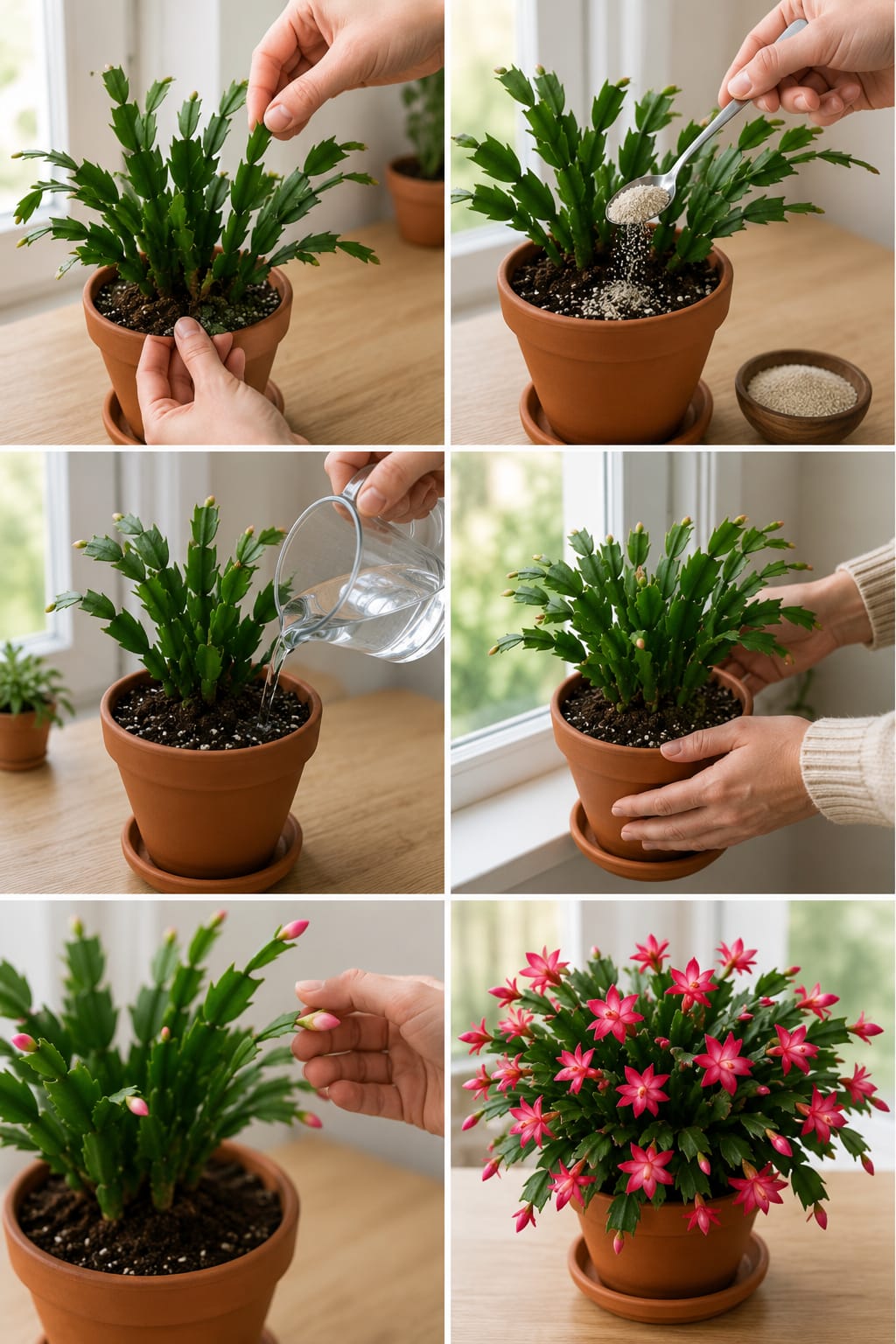
Christmas cactus is one of the most beautiful indoor plants for winter color. When most houseplants are resting, this plant can surprise you with bright pink, red, coral, purple, orange, or white flowers. Its flat green segmented stems grow in a soft arching shape, and when the buds open, the whole plant can look like a living holiday bouquet.
Many plant lovers want to know how to make Christmas cactus bloom more often and more heavily. The image shows a simple care routine: checking the plant, adding a light dry ingredient to the soil, watering gently, moving the pot near a bright window, watching buds form, and finally enjoying a full pot of colorful flowers. This type of routine can be helpful, but it must be done safely. Christmas cactus does not need heavy feeding, and too much powder or fertilizer can damage its roots.
The real secret to Christmas cactus blooms is not one magic ingredient. It is the right balance of light, watering, rest, temperature, soil, and gentle feeding. A small amount of a safe bloom-support ingredient can help only when the plant is already healthy. If the roots are stressed, the soil is soggy, or the plant is in a dark corner, no powder will force it to bloom well.
This complete guide explains how to care for Christmas cactus in pots, how to encourage more buds, how to use a mild soil booster safely, how to water correctly, how to prevent root rot, how to prepare the plant for blooming season, and how to keep it healthy after flowering.
What Is a Christmas Cactus?
Christmas cactus is a tropical forest cactus, not a desert cactus. This is very important. Many people hear the word cactus and think the plant wants hot dry desert conditions. Christmas cactus is different. It naturally grows in humid forest environments where it receives filtered light, gentle moisture, and airy organic material around the roots.
This means Christmas cactus likes more moisture than desert cactus, but it still does not want soggy soil. It needs a potting mix that drains well and allows air to reach the roots. It enjoys bright indirect light, moderate humidity, and stable indoor temperatures.
When it receives the right seasonal signals, it forms buds at the ends of its stem segments. These buds later open into beautiful star-like flowers.
Why Christmas Cactus Does Not Bloom
If your Christmas cactus grows green stems but refuses to flower, the problem is usually related to light, temperature, watering, or timing. The plant needs a rest period before blooming. It also needs shorter days and cooler nights to trigger bud formation.
Many people keep their Christmas cactus in a room with artificial lights on late into the night. This can confuse the plant. It may not receive the long dark period it needs to set buds. Others water too much, feed too heavily, or move the plant around when buds are forming.
A Christmas cactus that is healthy but not blooming usually needs better bloom preparation, not stronger fertilizer.
Main Reasons Christmas Cactus Fails to Bloom
- Not enough darkness at night
- Room is too warm before blooming season
- Too much water during the rest period
- Too little bright indirect light during the day
- Plant is stressed from repotting
- Potting mix is old or soggy
- Roots are damaged
- Too much fertilizer
- Plant is moved after buds form
- Air is too dry or temperature changes suddenly
The Real Bloom Secret
The real bloom secret is a simple seasonal routine. Christmas cactus needs bright indirect light during the day, long dark nights, slightly cooler temperatures, and careful watering for several weeks before blooming. This routine tells the plant that it is time to produce buds.
A mild soil booster can support the plant, but it should never replace proper seasonal care. Think of the booster as a small helper. The main work is done by light, temperature, rest, and root health.
What Is the White Powder or Soil Booster?
Many people use a small amount of white or pale powder around Christmas cactus to support blooming. Common safe options include finely crushed eggshell powder, a tiny amount of Epsom salt dissolved in water, or a balanced houseplant fertilizer used lightly. Sometimes the powder shown in images looks like dry yeast, rice powder, or another homemade ingredient. The exact ingredient matters because not every powder is safe.
For Christmas cactus, the safest approach is to avoid unknown powders. Use only ingredients you can identify and understand. If you want mineral support, diluted Epsom salt can be used rarely. If you want slow calcium support, finely ground eggshell powder can be used sparingly. If you want complete feeding, a diluted houseplant fertilizer is more reliable.
White Powders You Should Never Use
- Laundry powder
- Cleaning powder
- Table salt
- Borax
- Baking soda in heavy amounts
- Flour
- Powdered sugar
- Unknown chemical powder
- Strong fertilizer granules applied heavily
Christmas cactus roots are sensitive. Strong or unknown powders can burn roots, change soil balance, attract pests, or create mold.
Safe Bloom Booster Option 1: Diluted Epsom Salt
Epsom salt contains magnesium and sulfur. Magnesium helps plants form chlorophyll, which supports green growth. Some gardeners use it occasionally for flowering houseplants. However, it must be diluted and used rarely.
Safe Ratio
- 1/4 teaspoon Epsom salt
- 1 liter clean water
Stir until fully dissolved. Use this mixture only when the plant already needs watering. Do not pour it into wet soil. Use it no more than once every 6 to 8 weeks during active growth.
Safe Bloom Booster Option 2: Eggshell Powder
Eggshell powder can add calcium slowly over time. It does not work instantly, but it can be a gentle soil support when prepared correctly.
How to Prepare Eggshell Powder
- Rinse eggshells well.
- Remove any egg residue.
- Dry the shells completely.
- Crush or grind them into a fine powder.
- Store in a dry jar.
How to Use
Sprinkle only a tiny amount on the soil surface, about 1/4 teaspoon for a small pot or 1/2 teaspoon for a medium pot. Mix it lightly into the top layer of soil. Do not pile it against the plant stems.
Safe Bloom Booster Option 3: Balanced Fertilizer
A balanced houseplant fertilizer is often safer and more predictable than random homemade powders. Use it at half strength or quarter strength during active growth. Feed every 4 to 6 weeks in spring and summer, then reduce feeding before bloom preparation.
Do not overfeed. Too much fertilizer can cause salt buildup, brown tips, weak growth, and fewer blooms.
When to Use a Bloom Booster
The best time to use a gentle bloom-support routine is during active growth, usually spring and summer. This helps the plant build strong stems before the blooming season. Once fall arrives and you begin the bud-setting routine, reduce feeding and focus on darkness, cooler nights, and careful watering.
Do not use strong fertilizer while the plant is forming buds. Sudden changes can cause bud drop.
When Not to Use a Bloom Booster
- When the soil is already wet
- When the plant has root rot
- When stems are soft or mushy
- When fungus gnats are present
- When mold is growing on the soil
- Right after repotting
- During heavy blooming
- When the plant is stressed from cold or heat
If the plant is weak, fix the basic care first. A stressed plant needs root recovery, not extra feeding.
Best Soil for Christmas Cactus
Christmas cactus needs loose soil that holds light moisture but drains well. Heavy soil can hold too much water and suffocate the roots. A good mix should feel airy, not muddy.
Simple Soil Mix
- 2 parts indoor potting mix
- 1 part perlite
- 1 part orchid bark
- A small amount of coco coir or peat moss
This mix gives the plant moisture and air. Orchid bark helps create chunky spaces, while perlite improves drainage.
Best Pot for Christmas Cactus
Use a pot with drainage holes. This is essential. Christmas cactus roots can rot if water collects at the bottom. Terracotta pots are helpful because they dry faster. Ceramic and plastic pots can work if you water carefully.
Christmas cactus often blooms better when slightly snug in its pot. Do not move it into a huge container. A pot that is too large holds extra soil and extra moisture.
How to Water Christmas Cactus
Water when the top inch of soil feels dry. Pour water slowly until it drains from the bottom, then empty the saucer. Do not let the plant sit in water.
During active growth, the plant may need more regular watering. During the bloom preparation period, water slightly less. During blooming, keep moisture steady but not soggy.
Signs Your Christmas Cactus Needs Water
- Top inch of soil is dry
- Stem segments look slightly thinner
- Pot feels lighter than usual
- Plant looks a little less firm
- Soil pulls slightly from the pot edge
Signs of Overwatering
- Soft limp stems
- Yellowing segments
- Black or mushy roots
- Sour-smelling soil
- Mold on soil surface
- Fungus gnats
- Segments dropping suddenly
If the plant is overwatered, stop watering and check the roots. Do not add bloom booster to wet soil.
How to Prepare Christmas Cactus for Blooming
Bloom preparation usually begins in fall. The plant needs several weeks of long nights and cooler temperatures. This tells it to form buds.
Bloom Preparation Routine
- Place the plant in bright indirect light during the day.
- Give it 12 to 14 hours of darkness each night.
- Keep night temperatures cooler if possible.
- Water slightly less but do not let it shrivel badly.
- Avoid fertilizer during bud setting.
- Do not move the plant once buds appear.
This routine is more powerful than any homemade ingredient.
Best Light for Christmas Cactus
Christmas cactus likes bright indirect light. A bright east-facing window is excellent. A south or west window may work if the light is filtered with a sheer curtain. Too much direct sun can make the segments turn red, purple, or dry.
Too little light can reduce flowering. If your plant never blooms, move it to a brighter location during the day while still giving it darkness at night.
Why Darkness Matters
Christmas cactus is sensitive to night length. If lights are on late into the night, the plant may not receive the darkness it needs to trigger buds. Even room lamps can interrupt the process.
For several weeks before blooming, place it in a room that stays dark at night, or cover it with a breathable box during nighttime hours. Remove the cover during the day so the plant gets light.
Cool Nights Help Buds Form
Cooler nights can help trigger blooming. A room that is slightly cooler at night, but not cold, is ideal. Avoid freezing temperatures and cold drafts. Christmas cactus is tropical and can be damaged by cold.
Stable cool nights are better than sudden temperature shocks.
What to Do When Buds Appear
Once buds appear, keep the care steady. Do not move the plant around constantly. Do not suddenly change watering, light, or temperature. Buds can drop if conditions change too quickly.
Keep the soil lightly moist, provide bright indirect light, and avoid hot drafts from heaters.
Why Buds Drop
- Plant was moved after buds formed
- Soil dried too much
- Soil stayed too wet
- Air is too dry
- Temperature changed suddenly
- Plant received too much direct sun
- Fertilizer was applied too strongly
- Cold draft hit the plant
Bud drop is frustrating, but it is usually caused by sudden stress. Keep care consistent during budding.
After-Bloom Care
After the flowers fade, remove old blooms gently. Let the plant rest. Water a little less for a few weeks, then return to normal care as new growth begins.
After blooming is also a good time to prune lightly. Pruning encourages fuller growth and more branch tips, which can mean more flowers next season.
How to Prune Christmas Cactus
Prune after blooming. Twist or cut off one or two stem segments from long branches. Do not remove too much at once. Healthy cut pieces can be propagated.
Pruning helps the plant become bushier. More stem tips can lead to more bloom points later.
How to Propagate Christmas Cactus
- Take a cutting with 2 to 4 segments.
- Let the cut end dry for 1 to 2 days.
- Place it in lightly moist cactus or houseplant mix.
- Keep in bright indirect light.
- Water lightly until roots form.
- Do not overwater fresh cuttings.
Christmas cactus cuttings root easily when kept warm and lightly moist.
Repotting Christmas Cactus
Christmas cactus does not need frequent repotting. Repot every 2 to 3 years, or when soil becomes compacted. Repot after blooming, not while buds are forming.
Choose a pot only slightly larger than the old one. Keep the roots slightly snug. Use fresh airy soil and water carefully afterward.
How to Fix a Weak Christmas Cactus
If your plant looks weak, pale, or limp, check the roots. Remove the plant from the pot and inspect the root system. Healthy roots are firm. Rotten roots are mushy, black, or smelly.
Trim rotten roots, repot into fresh airy soil, and place the plant in bright indirect light. Wait before using any bloom booster. Let the plant recover first.
Natural Care Ingredients for Christmas Cactus
Some natural ingredients can be used carefully, but none should be overused.
- Eggshell powder: Very small amount for slow calcium support.
- Diluted Epsom salt: Rare magnesium support during active growth.
- Aloe water: Mild root-support rinse when diluted.
- Compost tea: Very weak and used rarely.
- Banana peel water: Must be diluted and fresh, but can attract pests if overused.
Plain water and correct light should always be the main care routine.
Ingredients to Avoid
- Strong vinegar
- Undiluted milk
- Salt water
- Cleaning powders
- Heavy baking soda
- Oily leaf shine
- Strong fertilizer on dry roots
- Rotting kitchen scraps
Christmas cactus roots are not a compost bin. Keep the pot clean and airy.
How to Keep Stems Green and Firm
- Water when the top inch dries.
- Use bright indirect light.
- Keep soil airy.
- Do not let roots sit in water.
- Avoid harsh sun.
- Keep away from cold drafts.
- Feed lightly during active growth.
- Prune after blooming.
Continue to Page 2
Continue to page 2 for more details about this article and the key points many readers miss on the first page.