Frequently Asked Questions
How long does this homemade weed killer take to work?
Small weeds may begin to wilt within a few hours. Many weeds show strong wilting after 24 to 48 hours, especially on a sunny day.
Will it kill weeds permanently?
It can dry the visible growth, but deep roots may return. Stubborn weeds may need a second spray or hand removal after they weaken.
Can I use it on grass?
No, unless you want to damage the grass. This mixture is non-selective and can harm lawn areas.
Can I spray near flowers?
It is risky. Use a shield if weeds are close to flowers, or pull those weeds by hand.
Why add dish soap?
Dish soap helps the mixture stick to weed leaves so the vinegar and salt do not slide off too quickly.
Should I spray the roots or leaves?
Spray the leaves directly. Coat the tops, sides, center, and lower leaves for better results.
What should I do after the weeds wilt?
Pull or sweep away the dead weeds, clean the cracks, and tidy the garden edge for a cleaner pathway transformation.
Final Thoughts
This homemade weed killer solution is a simple way to manage unwanted weeds in cracks, paths, gravel, and driveway edges. With white vinegar, Epsom salt, and dish soap, you can create a targeted spray that helps weeds wilt and dry out under the sun.
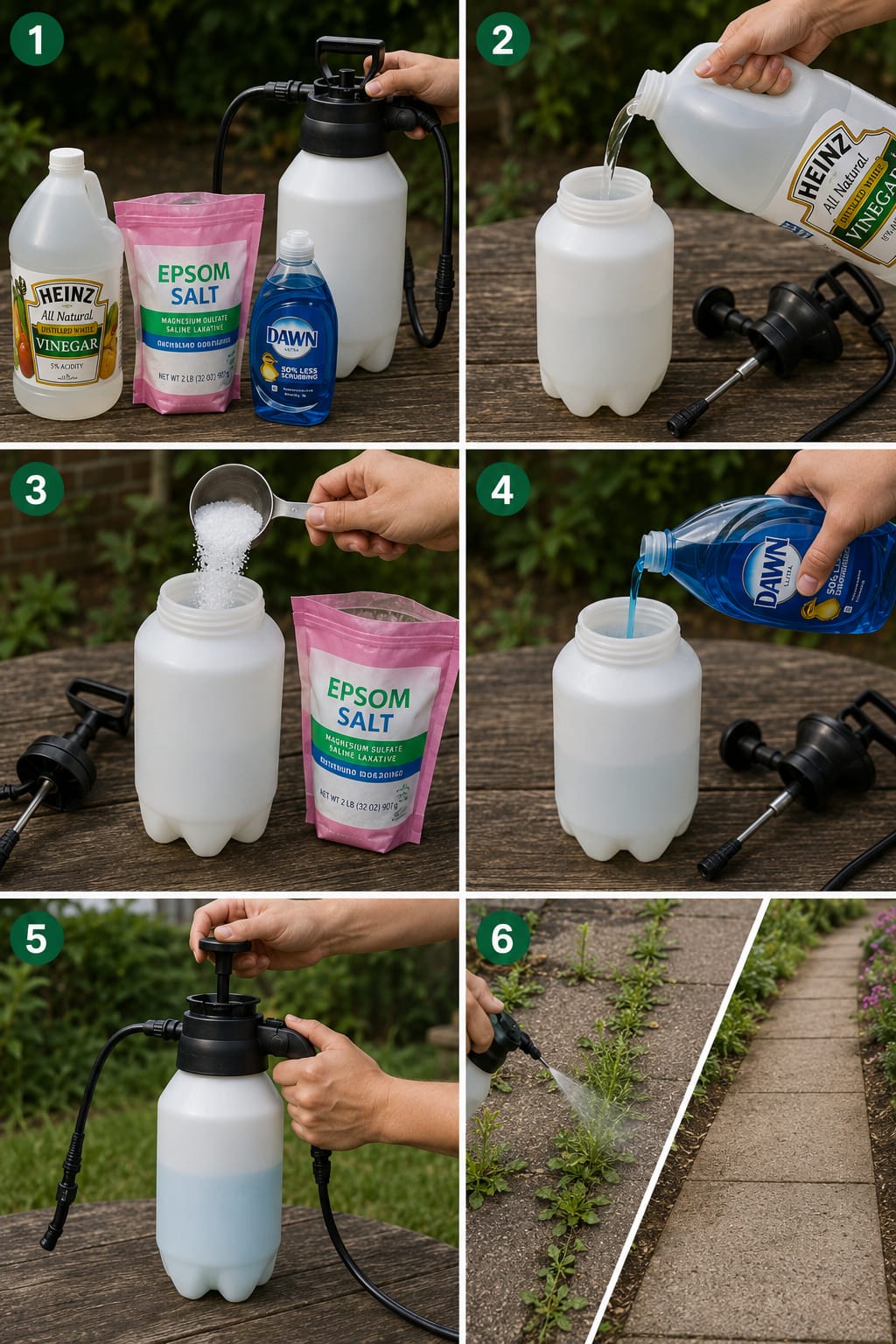
The 6-step method is easy: prepare the sprayer, add vinegar, add Epsom salt, add dish soap, pump the sprayer, and spray the weeds on a warm sunny day. After 24 to 48 hours, the weeds should look sad, wilted, and easier to remove. Once cleaned away, the pathway looks neater and the garden area feels fresh again.
Use this solution carefully. Avoid wanted plants, grass, vegetables, and flower beds. Keep the spray focused on weeds only. With regular maintenance, sweeping, and early treatment, you can keep your pathways cleaner and your garden looking more polished throughout the season.