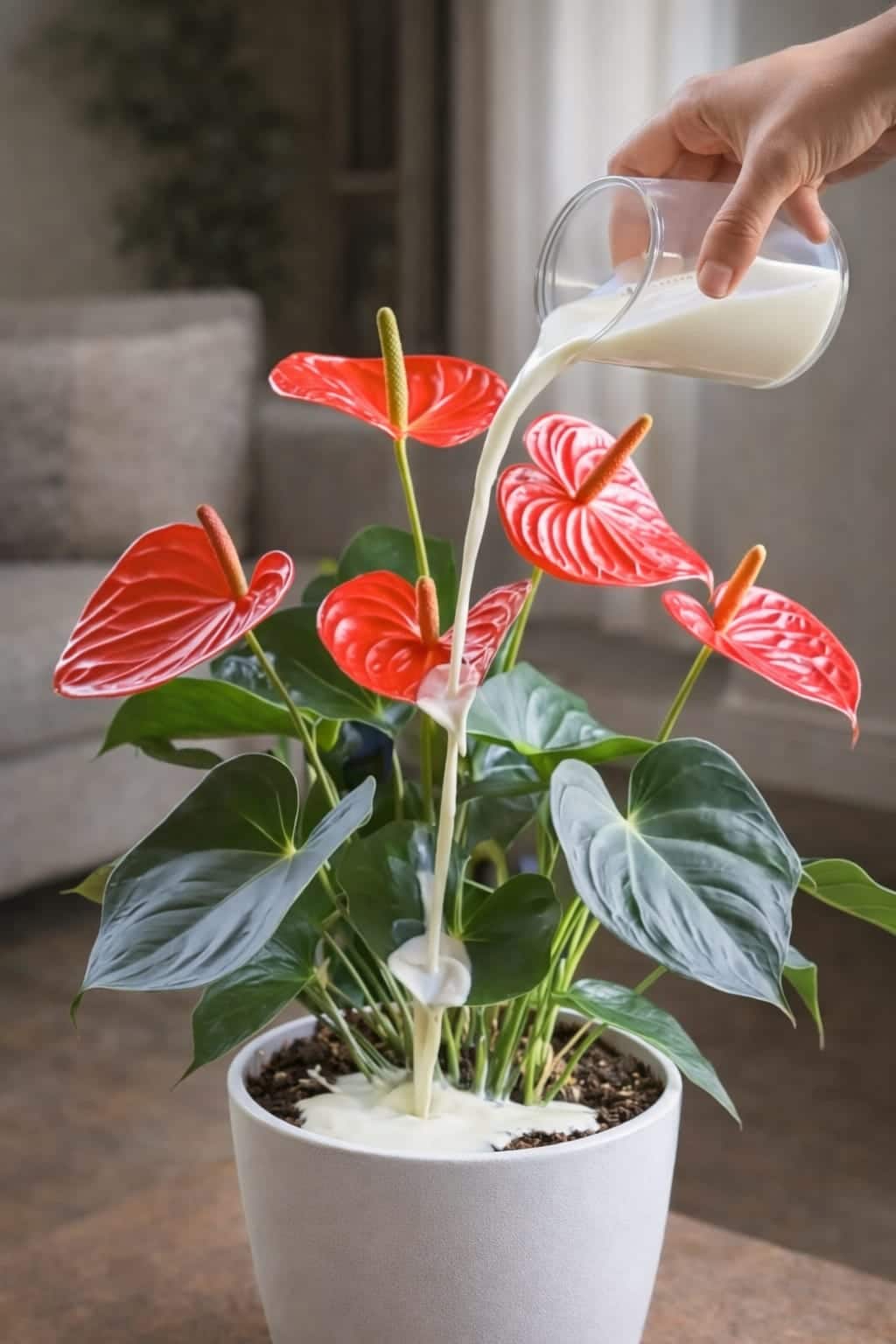
💧 How to Use a Diluted Kitchen Liquid Safely on Anthuriums
If you want to try this method, follow these careful guidelines. Moderation is everything.
Step‑by‑Step Application
- Dilute heavily – use 1 part whole milk to 4–5 parts water. The mixture should be faintly cloudy, not thick.
- Apply only to the soil – never on leaves or blooms. Pour around the edges of the pot.
- Use sparingly – once a month at most, and only during active growth (spring and summer).
- Ensure excellent drainage – never let the pot sit in standing water.
- Maintain bright indirect light – light fuels blooming more than any additive.
What to Avoid
· Using undiluted milk – will sour, smell, and cause mold.
· Applying too frequently – more than once a month can lead to salt buildup.
· Pouring into the crown – causes rot.
· Using on a stressed plant – fix watering or light issues first.
Pro tip: If you notice a sour smell or white mold on the soil, stop immediately and flush the pot with plain water.
❌ Common Mistakes That Shorten Bloom Life
Many indoor growers accidentally reduce bloom time by making these mistakes. The white liquid will not fix them – only proper care will.
Mistake Why It’s Harmful Correct Approach
Overwatering Roots rot, flowers fade quickly Water when top inch of soil is dry.
Using thick, undiluted milk Causes mold, sour smell, pests Dilute 1:4 or 1:5.
Letting liquid sit in the crown Crown rot – often fatal Apply to soil only.
Growing in compact, heavy soil Suffocates roots Use light, airy tropical mix (peat + perlite + bark).
Feeding during low‑light winter months Salt buildup, root burn Feed only in spring/summer.
Excess moisture is the most common cause of bloom decline. Anthuriums like consistent moisture, but they hate soggy roots.
🪴 What Actually Extends Anthurium Bloom Time? (Proven Methods)
Forget shortcuts – focus on these proven fundamentals. The white liquid can be a tiny supplement, but these factors matter far more.
- Bright Indirect Light – The #1 Factor
Anthuriums need bright, indirect light to produce and maintain flowers. Too little light = weak blooms, early fading. Too much direct sun = scorched leaves.
· Ideal spot: East or west‑facing window, or a few feet back from a south window with a sheer curtain.
· Signs of insufficient light: Dark green leaves, long stems, no blooms.
· Signs of too much light: Yellow or bleached leaves, brown patches.
- High Humidity (But Good Airflow)
Anthuriums are tropical plants. They thrive in humidity levels of 60–80%. Dry air causes brown leaf edges and shortens bloom life
· Increase humidity: Use a humidifier, pebble tray, or group plants together.
· Avoid – misting heavily, which can lead to fungal spots. Good airflow is equally important.
- Light, Well‑Draining Tropical Soil Mix
Anthuriums need airy, fast‑draining soil. Heavy, compacted soil suffocates roots and causes rot.
· Best mix: 2 parts peat moss + 1 part perlite + 1 part orchid bark.
· Avoid: Regular potting soil alone – it’s too dense.
- Consistent but Moderate Watering
Anthuriums like evenly moist soil – but they hate sitting in water.
· When to water: When the top inch of soil feels dry.
· How to water: Water thoroughly, then empty the saucer.
· Water quality: Use filtered or distilled water if your tap water is hard.
- Balanced, Diluted Fertilizer During Growth Season
Instead of kitchen hacks, use a proper fertilizer.
· Type: Balanced liquid fertilizer (e.g., 20-20-10 or 10-10-10) diluted to half strength.
· Frequency: Once a month during spring and summer. Stop in fall and winter.
Anthurium Bloom Optimization Table
Factor Ideal Condition Why It Matters
Light Bright, indirect (east/west window) Supports flower production and longevity
Soil Airy tropical mix (peat + perlite + bark) Prevents root suffocation
Watering Even moisture – water when top inch dries Avoids stress and root rot
Feeding Light, seasonal (spring/summer) Maintains bloom strength
Humidity Moderate‑high (60–80%) Extends bloom life, prevents brown tips
White liquid Occasional, heavily diluted (optional) Gentle calcium supplement – not necessary
How to Use a Diluted Milk Rinse Safely – A Simple Plan
If you want to try this method, follow this safe routine.
- Choose whole milk – skim lacks fat, which helps emulsify.
- Dilute 1 part milk with 4–5 parts water – room temperature.
- Apply only to the soil – pour around the edges, avoiding the crown and leaves.
- Use once a month at most – during spring and summer only.
- Stop immediately if you see mold, smell, or leaf spots.
Pro tip: If you want a calcium boost without the risks, use crushed eggshell powder (finely ground) sprinkled on the soil once a month – no smell, no mold.
Troubleshooting – Common Anthurium Problems & Solutions
Problem Likely Cause Solution
Flowers fading quickly Low light or inconsistent watering Move to brighter spot; water consistently.
Brown leaf edges Low humidity or fluoride in tap water Increase humidity; use filtered water.
Yellow leaves Overwatering or poor drainage Let soil dry; repot with airy mix.
No blooms Insufficient light Move to bright indirect light.
White mold on soil Overwatering or milk residue Scrape off; reduce watering; stop milk.
Root rot Overwatering + dense soil Repot in fresh, dry mix; trim rotten roots.
Frequently Asked Questions (FAQs)
Q: Can diluted milk extend anthurium bloom time?
A: Not directly. The calcium may help slightly, but proper light, humidity, and watering have a much bigger impact. Use it as an occasional supplement, not a cure.
Q: Why are my anthurium flowers fading quickly?
A: Most common causes: low light, inconsistent watering, or dry air. Check these first.
Q: Should I pour white liquid into the crown of the plant?
A: No – always apply to the soil only. Liquid in the crown causes rot.
Q: How often should I fertilize anthuriums?
A: Light feeding during active growth season (spring and summer) – once a month with a diluted balanced fertilizer.
Q: Do anthuriums need high humidity?
A: Yes – moderate to high humidity (60–80%) helps blooms last longer. Use a pebble tray or humidifier.
Q: Can anthuriums tolerate direct sun?
A: No – direct sun scorches leaves. Bright, indirect light is best.
Q: Why are anthurium leaves turning yellow?
A: Possible overwatering or root stress. Check soil moisture and drainage.
Q: Do anthurium blooms last long naturally?
A: Yes – healthy blooms can last several weeks (sometimes 2–3 months) with proper care.
Q: Should I cut old flowers off?
A: Yes – removing spent blooms redirects energy to new growth and future flowers.
Q: What’s the biggest mistake people make with anthuriums?
A: Overwatering combined with poor drainage – this is the #1 killer. Let the soil dry slightly between waterings.
Printable Anthurium Care Checklist
☐ Place in bright, indirect light (east/west window)
☐ Use an airy tropical soil mix (peat + perlite + orchid bark)
☐ Use a pot with drainage holes
☐ Water when top inch of soil is dry
☐ Water thoroughly, then empty saucer
☐ Maintain humidity 60–80% (pebble tray or humidifier)
☐ Fertilize with diluted balanced fertilizer once a month in spring/summer
☐ Optional: use diluted milk rinse (1:4) once a month – not necessary
☐ Do not pour liquids into the crown
☐ Remove spent flowers and yellow leaves
☐ Repot every 2–3 years when root‑bound
Final Thoughts – Gentle Support, Stronger Blooms
The “simple white liquid” trend is not magic. A highly diluted milk rinse can provide a tiny calcium boost, but it will never replace the fundamentals: bright indirect light, high humidity, well‑draining soil, consistent watering, and light feeding.
If your anthurium blooms are fading quickly, don’t reach for a bottle first. Check the light, increase humidity, and adjust your watering. Once those basics are right, a little diluted milk once a month can be a gentle experiment – but it’s never the cure.
With patience and the right care, your anthurium will reward you with glossy leaves and vibrant blooms that last for weeks.
Now it’s your turn! Have you tried a diluted milk rinse on your anthurium? What results did you see? Drop a comment below – I’d love to hear your experience.
And if you found this guide helpful, share it with a friend who loves anthuriums. Pin it for later, and subscribe to our newsletter for more honest, evidence‑based plant care.
Stay bright, stay humid, and watch your anthurium thrive. 🌺✨