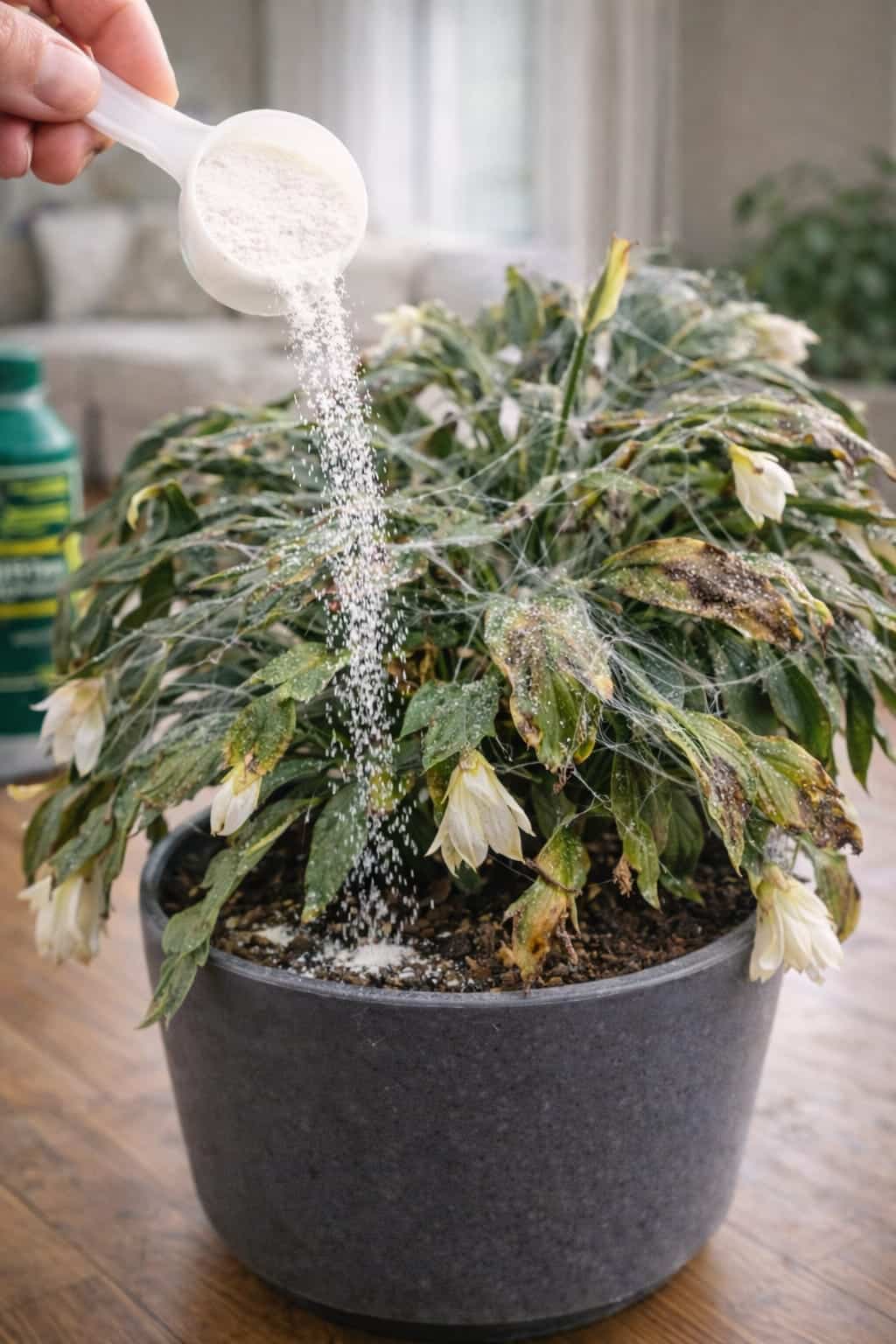
There is nothing more discouraging than watching a holiday cactus go from full and beautiful to dry, droopy, and covered in damaged leaves. One week it looks fine, and the next it seems like it is collapsing right in front of you. Limp stems, browning edges, faded blooms, and even web-like buildup can make it look beyond saving.
That is exactly why dramatic rescue tricks get so much attention.
When people see a white powder being sprinkled over the soil and a “before and after” transformation beside it, they instantly feel like the answer must be simple. And while a powder treatment can sometimes help in specific situations, the real recovery almost never comes from one ingredient alone.
The truth is more useful than the viral version:
👉 A struggling holiday cactus can recover, but only when you treat the real problem first.
Why Holiday Cactus Plants Decline So Quickly
Holiday cacti, including Christmas cactus, Thanksgiving cactus, and Easter cactus, are much more sensitive than people think. They are not desert cacti. They prefer moderate moisture, bright indirect light, and stable care. When something goes wrong, the plant usually shows it fast.
Common causes of decline include:
· overwatering
· root stress
· poor drainage
· pest problems
· very dry air
· too much harsh direct sun
· exhausted soil
· fungal or rot issues
In the kind of situation you might see online, the plant looks severely stressed, with browning, drooping stems and web-like buildup. That usually suggests the plant is dealing with more than one issue at once. In a situation like that, no powder alone will solve everything.
What the White Powder Is Usually Supposed to Do
In plant posts like this, the white powder is often presented as a miracle cure. It may be one of several things:
· cinnamon powder
· baking soda
· Epsom salt for plants
· a plant-safe antifungal dust
· diatomaceous earth in some cases
The exact ingredient matters less than the role it is supposed to play.
Usually, the powder is meant to:
· help dry the surface
· reduce fungal pressure
· discourage pests
· support the soil surface after cleanup
That can be useful, but only after the real issue has been addressed.
The Real First Step: Inspect the Plant Carefully
Before adding anything, the most important thing is to inspect the plant.
Look for:
· mushy stems
· black or rotten areas near the base
· signs of spider mites or webbing
· constantly wet soil
· dry shriveled roots
· pests hiding under stems or around the crown
This step matters because different problems need different solutions.
For example:
· If the roots are rotting, the plant needs less water and probably fresh potting soil for succulents.
· If pests are present, the plant needs cleaning and proper treatment.
· If the soil is old and compacted, the roots may be suffocating.
Until you know the cause, adding random powders can just delay the real fix.
What Actually Helped Revive My Plant
The biggest change came when I stopped looking for a miracle and started fixing the basics.
- I Removed the Worst Damaged Parts
Dry flowers, badly browned segments, and clearly dead material needed to go. This instantly reduced stress on the plant and made it easier to see what was still healthy.
Use clean, sharp scissors. Cut each damaged segment back to the first healthy-looking joint. Do not leave stubs that can rot.
- I Checked the Roots and Soil
If the soil is wet and sour-smelling, the roots may already be in trouble. Holiday cacti need airy, draining soil. If the mix stays soggy, the plant cannot recover properly.
Gently tip the plant out of its pot. Healthy roots are firm and white or light tan. Rotten roots are dark, mushy, and smell bad. Trim away any rotten roots with sterilized scissors.
- I Improved Drainage
A pot without good drainage or a dense mix can keep the roots under constant stress. Fresh, lighter soil makes a huge difference.
I mixed cactus potting soil with perlite at a 2:1 ratio. This creates the fast-draining environment holiday cacti love. I also made sure the pot had multiple drainage holes.
- I Gave It Bright, Indirect Light
Not intense direct sun. Not a dark corner. Just steady, bright filtered light so the plant could rebuild energy.
An east-facing window is perfect. A south window with a sheer curtain also works. Holiday cacti need about 10–12 hours of bright indirect light daily during recovery.
- I Stopped Overwatering
This is one of the biggest reasons these plants decline. They like moderate moisture, but not wet roots.
I started watering only when the top inch of soil felt completely dry. For my recovering plant, that meant about once every 10–14 days. I also stopped misting the leaves, which can encourage fungal issues.
Continue to Page 2
Continue to page 2 for more details about this article and the key points many readers miss on the first page.