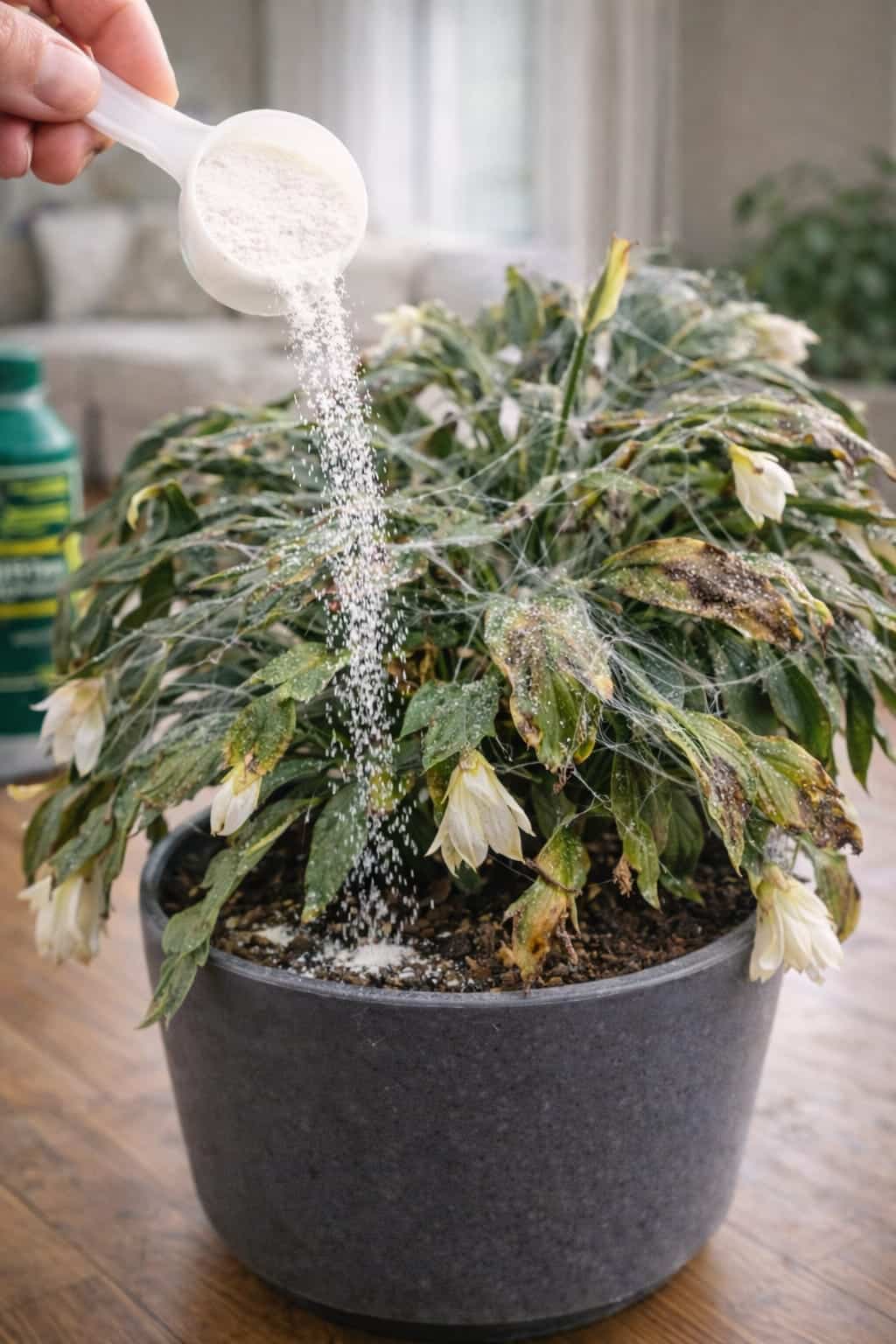
Where the Powder Can Actually Help
Once the plant is cleaned up and the major issue is identified, a powder treatment may have a place.
Cinnamon Powder
Cinnamon is sometimes used lightly around damaged dry areas because it helps keep the surface cleaner and drier. It has natural antifungal properties. Sprinkle a very thin layer on cut ends or on the soil surface after removing rot.
Baking Soda
Baking soda is more often used for mildew-related garden sprays than as a direct houseplant cure. Mix 1 teaspoon per quart of water for a foliar spray if you see white powdery mildew. Do not apply dry baking soda to soil.
Epsom Salt for Plants
Epsom salt can help if your holiday cactus shows signs of magnesium deficiency (yellowing between leaf veins). Mix 1 teaspoon per gallon of water and use as a monthly feed during the growing season. It is not an emergency rescue treatment.
Diatomaceous Earth
Food-grade diatomaceous earth is sometimes used for pest-related problems around the surface of the soil. It works by dehydrating soft-bodied insects like fungus gnats and thrips. Apply a thin layer on dry soil and keep it dry to remain effective.
In other words, the powder can be a support step. It is not usually the main reason the plant gets better.
The Hidden Problem Many People Miss: Pests
In a plant that looks shriveled and webbed, pests may be part of the issue. Tiny pests like spider mites can quickly weaken holiday cactus stems and make the whole plant look dry, faded, and exhausted.
Signs of spider mites include:
· fine webbing between stem segments
· tiny moving specks (red, brown, or white)
· stippled, yellowing foliage
· overall dusty appearance
If pests are present, real recovery usually comes from:
· isolating the plant immediately
· cleaning the foliage with a damp cloth or gentle spray
· removing badly affected sections
· using a proper plant-safe treatment (like neem oil or insecticidal soap)
· improving airflow and humidity balance
This is another reason the powder alone is not the whole story.
How the Recovery Starts to Look
A holiday cactus does not usually transform overnight in real life. What happens instead is more gradual and much more believable.
Good recovery signs include:
· firmer green segments
· less drooping
· new growth at the tips (small reddish or light green leaf sections)
· fewer damaged edges
· stronger overall color
· better branching
After about 2–4 weeks of correct care, you will see the first real improvements. The plant may still look rough around the edges, but the new growth tells you it is fighting back.
Eventually, once the plant becomes healthy again, blooming can return too. That is when the real transformation begins.
What to Avoid During Recovery
If your plant looks like this, avoid these mistakes:
Do Not Keep Adding Random Ingredients
Too many treatments at once can overwhelm an already stressed plant. Stick to one small intervention at a time.
Do Not Leave It in Soggy Soil
If the roots are damaged, extra moisture will only make recovery harder. When in doubt, wait another day before watering.
Do Not Put It in Harsh Direct Sun
A weak plant burns more easily. Afternoon sun through a bare window can scorch recovering stems within hours.
Do Not Ignore Webbing or Signs of Pests
Pests do not go away on their own. Address them directly with proper treatments.
Do Not Expect Instant Flowers
First comes survival. Then regrowth. Blooms come after strength returns. Trying to force flowers with bloom-boosting fertilizers during recovery can actually harm the plant.
How to Help It Bloom Beautifully Again
Once the plant is healthy, you can focus on getting blooms back.
Holiday cacti bloom better when they get:
· bright indirect light during the growing season (spring through summer)
· careful watering with a slight dry period between waterings
· cooler nights (50–65°F / 10–18°C) for 6–8 weeks before the desired bloom time
· longer nights (12–14 hours of total darkness) starting in late September for Christmas cactus
· a stable routine without moving the plant once buds appear
· less disturbance – even turning the pot can cause buds to drop
After your holiday cactus recovers, give it this treatment starting in early fall. You should see tiny buds forming at the leaf tips within 4–6 weeks. Those buds will open into stunning flowers in shades of pink, red, white, or purple depending on the variety.
A recovered plant can absolutely bloom again, but only after it has rebuilt strength.
Step-by-Step Holiday Cactus Rescue Guide (Printable Summary)
Here is a quick checklist to save or print.
Week 1 – Emergency Triage
· Remove all dead or dying stems and blooms.
· Unpot and inspect roots. Trim rot.
· Repot in fresh, fast-draining cactus mix with perlite.
· Water very lightly once (just enough to settle the soil).
· Place in bright indirect light, no direct sun.
Weeks 2–4 – Stabilization
· Water only when top inch of soil is dry.
· Do not fertilize yet.
· Monitor for pests. Treat if found.
· Keep temperatures between 65–75°F (18–24°C).
· Do not move the plant around.
Weeks 5–8 – Recovery Growth
· Look for new leaf segments at the tips.
· Begin very light feeding with balanced liquid fertilizer diluted to half strength.
· Gradually increase watering frequency as plant perks up.
· Resume normal holiday cactus care.
After Full Recovery (3–6 months)
· Transition to bloom induction if desired.
· Provide cool nights and long dark periods for 6 weeks.
· Watch for buds. Do not change care once buds appear.
· Enjoy the flowers!
Frequently Asked Questions (Holiday Cactus Rescue)
Can a holiday cactus recover from root rot?
Yes, but you must act fast. Remove the plant from soil, cut away all rotten roots, and repot in fresh dry mix. Water sparingly for several weeks. If the rot has reached the stem, you may need to propagate healthy cuttings.
How do I know if my Christmas cactus has spider mites?
Look for fine webbing between stem segments and tiny moving dots. Hold a white sheet of paper under a stem and tap it. If small specks fall and move, you have mites.
Is cinnamon good for holiday cactus?
Lightly dusting cinnamon on cut wounds or soil surface can help discourage fungus. It is not a cure-all, but it is a safe, mild antifungal.
Can I use Epsom salt on my Thanksgiving cactus?
Yes, Epsom salt for plants can provide magnesium if your cactus shows deficiency. Use 1 teaspoon per gallon of water once a month during active growth. Do not overuse.
How often should I water a recovering holiday cactus?
Much less than a healthy one. Start with a small drink every 10–14 days. Increase only when the plant shows consistent new growth.
Why are my holiday cactus leaves turning purple?
Purple or red leaves usually indicate stress from too much light, temperature extremes, or a phosphorus deficiency. It can also happen naturally before blooming. Evaluate your conditions.
How long does it take for a holiday cactus to bloom again after rescue?
Typically 6–12 months. The plant needs to first rebuild leaf mass and root strength. Do not rush it.
Final Thoughts
If your holiday cactus looks finished, do not assume it is hopeless. These plants can come back surprisingly well when you stop chasing miracle fixes and start solving the real problem.
A white powder may help in certain situations. It may support surface treatment, pest control, or cleaner recovery conditions. But the true rescue comes from:
· removing damage
· checking the roots
· fixing the soil
· improving drainage
· treating pests if needed
· giving the plant the right light and watering rhythm
That is what brings it back.
And when new healthy growth finally appears, the change feels even better than a viral “instant transformation” — because this time, it is real.
Have you ever revived a holiday cactus that looked completely dead? Share your story in the comments below. And if this guide helped you, save it for later or send it to a friend who needs some plant rescue hope.