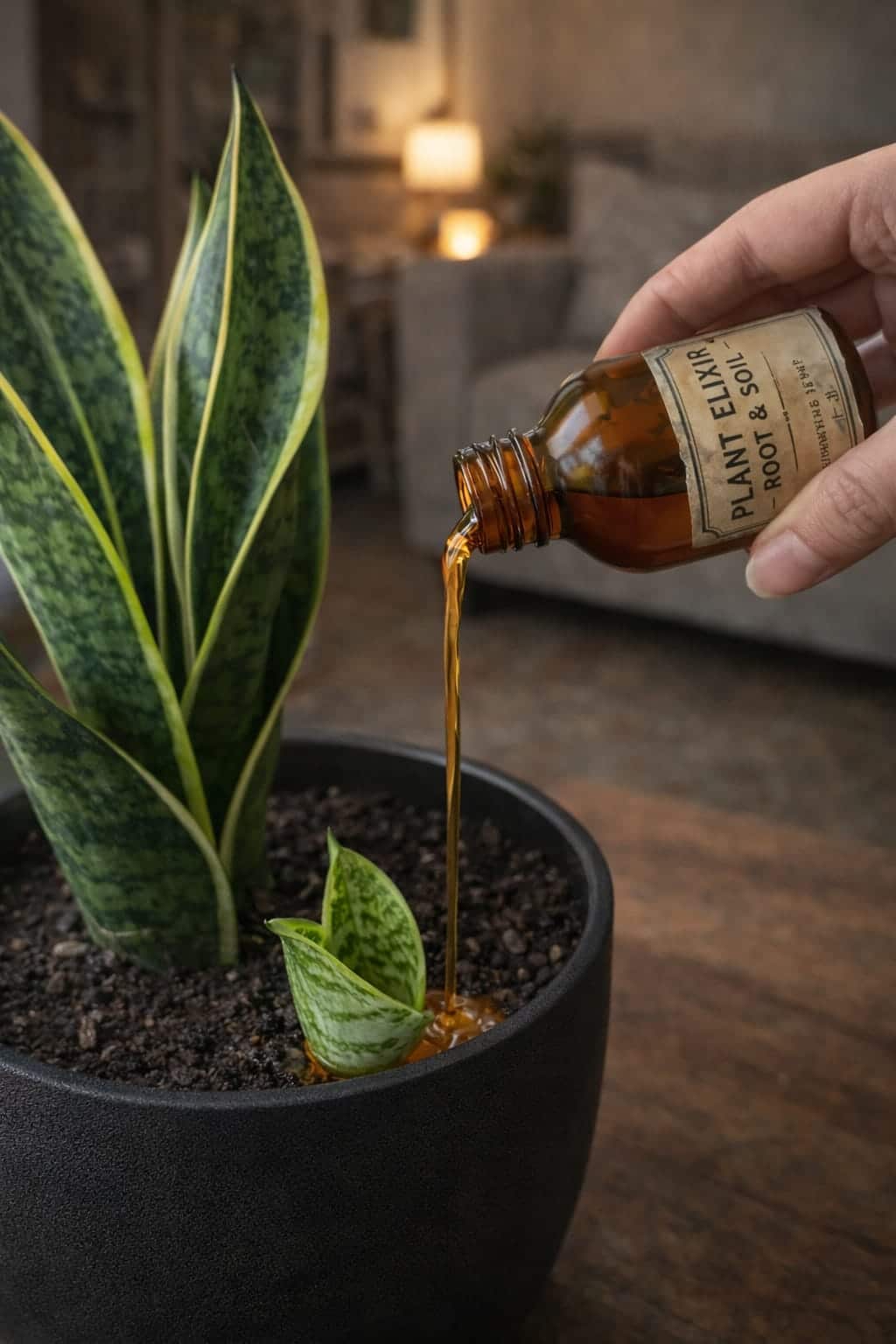
⚠️ Why Gentle Soil Support Works Better Than Strong Fertilizer
Snake plants prefer stability. When soil is overloaded with nutrients:
· Oxygen circulation decreases – heavy salt buildup compacts soil, suffocating roots.
· Roots weaken – excess nutrients burn tender root hairs, reducing water absorption.
· Salt buildup occurs – white crust on soil surface and brown leaf tips.
· Leaves soften or lean – weakened roots cannot support upright growth.
But when soil conditions remain balanced:
· Roots expand naturally – they grow strong and spread evenly.
· Leaves grow firm and vertical – the plant maintains its architectural shape.
· Growth remains consistent – slow but steady, without stress signals.
· The plant resists pests and diseases – healthy snake plants are naturally resilient.
That structural strength is what makes snake plants ideal for modern interior styling and luxury home presentation. A snake plant with firm, upright leaves and rich green color is a statement piece. A weak, leaning plant with brown tips is not.
🪴 The Essential Conditions for a Thriving Snake Plant (Before Any Elixir)
The plant elixir is a supplement, not a substitute. Focus on these fundamentals first.
- Bright Indirect Light – The #1 Driver of Growth
Snake plants can survive in low light, but they thrive in bright, indirect light. More light = stronger leaves, faster growth, and more pups.
· Ideal spot: East or west‑facing window.
· Acceptable: A few feet back from a south window with a sheer curtain.
· Avoid: Dark corners (slow growth, weak leaves) and direct afternoon sun (leaf scorch).
- Fast‑Draining Soil Mix
Snake plants need soil that dries quickly. Heavy, moisture‑retentive soil leads to root rot.
· Best mix: Cactus/succulent soil + 30% perlite.
· Avoid: Regular potting soil alone.
- Infrequent, Deep Watering
· When to water: Only when the top 2–3 inches of soil are completely dry.
· How to water: Water deeply until it runs out the drainage holes. Empty the saucer.
· Frequency: Every 2–4 weeks, depending on light and temperature.
- A Pot with Drainage Holes
· Terracotta pots are excellent – they wick away excess moisture.
· Plastic pots can work but require more careful watering.
- Stable Indoor Temperatures
· Ideal range: 65–85°F (18–29°C).
· Avoid: Cold drafts below 50°F and sudden temperature swings.
Snake Plant Care Table – Balanced Growth Conditions
Factor Ideal Setup Why It Matters
Light Bright, indirect (east/west window) Supports vertical growth and firm leaves
Soil Fast‑draining cactus/succulent mix Encourages airflow, prevents rot
Watering Only when soil is completely dry Prevents root rot
Feeding Diluted root support (once a month, spring/summer) Reduces nutrient shock, avoids salt buildup
Drainage Pot with holes (terracotta preferred) Protects soil structure and root health
Troubleshooting – Common Snake Plant Problems & Solutions
Problem Likely Cause Solution
Brown leaf tips Over‑fertilizing or mineral buildup Flush soil; reduce feeding; use filtered water.
Soft, floppy leaves Overwatering or root rot Let soil dry completely; check roots.
Leaves bending or leaning Low light or weak roots Move to brighter light; support with gentle elixir.
White crust on soil Salt buildup from fertilizer or tap water Flush soil with plain water; reduce feeding.
No new growth Insufficient light or cold temperatures Move to brighter spot; keep above 65°F.
Yellow leaves Overwatering Let soil dry; improve drainage.
Frequently Asked Questions (FAQs)
Q: Can this elixir replace fertilizer completely?
A: It supports soil balance but does not permanently replace full plant nutrition. For long‑term health, use a diluted balanced fertilizer once or twice a year, or rely on the elixir as a gentle supplement.
Q: How often should I apply the plant elixir?
A: Occasionally – once a month at most, and only during spring and summer (active growing season). Do not use in fall and winter.
Q: What happens if I use too much of the elixir?
A: Roots may weaken, and you may see brown tips or white crust on the soil. Flush with plain water and reduce frequency.
Q: Should I apply the elixir to the leaves?
A: No – apply to soil only. Liquid on leaves can cause spots or attract pests.
Q: Why are my snake plant leaves bending or leaning?
A: Low light or root stress. Move to brighter light and ensure the soil is not waterlogged.
Q: Is drainage more important than feeding for snake plants?
A: Yes – absolutely. Proper drainage prevents root rot, which is the #1 killer of snake plants. Feeding is secondary.
Q: Can strong fertilizer damage snake plants?
A: Yes – snake plants are sensitive to excess nutrients. Over‑fertilizing causes brown tips, salt buildup, and weak growth.
Q: Why is my soil compacted?
A: Salt buildup from tap water or fertilizer, combined with overwatering, compacts soil. Flush with plain water and consider repotting with fresh mix.
Q: Can this elixir be used indoors and outdoors?
A: Yes, with proper drainage. Outdoor snake plants may need more frequent watering, but the same dilution rules apply.
Q: What is the most common mistake people make with snake plants?
A: Overwatering combined with feeding. Let the soil dry completely, and feed very lightly – or not at all.
Printable Snake Plant Care Checklist
☐ Place in bright, indirect light (east/west window)
☐ Use a pot with drainage holes (terracotta preferred)
☐ Fill with fast‑draining cactus/succulent soil (add perlite)
☐ Water only when soil is completely dry (check with finger)
☐ Water deeply, then empty saucer
☐ Do not water again for 2–4 weeks (depending on light)
☐ Optional: apply diluted plant elixir (seaweed or weak fertilizer) once a month in spring/summer
☐ Apply to soil only – avoid crown and leaves
☐ Do not use in fall/winter
☐ Wipe leaves with damp cloth monthly
☐ Remove dead or yellow leaves at base
☐ Repot every 2–3 years when root‑bound
Final Thoughts – Gentle Support, Strong Growth
The affordable plant elixir that helped my snake plant thrive wasn’t a magic potion. It was a diluted, gentle root‑support solution used sparingly, alongside proper light, watering, and soil. The real secret wasn’t the elixir itself – it was the shift from aggressive feeding to balanced, low‑intervention care.
If your snake plant is struggling, don’t reach for a strong fertilizer first. Check the light, the soil, and your watering routine. Once those basics are right, a little diluted elixir once a month can give it a gentle nudge – but it’s never the cure.
With patience and the right care, your snake plant will reward you with strong, upright leaves and that architectural beauty that makes it a favorite in modern homes.
Now it’s your turn! Have you tried a gentle plant elixir on your snake plant? What results did you see? Drop a comment below – I’d love to hear your experience.
And if you found this guide helpful, share it with a friend who loves snake plants. Pin it for later, and subscribe to our newsletter for more honest, evidence‑based plant care.
Stay dry, stay bright, and watch your snake plant thrive. 🌿✨