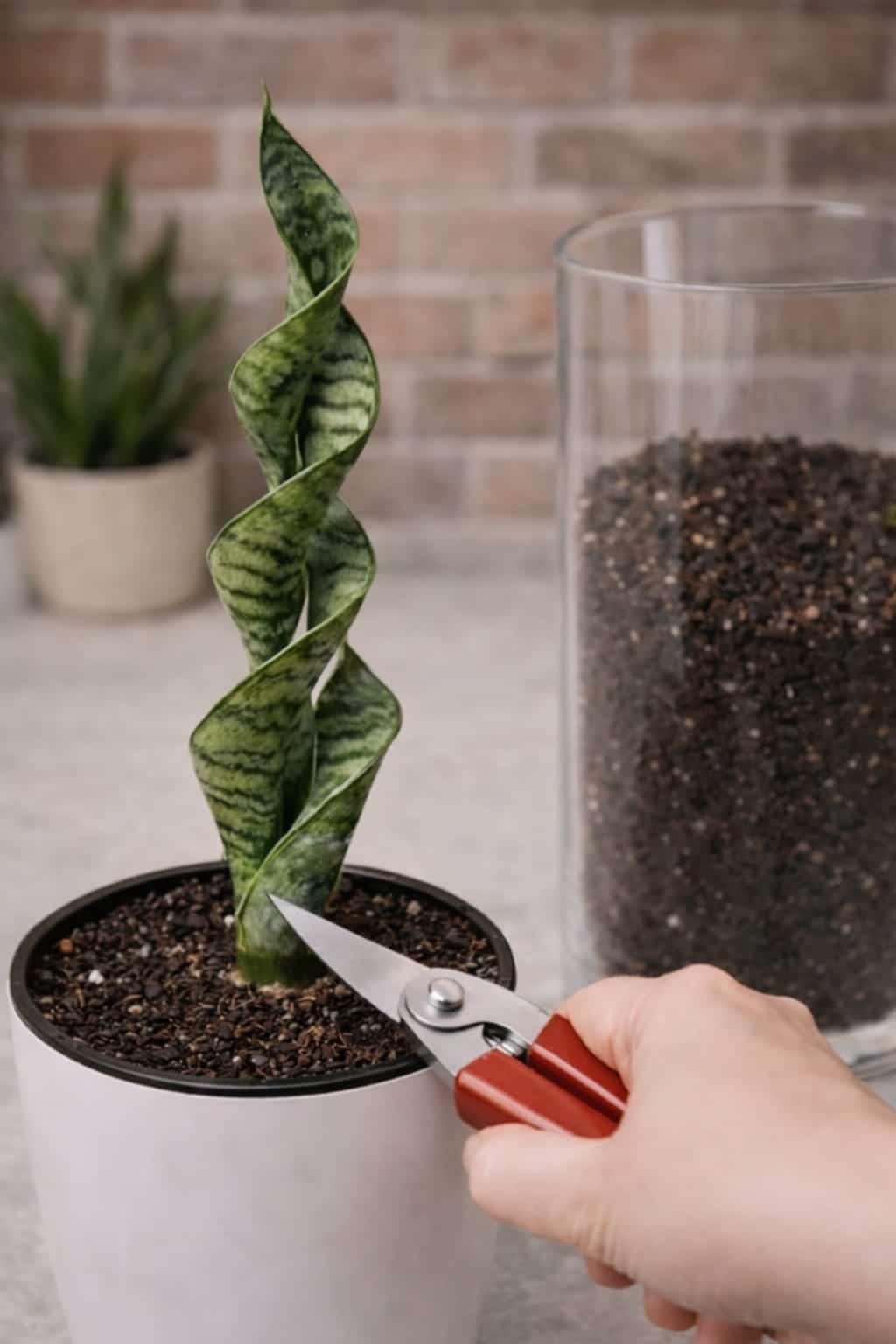
Watering Rules That Protect the Spiral Shape
Snake plants prefer less water than most indoor plants. Overwatering leads to soft, mushy leaves that lose their architectural shape. The spiral becomes floppy and indistinct.
When to Water
· Only when the soil is completely dry – Stick your finger into the soil up to the second knuckle. If it feels dry, water. If damp, wait.
· The pot feels light – Lift the pot. A dry pot is significantly lighter than a wet one.
· In most homes – Water every 2–4 weeks in spring/summer, and once a month or less in fall/winter
How to Water
· Water thoroughly until it runs from the drainage holes.
· Let all excess water drain away.
· Empty the saucer immediately. Never let the pot sit in standing water.
Signs of Overwatering
· Yellowing or softening leaves
· Leaves falling over
· A musty smell from the soil
Too much water causes soft leaves that cannot hold the spiral. Always use planters with drainage holes to protect roots and maintain visual quality.
Choosing the Right Pot for Design Impact
The container matters almost as much as the plant. A spiral snake plant deserves a pot that complements its sculptural form without competing.
Best Planter Styles
· Matte ceramic – Clean, modern, non‑reflective.
· Concrete or stone finishes – Adds an organic, grounded feel.
· Neutral tones – White, beige, soft gray, or terracotta.
· Simple geometric shapes – Cylinders, cubes, or tapered pots.
What to Avoid
· Bright colors or busy patterns – They distract from the spiral.
· Glossy finishes – Can look cheap next to the plant’s natural texture.
· Pots without drainage – Essential for root health.
A simple planter highlights the spiral shape and blends seamlessly into modern interior design.
Best Placement for Interior Styling
A spiral snake plant works beautifully as:
· A coffee table accent – Low, wide pots work best.
· A shelf focal point – Use a tall, narrow pot.
· A side table feature in living rooms – Pair with a stack of books or a small sculpture.
· A clean statement piece in bedrooms or offices – Place near a window for light.
Room‑by‑Room Suggestions
· Living room – On a console table behind a sofa, or flanking a fireplace.
· Home office – On a desk or bookshelf to add life without clutter.
· Bedroom – On a nightstand or dresser. Its upright form saves space.
· Bathroom – If there is bright indirect light, the humidity is beneficial.
Its upright form makes it ideal for small spaces while still adding visual interest. The spiral draws the eye upward, making ceilings feel higher.
Common Mistakes That Ruin the Spiral
Avoid these errors if you want a clean, architectural spiral.
Rotating the Plant Too Often
Frequent turning confuses the plant and prevents the gradual curve from forming. Stick to once every 10–14 days.
Overfertilizing
Rapid, uneven growth flattens the spiral. Use half‑strength fertilizer only during active growth.
Low Light Conditions
Without enough light, the plant grows slowly and weakly. It will not have the energy to twist.
Heavy Soil
Soil that stays wet suffocates roots and leads to soft leaves. Always use cactus mix.
Oversized Pots
A pot that is too large encourages root sprawl instead of focused upward growth. Use a snug pot.
Inconsistent Watering
Going from bone dry to soggy and back stresses the plant. Aim for steady, moderate dryness between waterings.
Ignoring Dust
Dust on leaves blocks light. Wipe leaves gently with a damp cloth every few weeks.
How Long Until You See a Spiral Shape?
Patience is essential. Unlike pruning or staking, light training is slow.
· After 6–8 weeks – You may notice the tips of new leaves angling slightly.
· After 3–4 months – A gentle curve becomes visible.
· After 6–12 months – A clear spiral shape emerges.
· After 2 years – The plant will have a strong, sculptural spiral.
The spiral continues to develop as the plant grows. Even after the shape is established, maintain the same light routine to preserve it.
Can You Fix a Snake Plant That Has Lost Its Spiral?
If your snake plant has become straight or leggy, you can retrain it, but it takes time.
- Move it to a brighter, consistent light source.
- Stop fertilizing for 2–3 months to slow growth.
- Begin the rotation routine (slight turn every 10–14 days).
- Remove any leaves that are badly misshapen (cut at the base).
- Be patient – New leaves will follow the light direction.
Do not try to force a spiral by bending or tying leaves. This damages the plant.
Frequently Asked Questions (Spiral Snake Plant)
Is the spiral snake plant a different species?
No. It is a training technique applied to standard snake plant varieties. Some varieties spiral more easily than others.
Can I grow a spiral snake plant from a pup?
Yes. Start with a young pup and use the light rotation method from the beginning. The spiral will be more pronounced.
How often should I rotate my spiral snake plant?
Every 10–14 days, turn the pot 15–30 degrees. Do not turn more often.
What is the best light for spiral training?
Bright indirect light. An east window or a south window with a sheer curtain is ideal.
Will the spiral disappear if I stop rotating?
Yes, over time. If you stop rotating, new leaves will grow straight toward the light. Maintain the routine to preserve the shape.
Can I use a grow light to create a spiral?
Yes, but place the grow light consistently on one side of the plant. Rotate the pot slightly every 10–14 days as usual.
Why are my snake plant leaves flopping over instead of spiraling?
Usually overwatering or too much fertilizer. Soft, weak leaves cannot hold a spiral. Check your watering and feeding routine.
How do I make the spiral tighter?
Use a stronger, more directional light source (still indirect) and rotate in smaller increments (10–15 degrees). More pronounced light direction creates tighter curves.
Final Thoughts
A spiral snake plant combines low‑maintenance care, clean architectural lines, strong compatibility with modern home decor, and long‑term visual appeal. It is not a rare or expensive plant — it is a well‑trained one.
With controlled light, careful feeding, and patience, this plant becomes more than greenery. It becomes a living design element — a conversation piece that grows more beautiful over time.
So choose your variety. Find the perfect pot. Place it in bright, indirect light. Rotate it gently every couple of weeks. Water sparingly. Feed lightly. And watch as those straight leaves begin to twist into something extraordinary.
That is the art of growing a spiral snake plant. And now, you know exactly how to do it.
Have you tried training a snake plant into a spiral shape? Share your experience in the comments below. And if you found this guide helpful, save it for later or send it to a friend who loves modern, sculptural houseplants.