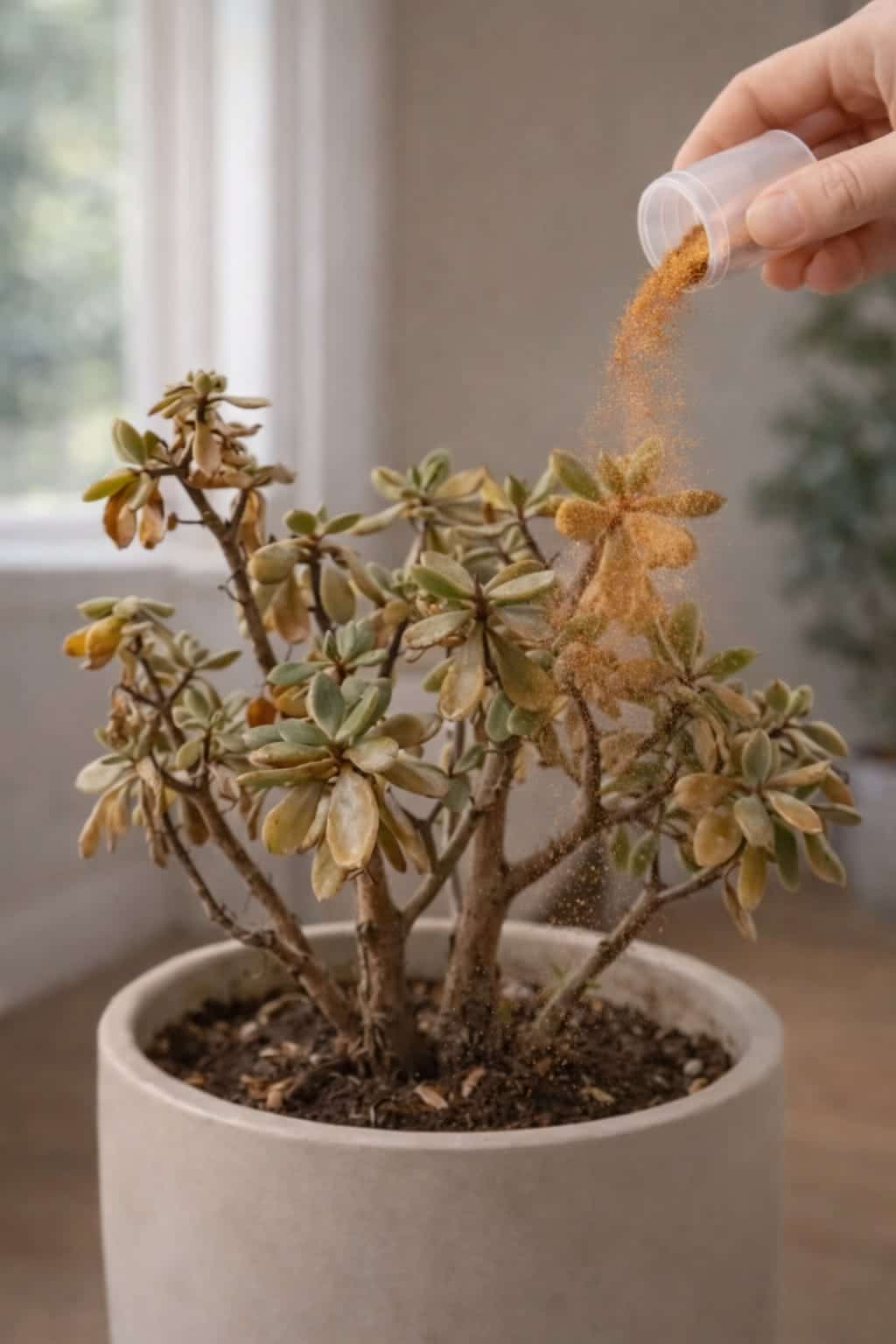
Jade plants are supposed to be easy. They are tough, attractive, and usually happy with very little fuss. But when a jade plant starts looking thin, tired, stretched, or slow‑growing, many people go searching for one simple fix.
That is why videos showing a brown powder sprinkled over the soil have become so popular.
It looks like a miracle trick: a struggling jade plant on one side, a healthier fuller plant on the other, and a sprinkle of “something” in between.
But what is that brown powder really doing? And does it actually help?
The truth is more practical than viral posts suggest. A brown powder can sometimes support a jade plant, but only if it is the right material and only if the plant’s real needs are also being corrected.
In this guide, we will uncover what that brown powder likely is, when it helps, when it harms, and — most importantly — the proven care habits that turn a struggling jade plant into a lush, compact, beautiful specimen.
What the Brown Powder Usually Is
In most plant videos, the brown powder is often one of these:
· Cinnamon powder – Fine, light brown, used for antifungal properties.
· Ground coffee or used coffee grounds – Dark brown, granular, smells like coffee.
· A mild organic fertilizer – Commercial granules, often labeled for succulents.
· Crushed compost or worm castings – Dark, earthy, rich in organic matter.
· A powdered pest treatment – Diatomaceous earth or similar.
Each one does something different, which is why copying random videos can be risky. A lot of people assume any brown powder means “plant food,” but that is not always true.
Let us look at each one.
Cinnamon Powder
Cinnamon is antifungal and mildly antibacterial. It is sometimes sprinkled on soil to prevent mold or on cut wounds to prevent rot. It does not feed the plant. It does not stimulate growth. It is not a fertilizer.
Used Coffee Grounds
Coffee grounds contain small amounts of nitrogen, potassium, and phosphorus. They also add organic matter. However, they can compact the soil surface, hold moisture, and attract fungus gnats if used too heavily. Jade plants prefer dry, airy soil — coffee grounds can work against that.
Organic Fertilizer Granules
A slow‑release succulent fertilizer (like 2‑7‑7 or 1‑1‑1) sprinkled on the soil can provide gentle nutrition over weeks or months. This is the most likely candidate for a beneficial brown powder — but only if used correctly.
Worm Castings
Worm castings are a gentle, nutrient‑rich soil amendment. They add beneficial microbes and trace minerals without burning roots. Sprinkling a thin layer on top and watering it in can support overall health.
Diatomaceous Earth
This fine, off‑white to brown powder is used to kill soft‑bodied pests like fungus gnats, thrips, and mealybugs. It works by dehydrating insects. It is not a fertilizer.
So, the “brown powder” could be helpful, useless, or even harmful depending on what it actually is and how it is applied.
Why People Use Powders on Jade Plants
Homeowners usually sprinkle something on jade plants for one of three reasons:
- To Support Weak Soil
If the soil is old and depleted (same pot for 2+ years), a light organic top dressing can sometimes add mild nutrition. Worm castings or a slow‑release succulent fertilizer are the best choices here.
- To Discourage Surface Issues
Mold on the soil surface, fungus gnats, or a musty smell can appear when soil stays too wet. Cinnamon or diatomaceous earth may help temporarily, but the real fix is better drainage and less water.
- To Help with Pests or Fungus Concerns
If the plant has mealybugs, scale, or fungus gnats, some people use diatomaceous earth or cinnamon as a first line of defense. These can help, but they are not a substitute for proper pest treatment.
That does not mean the powder is the real fix. Usually, it just becomes part of a bigger recovery process — and often, the recovery would have happened anyway once the plant received better light and less water.
The Real Reason Jade Plants Decline
A jade plant usually struggles because of one or more of these:
· Overwatering – The #1 killer. Soggy soil leads to root rot, yellow leaves, and leaf drop.
· Poor drainage – Pots without holes or soil that holds water.
· Low light – Jade plants need bright light to stay compact. Low light causes stretching (etiolation).
· Heavy, compact soil – Regular potting soil is too dense. Use cactus mix.
· Weak roots – From rot, old soil, or cold damage.
· Cold stress – Jade plants are not frost‑hardy. Temperatures below 50°F (10°C) cause damage.
· Long‑term neglect in exhausted soil – No nutrients left, soil becomes hydrophobic.
If those problems are not fixed, no powder will make a real difference.
That is why some people sprinkle something on the soil and see improvement — not because the powder is magical, but because they also start paying better attention to the plant. They water less. They move it to a brighter spot. They repot. The powder gets the credit, but the care changes did the work.
Can a Brown Powder Actually Help?
Yes, sometimes.
A light organic top dressing like worm castings or a mild succulent‑safe fertilizer can support healthier growth if the jade plant is otherwise in decent condition.
A drying support powder like cinnamon may help in very specific situations around the soil surface or after trimming damaged parts (to prevent rot on cut ends).
But a powder is never a substitute for:
· bright light
· fast‑draining soil
· careful watering (dry between waterings)
· healthy roots
That is what actually makes a jade plant thrive.
Continue to Page 2
Continue to page 2 for more details about this article and the key points many readers miss on the first page.