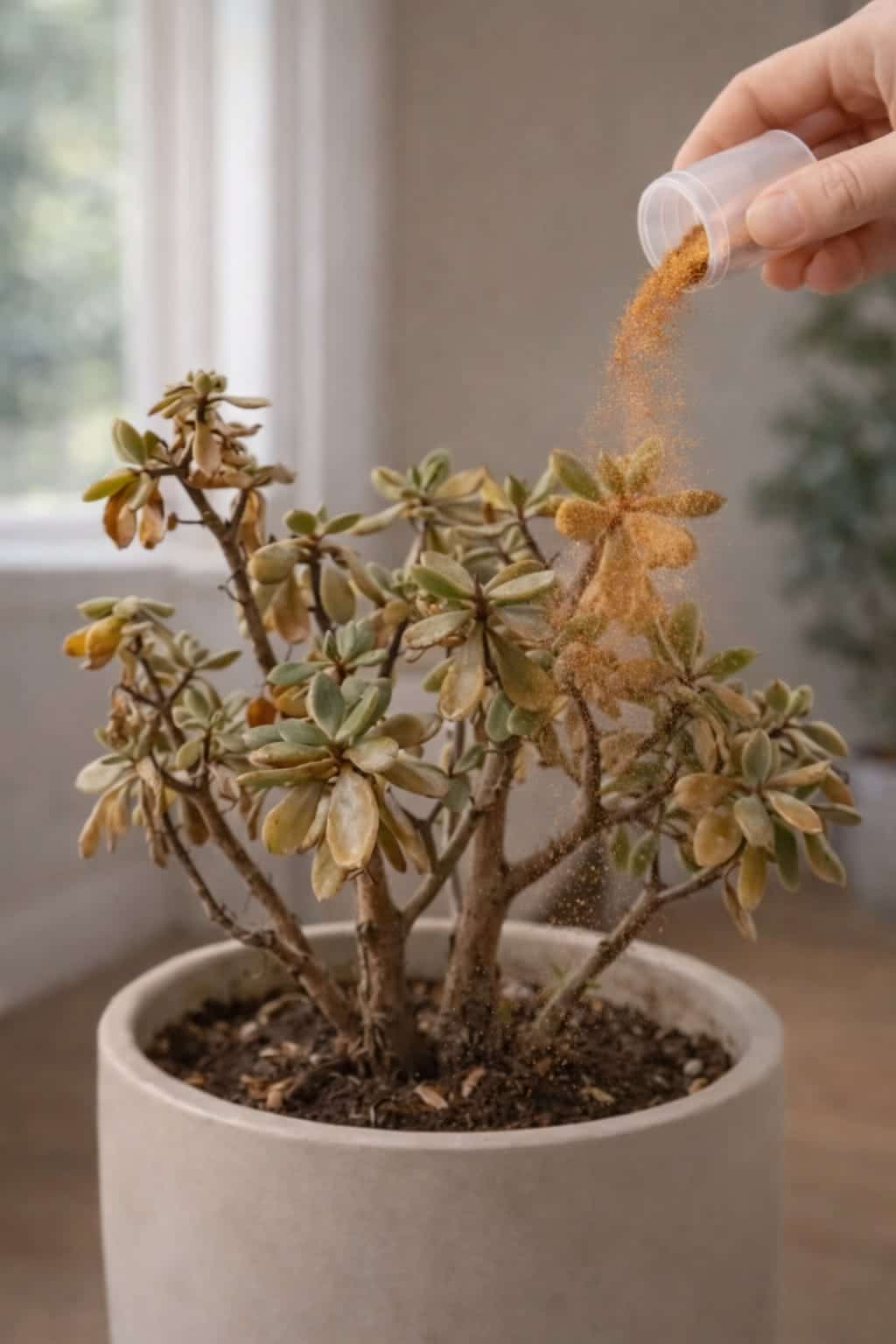
What Jade Plants Really Need Most
Let us focus on the proven, non‑negotiable care habits that turn a sad jade into a showpiece.
- Bright Light
Jade plants need much more light than many people give them. Without good light, they stretch, weaken, and lose that thick, compact look.
· Ideal: 4–6 hours of direct sun daily (south or west window).
· Acceptable: Very bright indirect light for 8–10 hours.
· Not enough: A dark corner or north window.
If your jade plant has long, leggy stems with widely spaced leaves, it is not getting enough light. Move it closer to a window or add a grow light.
- Dry Soil Between Waterings
This is the biggest rule. Jade plants are succulents. They store water in their thick leaves and stems. They hate staying wet.
· Water only when the soil is completely dry – stick your finger in. If dry at least 2 inches down, water.
· In most homes – water every 2–3 weeks in spring/summer, every 3–4 weeks in winter.
· Signs of overwatering – soft, yellow, or dropping leaves; mushy stems.
· Signs of underwatering – wrinkled, shriveled leaves (but this is rare).
When you water, do it thoroughly until it runs from the drainage holes. Then let the pot drain completely. Never let the plant sit in standing water.
- Fast‑Draining Soil
A succulent or cactus mix works much better than heavy regular potting soil.
· Best mix: Commercial cactus/succulent mix.
· DIY mix: 2 parts all‑purpose potting soil + 1 part perlite + 1 part coarse sand.
· Avoid: Regular potting soil alone, garden soil, or moisture‑control mixes.
Repot every 2–3 years to refresh the soil and check root health.
- Pots with Drainage Holes
If the pot traps moisture, the roots will eventually suffer. Terracotta pots are excellent because they breathe and wick away excess moisture. Plastic pots work if they have holes and you are careful with watering.
Never use a pot without drainage holes for a jade plant.
- Occasional Feeding (Gentle)
A light succulent fertilizer during the growing season (spring and summer) can help, but only in moderation.
· Best fertilizer: Balanced, water‑soluble succulent fertilizer (like 2‑7‑7 or 1‑1‑1) diluted to half strength.
· How often: Once every 4–6 weeks during spring/summer.
· Do not fertilize in fall and winter.
· Never fertilize dry soil – water first.
Overfeeding causes rapid, weak growth. Less is more.
When Sprinkling Something Can Go Wrong
This is where viral plant advice causes problems.
Sprinkling random powders onto a jade plant can backfire if:
· the powder holds too much moisture (coffee grounds, flour)
· it creates buildup on the soil (blocks water and air)
· it is used too often (salt buildup from fertilizers)
· the soil is already soggy (powder will not fix rot)
· the product is not actually meant for succulents
For example, coffee grounds are often overused. A thin layer is fine, but many people dump on thick layers that compact and hold moisture. That is the opposite of what a jade plant wants.
Cinnamon is safe but does not feed the plant. Diatomaceous earth is only for pests, not nutrition.
Signs You Have Used Too Much or the Wrong Powder
· White mold growing on the powder
· A sour or musty smell from the soil
· Fungus gnats suddenly appearing
· Leaves turning yellow or dropping
· The soil surface crusting over
If you see any of these, scrape off the powder and flush the soil with plain water.
What to Do If Your Jade Plant Looks Weak (Step‑by‑Step Rescue)
If your plant looks like the one in the image — thin, droopy, pale, or stressed — start with the basics. Do not reach for a powder first.
Step 1 – Check the Soil
Is it wet? Does it smell bad? Does water pool on top?
· If yes, remove the plant from the pot. Inspect roots.
· Healthy roots are firm and light tan. Rotten roots are brown, mushy, and smell.
· Cut away any rotten roots with clean scissors.
Step 2 – Repot into Better‑Draining Mix
If the soil is old, heavy, or waterlogged, repot into fresh cactus mix. Use a pot with drainage holes that is only 1–2 inches larger than the root ball.
Step 3 – Move to Brighter Light
Place the plant in a south or west window. If that is not possible, add a full‑spectrum grow light on for 10–12 hours daily.
Step 4 – Water Less Often
After repotting, wait at least a week before watering. Then water only when the soil is completely dry. When in doubt, wait another day.
Step 5 – Remove Damaged Parts
Cut off any leaves that are badly yellowed, shriveled, or mushy. Remove any stems that are soft or blackened. Use clean scissors.
Step 6 – Only Then Consider a Light Top Dressing
If the plant is recovering and you want to support it, sprinkle a thin layer of worm castings or a few slow‑release succulent fertilizer granules on the soil surface. Water in gently.
Do not use coffee grounds, cinnamon (unless for antifungal purposes), or random kitchen powders.
That order matters. Fix the environment first. Then add gentle support.
Signs Your Jade Plant Is Improving
If your jade plant is recovering, you may notice:
· firmer, thicker leaves (not soft or wrinkled)
· richer green color (maybe red edges on some varieties)
· stronger, upright stems (not drooping)
· compact new growth at the tips
· less leaf drop
· eventually, a woody trunk forming (maturity)
That is the real sign that the care routine is working — not the powder.
Best Natural Amendments for Jade Plants (If You Want to Sprinkle Something)
If you want to use a brown powder the right way, here are the safest options.
Worm Castings (Highly Recommended)
· What: Earthworm manure. Gentle, nutrient‑rich, full of beneficial microbes.
· How to use: Sprinkle 1–2 tablespoons on the soil surface of a 6‑inch pot. Gently work into the top inch. Water in.
· How often: Once every 2–3 months during growing season.
Slow‑Release Succulent Fertilizer
· What: Granules formulated for cacti and succulents (low nitrogen, higher phosphorus and potassium).
· How to use: Follow package directions. Usually ½ teaspoon per pot size.
· How often: Once at the beginning of spring and again in midsummer.
Cinnamon (Only for Specific Issues)
· What: Antifungal powder.
· How to use: Lightly dust on soil surface if you see mold. Also dust on cut stems after pruning to prevent rot.
· How often: Only as needed. Not a regular feed.
What to Avoid
· Used coffee grounds – Too moisture‑retentive, can acidify soil, attracts gnats.
· Epsom salt – Not a fertilizer; can cause salt buildup.
· Baking soda – Alters soil pH, damages roots.
· Flour or cornstarch – Feeds mold, no benefit.
· Ash – Too alkaline, burns roots.
Common Mistakes That Keep Jade Plants Weak
If your jade plant is not thriving, avoid these errors.
Overwatering
The most common mistake. Jade plants are drought‑tolerant. Err on the side of too dry.
Too Little Light
Leaves become pale, small, and spaced far apart. The plant stretches toward the light.
Wrong Soil
Regular potting soil stays wet too long. Always use cactus mix.
No Drainage
A pot without holes is a death sentence for succulents.
Overfeeding
Too much fertilizer causes weak, leggy growth and can burn roots.
Ignoring Pests
Mealybugs and scale love jade plants. Check under leaves and at stem joints.
Cold Drafts
Jade plants are sensitive to cold. Keep away from drafty windows in winter.
Frequently Asked Questions (Brown Powder on Jade Plants)
Can I use coffee grounds on my jade plant?
In very small amounts (1 teaspoon on a 6‑inch pot), mixed into the topsoil, coffee grounds are unlikely to harm. But they offer little benefit and can cause moisture problems. Worm castings or succulent fertilizer are better.
Is cinnamon good for jade plants?
Cinnamon is antifungal. It can help prevent rot on cut stems or suppress mild surface mold. It does not feed the plant. Do not use it as a regular soil amendment.
What is the best fertilizer for jade plants?
A balanced, water‑soluble succulent fertilizer (like 2‑7‑7 or 1‑1‑1) diluted to half strength, applied once a month in spring and summer. Or slow‑release granules for succulents.
Why are my jade plant leaves falling off?
Usually overwatering. Check soil moisture. Also possible: sudden temperature change, pests, or old age. If leaves are soft and yellow, overwatering. If wrinkled and dry, underwatering.
How do I make my jade plant bushy and compact?
Bright light is the #1 factor. Also, prune leggy stems back to a leaf node to encourage branching. Do not overwater or overfeed.
Can I use Epsom salt on my jade plant?
Not recommended. Epsom salt provides magnesium, but jade plants rarely need it. Excess can cause salt buildup and root damage.
How often should I repot a jade plant?
Every 2–3 years, or when roots are circling the pot. Use fresh cactus mix. Go up only one pot size.
Will sprinkling powder fix a jade plant with root rot?
No. Root rot requires immediate action: remove the plant, cut away rotten roots, repot in dry soil, and water sparingly. No powder will cure rot.
Final Thoughts
So why are homeowners sprinkling this brown powder on jade plants?
Because they want a simple fix for a plant that looks stressed. And sometimes the powder helps a little — especially if it is a gentle organic amendment like worm castings or a slow‑release succulent fertilizer.
But the real secret is not the powder itself.
It is giving the jade plant what it actually needs:
· more light (bright, direct or indirect)
· less water (let soil dry completely)
· better soil (cactus mix, fast draining)
· a pot with drainage holes
· healthy roots (check and repot if needed)
· gentle support, not overcare
That is what turns a tired, leggy, pale jade plant into a strong, compact, beautiful one again.
So before you reach for that brown powder, look at your plant. Feel the soil. Check the light. Adjust the basics first. Then, if you still want to use a gentle amendment, choose wisely and sprinkle lightly.
Your jade plant will thank you — with firm, glossy leaves and a shape that makes you smile every time you walk by.
Have you tried sprinkling something on your jade plant? Share your experience in the comments below. And if you found this guide helpful, save it for later or send it to a fellow succulent lover who needs some plant rescue truth.