Orchids are beautiful, elegant, and surprisingly resilient, but when they start looking weak, they can decline fast. Yellowing leaves, shriveled roots, dry stems, and fading blooms can make even a once‑gorgeous orchid look like it is beyond saving.
That is exactly why “simple orchid rescue tricks” spread so quickly online.
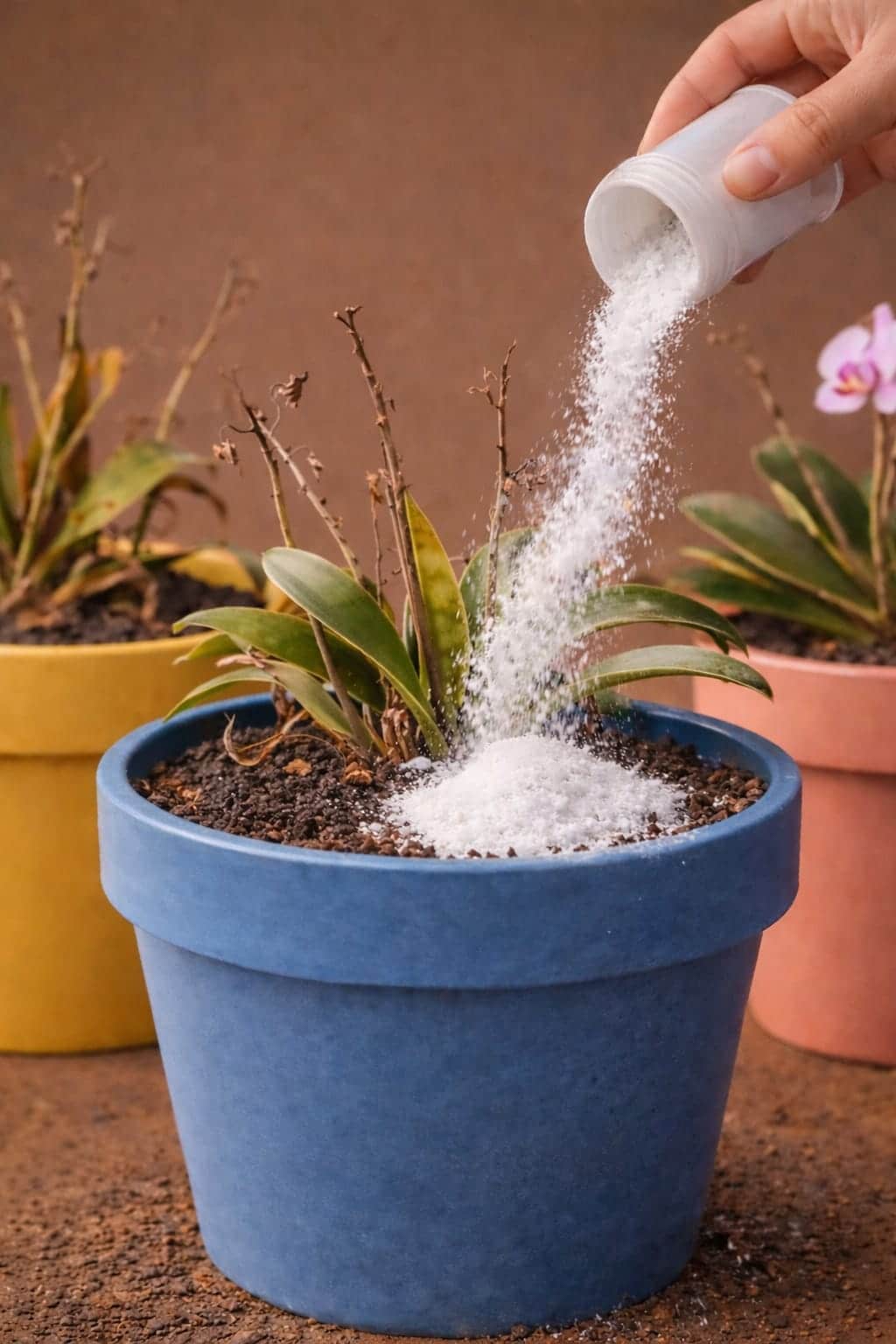
One of the most common ones shows a white powder being sprinkled over the pot, with the promise that it helps weak orchids recover faster, grow stronger, and bloom again. It looks simple, cheap, and almost too easy.
But what is that white powder actually doing? And does it really help?
The answer is a little more realistic than viral posts suggest. In some situations, a white powder can support an orchid’s recovery — but only if the real cause of the weakness is also fixed.
In this guide, we will uncover what that white powder usually is, when it helps, when it harms, and — most importantly — the proven steps that actually bring a weak orchid back to life.
Why Orchids Start Looking Weak
Orchids rarely decline for no reason. When they look tired, limp, or unproductive, the problem usually begins at the roots. Unlike many houseplants, orchids (especially Phalaenopsis) are epiphytes — they grow on trees in nature. Their roots are adapted to open, airy conditions, not dense, wet potting soil.
The Most Common Causes of Weak Orchids
· Overwatering – The #1 killer. Soggy bark suffocates roots and leads to rot.
· Old, broken‑down bark – Bark decomposes over time, becoming compact and waterlogged.
· Poor drainage – Pots without holes or decorative pots that trap water.
· Low light – Orchids need bright indirect light to photosynthesize and store energy.
· Weak airflow around roots – Stagnant, humid conditions promote fungus and rot.
· Crown rot – Water trapped in the center of the plant causes deadly rot.
· Root damage after blooming – Many orchids are discarded after flowers fade, but they need care to rebuild.
· Nutrient imbalance – Too much fertilizer burns roots; too little weakens growth.
That means a weak orchid usually does not need a miracle trick. It needs healthier roots, better growing conditions, and gentler, smarter care.
What the White Powder Usually Is
In many plant videos, the white powder is often one of these:
· Cinnamon powder – Light tan to white‑ish brown, fine texture.
· Epsom salt – White, crystalline, dissolves in water.
· A powdered orchid fertilizer – Commercial product, often blue or white granules.
· A mild antifungal dust – Such as sulfur powder or rooting hormone powder.
· Baking soda – White, fine, sometimes used for mildew (less useful for orchids).
Each one has a different purpose, which is why blindly copying a video can be risky. The powder itself is not always the secret. Often, it just becomes part of a bigger recovery routine.
Let us break down the most common white powders.
Cinnamon Powder
Cinnamon is a natural antifungal and antibacterial agent. It does not feed the plant, but it can help protect cut surfaces from rot. Orchid growers often dust cinnamon on trimmed roots, cut flower spikes, or leaf wounds. It is not a fertilizer and will not green up leaves or promote blooming.
Epsom Salt (Magnesium Sulfate)
Epsom salt provides magnesium and sulfur. Magnesium is essential for chlorophyll production. If an orchid shows signs of magnesium deficiency (yellowing between leaf veins), a very diluted Epsom salt solution (1 teaspoon per gallon of water) applied once a month may help. But Epsom salt does not cure root rot or revive a dying orchid on its own.
Powdered Orchid Fertilizer
Some commercial orchid fertilizers come in powder form (e.g., 20‑20‑20 or 30‑10‑10). When diluted correctly, they provide balanced nutrition. Sprinkling dry powder directly onto the bark is not recommended — it can burn roots. Always dissolve in water first.
Antifungal or Rooting Powder
These are specialty products. Antifungal powders (like sulfur) are used to prevent rot on large cuts. Rooting hormone powder (often white or gray) encourages root growth on cuttings. They are not general orchid tonics.
Baking Soda
Baking soda is sometimes used to raise pH or treat powdery mildew on leaves. It is rarely helpful for weak orchids and can damage roots if overused.
So, the “white powder” could be helpful, useless, or even harmful depending on what it actually is and how it is applied.
Continue to Page 2
Continue to page 2 for more details about this article and the key points many readers miss on the first page.