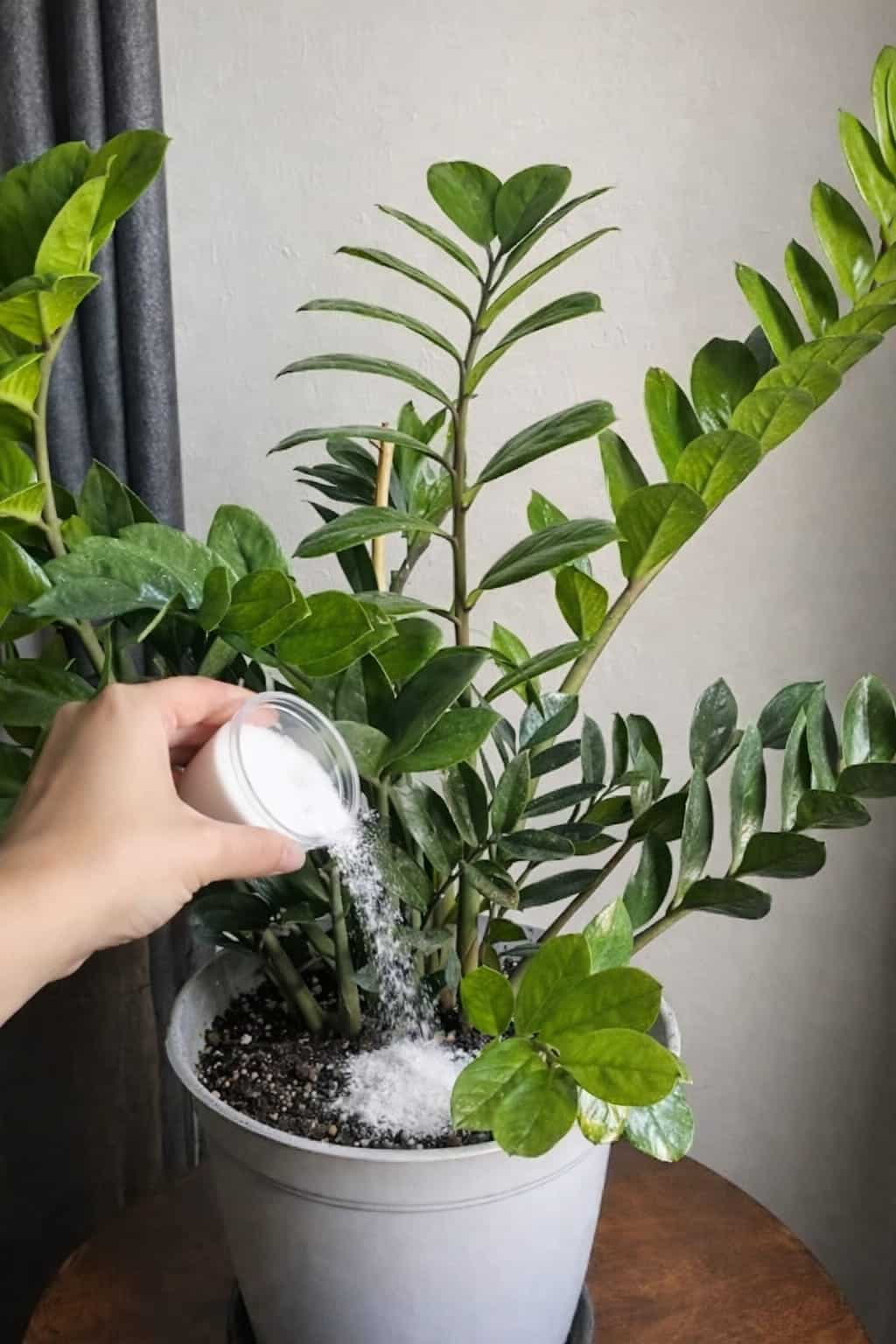
ZZ plants are famous for being low‑maintenance, glossy, and almost impossible to kill. They thrive on neglect, survive low light, and forgive missed waterings. But once you have one healthy plant, the next question is always the same: how do I make it multiply and get fuller?
That is why videos showing a white powder sprinkled into the pot get so much attention. It looks like a secret shortcut. A little powder, a little patience, and suddenly the pot is full of new shoots.
The truth is more practical. A white powder can sometimes support healthier growth, but ZZ plants multiply because their rhizomes and roots are healthy, not because of one magic ingredient alone.
In this guide, you will learn exactly how ZZ plants multiply, what that white powder likely is, when it helps, when it harms, and — most importantly — the proven care habits that turn a single ZZ plant into a lush, full, multiplying machine.
How ZZ Plants Actually Multiply
ZZ plants (Zamioculcas zamiifolia) grow from underground rhizomes. These are thick, potato‑like storage organs beneath the soil. New stems — each with those iconic glossy leaves — emerge from these rhizomes. Over time, a healthy rhizome system sends up multiple shoots, filling the pot.
That means if you want more stems in the same pot, your real goal is to encourage:
· Strong rhizomes – Firm, plump, and free from rot.
· Healthy roots – White or tan, not brown or mushy.
· Bright enough light – Energy for growth.
· Proper watering – Not too much, not too little.
· Steady growth during the active season – Spring and summer.
When those conditions are right, the plant is much more likely to produce new shoots. Multiplication is not random luck — it is the result of consistent, appropriate care.
What the “White Powder” Usually Is
In videos like this, the white powder is often one of these:
· A powdered fertilizer (balanced houseplant food, often blue‑white)
· Epsom salt (magnesium sulfate, crystalline)
· Crushed eggshells (calcium carbonate, slow release)
· Rooting booster powder (hormone powder for cuttings)
· Baking soda or other household powder (not recommended)
If it is a light fertilizer or mineral supplement, it may help a little. If it is something unsuitable or overused, it can do nothing — or even stress the plant.
Let us break down each one.
Powdered Fertilizer
Some commercial fertilizers come in powder form. When diluted correctly in water, they provide balanced nutrition. However, sprinkling dry fertilizer powder directly onto the soil can burn roots. Most powdered fertilizers need to be dissolved first. If a video shows someone sprinkling dry white powder and then watering it in, that might be a slow‑release formula — but always check the label.
Epsom Salt
Epsom salt provides magnesium and sulfur. Magnesium is essential for chlorophyll production. If your ZZ plant shows signs of magnesium deficiency (yellowing between leaf veins on older leaves), a diluted Epsom salt solution (1 teaspoon per gallon of water) once a month may help. But Epsom salt is not a general fertilizer and does not directly cause multiplication.
Crushed Eggshells
Eggshells add calcium to the soil, but they break down very slowly. They are not an instant boost for multiplication. A light sprinkle on the soil surface is harmless but unlikely to produce visible results.
Rooting Hormone Powder
This is used for propagating cuttings, not for encouraging a mature plant to multiply. Dusting the cut end of a stem or leaf cutting can help it root faster. It is not meant to be sprinkled on the soil of an established plant.
Baking Soda or Other Powders
Baking soda, flour, or other household powders have no place in ZZ plant care. They can alter soil pH, attract pests, or create a crust that blocks water and air.
So, before you sprinkle any white powder, know exactly what it is and whether it is appropriate for your plant.
Continue to Page 2
Continue to page 2 for more details about this article and the key points many readers miss on the first page.