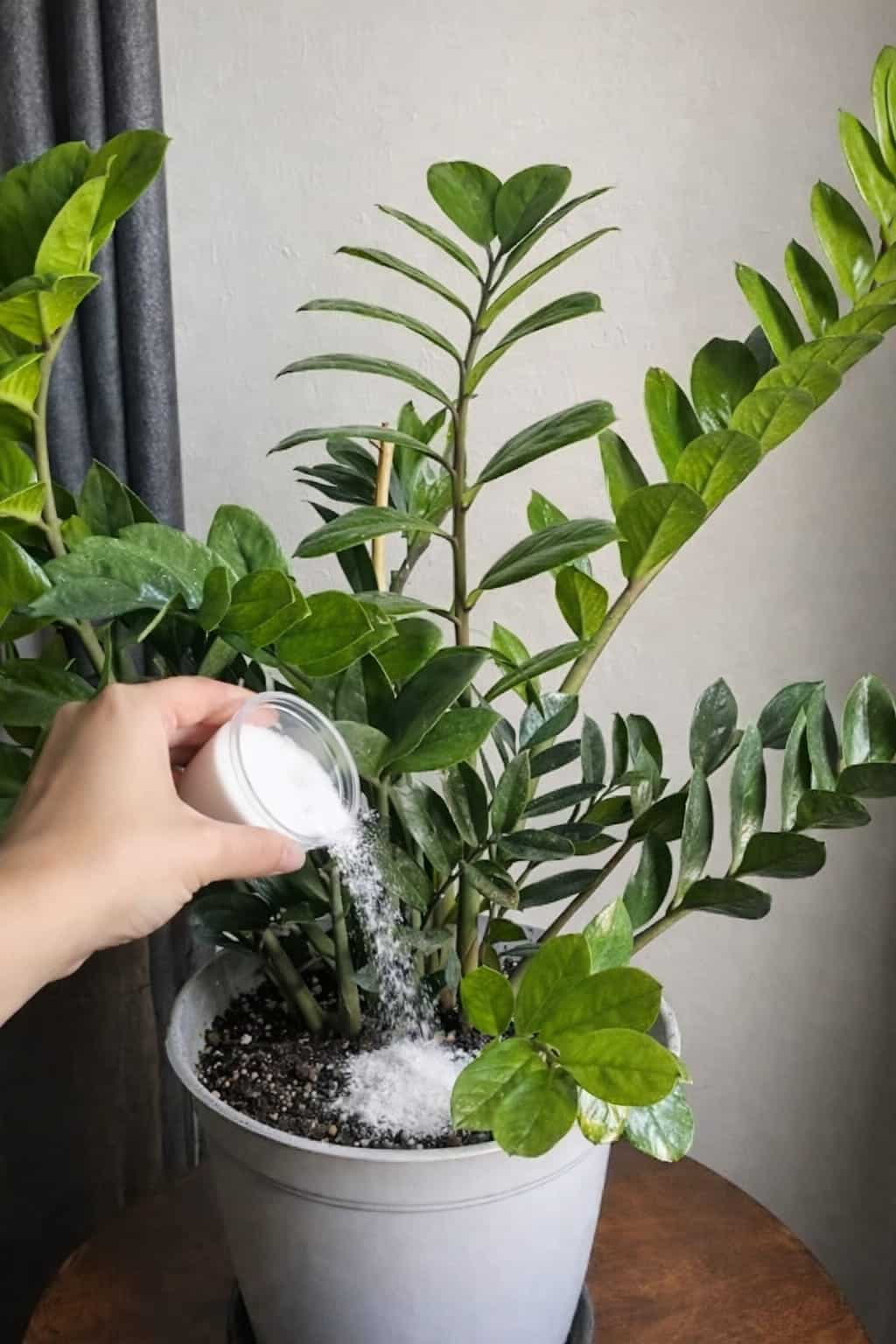
Can White Powder Help a ZZ Plant Multiply?
Sometimes, a little. But only if the plant is already healthy enough to respond.
A light feeding supplement may help by supporting:
· greener leaves (from balanced nutrients)
· stronger roots (from proper mineral balance)
· more stored energy in the rhizomes
· better overall vigor
But it does not directly force multiplication. ZZ plants multiply when they feel stable and strong, not when they are overloaded with random powders. Think of a gentle supplement as a supporting actor — the star of the show is still good light, proper watering, and healthy rhizomes.
The Real Secret to Getting More ZZ Shoots
If you want your ZZ plant to send up new shoots and fill the pot, focus on these five proven factors.
- Give It Brighter Indirect Light
ZZ plants survive in low light, but they grow and multiply better in bright indirect light. More light means more energy for photosynthesis, which translates to stronger stems, better root activity, and a higher chance of new shoots.
· Ideal spot: Within 3–5 feet of an east or north window. A south or west window with a sheer curtain also works.
· How much: 10–12 hours of bright indirect light daily.
· Signs of too little light: Leggy growth, very slow growth, no new shoots for years.
· Signs of too much direct sun: Scorched, pale, or curling leaves.
If your ZZ plant has been in a dark corner for a long time, move it to a brighter spot. You may see new shoots within a few months.
- Let the Soil Dry Between Waterings
This is one of the biggest factors. ZZ plants hate sitting in wet soil. Their rhizomes store water, so they are extremely drought‑tolerant. Overwatering is the fastest way to cause root rot, which stops multiplication entirely.
· Water only when the soil is completely dry — stick your finger in. If it feels dry at least 2 inches down, water.
· In most homes: water every 2–3 weeks in spring/summer, every 4–6 weeks in fall/winter.
· Always use a pot with drainage holes and empty the saucer.
If the rhizomes stay soggy, the plant slows down and may rot instead of multiplying. A healthy dry cycle encourages the rhizomes to store energy and produce new shoots.
- Use Fast‑Draining Soil
A heavy, compact mix slows everything down. Rhizomes need oxygen as much as moisture. Use:
· Cactus or succulent potting mix – Commercial bag is fine.
· DIY mix: 2 parts all‑purpose potting soil + 1 part perlite + 1 part coarse sand.
· Avoid: Regular potting soil alone, garden soil, or moisture‑control mixes.
Repot every 2–3 years or when the soil becomes compacted. Fresh soil also provides trace nutrients.
- Keep It in a Pot That Is Not Too Large
A slightly snug pot often helps ZZ plants focus their energy better. A pot that is too big can stay wet too long, delaying multiplication. The plant will first fill the extra space with roots before sending up new shoots.
· Choose a pot only 1–2 inches wider than the root ball.
· Do not repot too often — every 2–3 years is plenty.
· If roots are cracking the pot or circling densely, it is time to repot, but go up only one size.
A snug pot signals to the plant that it is running out of space, which can encourage pup (shoot) production as a survival strategy.
- Feed Lightly During Active Growth
Spring and summer are the best times for any feeding support. A mild fertilizer works much better than repeated strong treatments.
· Use a balanced liquid fertilizer (like 10‑10‑10 or 20‑20‑20) diluted to half strength.
· Feed once every 6–8 weeks during spring and summer.
· Do not fertilize in fall and winter.
· Never fertilize dry soil — water first.
Overfeeding (especially with high‑nitrogen fertilizer) can cause weak, floppy growth and may actually reduce rhizome activity. Gentle support is best.
If You Want to Use a White Powder Safely
If you decide to use a white powder, do it wisely.
For Powdered Fertilizer
· Dissolve in water according to label directions. Do not sprinkle dry.
· Use at half strength for ZZ plants.
· Apply during regular watering every 6–8 weeks in spring/summer.
For Epsom Salt
· Dissolve 1 teaspoon per gallon of water.
· Use once a month for 2–3 months if you suspect magnesium deficiency.
· Do not use more than that; excess can cause salt buildup.
For Crushed Eggshells
· Grind eggshells into a fine powder.
· Sprinkle a thin layer on the soil surface and gently mix into the top inch.
· It will break down slowly — this is a long‑term soil amendment, not a quick multiplication booster.
What to Avoid
· Baking soda – Alters soil pH, can harm roots.
· Flour or cornstarch – Feeds mold, no benefit.
· Unlabeled mystery powders – Skip them.
· Sprinkling any powder on wet, compacted soil – It will turn to paste and cause problems.
Better Than the Powder: Proven Multiplication Methods
If your goal is truly to multiply a ZZ plant, the most reliable methods are not powders at all.
Method 1: Division
When repotting, separate healthy rhizome clumps into more sections.
- Unpot the ZZ plant and gently shake off soil.
- Identify natural divisions — clumps of rhizomes with their own stems and roots.
- Use a clean, sharp knife to cut between clumps.
- Let cut surfaces dry for a few hours (callus over).
- Repot each division into its own pot with fresh cactus mix.
- Water lightly once, then wait for the soil to dry before watering again.
Division is the fastest way to turn one ZZ plant into several.
Method 2: Propagation from Stems or Leaves
This is slower, but it works. A rooted cutting eventually forms its own rhizome.
· Stem cuttings: Cut a healthy stem with several leaves. Place the cut end in water or directly into moist cactus mix. Roots appear in 4–6 weeks. A new rhizome forms after several months.
· Leaf cuttings: Cut a single leaf with a small piece of stem (petiole). Place in moist soil. Roots and a tiny rhizome will form over many months — patience required.
Method 3: Let the Main Plant Mature
A strong, established plant naturally starts producing more shoots over time. If your ZZ plant is still young (under 2–3 years old), it may not multiply yet. Give it good light, proper watering, and time.
Signs Your ZZ Plant Is Getting Ready to Multiply
Watch for these positive signs:
· Rich, dark green leaves (not pale or yellow)
· Firm, upright stems (not drooping or soft)
· Active, light‑green new shoots emerging from the soil
· A fuller base (more stems than before)
· Steady growth during warm months
These are better signs than any powder trick. If you see new shoots, your care routine is working.
Common Mistakes That Stop Multiplication
Avoid these if you want more ZZ growth:
· Overwatering – The #1 killer. Soggy soil = rot, not shoots.
· Heavy, compact soil – Suffocates rhizomes.
· Very low light – The plant survives but does not multiply.
· Overfeeding – Too much fertilizer causes weak growth.
· Repotting too often – Constant disturbance stresses the plant.
· Using random kitchen powders – Baking soda, flour, etc., have no benefit.
· A pot that is too large – The plant focuses on filling space with roots, not shoots.
Most ZZ problems start below the soil. If you are not seeing new shoots, check the rhizomes first.
Frequently Asked Questions (ZZ Plant Multiplication)
How long does it take for a ZZ plant to multiply?
It depends on conditions. In bright light with proper care, you may see new shoots every few months. In low light, it may take a year or more. Young plants multiply slower than mature ones.
Can I use Epsom salt to make my ZZ plant multiply?
Epsom salt provides magnesium. If your plant has a deficiency, correcting it may improve overall health, which could indirectly support multiplication. But Epsom salt is not a direct multiplication trigger.
Is cinnamon good for ZZ plants?
Cinnamon is antifungal. It can be dusted on cut rhizomes during division to prevent rot. It does not feed the plant or stimulate multiplication.
Why does my ZZ plant have no new shoots even though it looks healthy?
Most likely not enough light. Move it to a brighter spot. Also check that the pot is not too large and that you are not overwatering.
Can I use coffee grounds on my ZZ plant?
Not recommended. Coffee grounds can compact the soil, hold moisture, and acidify the mix — all things ZZ plants dislike.
How do I know if my ZZ plant’s rhizomes are healthy?
Healthy rhizomes are firm, plump, and light brown to white inside. Unhealthy rhizomes are soft, mushy, black, or shriveled.
Can I propagate a ZZ plant from a single leaf?
Yes, but it takes patience. Place a leaf with its petiole in moist soil. Keep it lightly moist. A small rhizome and roots will form in 4–6 months. New shoots may take another 6–12 months.
What is the best fertilizer for ZZ plant multiplication?
A balanced liquid fertilizer (10‑10‑10) diluted to half strength, applied every 6–8 weeks during spring and summer. Organic options include diluted worm casting tea.
Final Thoughts
If you want your ZZ plant to multiply, do not depend on the white powder alone.
The real formula is:
· bright indirect light
· healthy rhizomes (check them during repotting)
· dry‑down between waterings (let soil dry completely)
· airy, fast‑draining soil
· light feeding only when needed (spring/summer)
· patience (multiplication takes time)
That is what makes a ZZ plant send up more shoots and fill the pot over time.
Because the real secret is not the powder. It is creating the kind of conditions that make the plant want to grow — strong, steady, and full of life.
So before you reach for that white powder, check your light. Feel your soil. Look at your pot. Then, if you want to use a gentle, appropriate supplement, do so wisely. But never forget: a happy ZZ plant multiplies on its own, without magic.
Give it what it needs, and it will reward you with shoot after shoot, until that once‑lonely plant becomes a lush, thriving centerpiece.
Have you successfully multiplied your ZZ plant? Share your experience in the comments below. And if you found this guide helpful, save it for later or send it to a friend who wants a fuller, bushier ZZ plant.