Anthuriums are some of the most eye‑catching houseplants you can grow. Their glossy heart‑shaped leaves and bright, waxy flowers — often in vivid red, pink, white, or even purple — can make any room feel more elegant and alive. But if you have ever owned one, you already know the challenge: sometimes the plant stays green… but the blooms slow down.
That is when people start looking for simple home tricks to make anthuriums flower more. One of the most common ideas is using homemade organic fertilizers made from kitchen ingredients. And while some of these can help, the truth is a little more balanced than viral posts suggest.
A homemade fertilizer can support blooming, but it only works well when the plant is already getting the basics right: light, drainage, careful watering, and healthy roots.
In this guide, you will learn why anthuriums stop blooming, which homemade organic fertilizers actually make sense, how to apply them safely, and — most importantly — the proven care habits that will keep your anthurium producing those gorgeous, long‑lasting flowers.
Why Anthuriums Stop Blooming Well
Anthuriums are not as fussy as orchids, but they are not as tough as snake plants. When they stop flowering, there is almost always a clear reason.
The Most Common Causes Are:
· Not enough bright indirect light – Anthuriums need good light to produce energy for flowers.
· Overwatering – Soggy soil leads to root stress, and stressed roots do not support blooms.
· Heavy soil that stays wet too long – Anthuriums need a loose, airy mix, not dense potting soil.
· Low humidity – Dry air can cause flowers to fade quickly or fail to form.
· Poor feeding routine – Anthuriums that bloom regularly need gentle, consistent nutrition.
· Weak or crowded roots – If the pot is too small or roots are damaged, flowering suffers.
· Temperature stress – Cold drafts or sudden temperature changes can stop bud development.
A lot of people think more water means more flowers. For anthuriums, that is often the opposite. They like moisture, but they hate soggy roots. Overwatering is one of the fastest ways to kill blooms.
The Truth About Lemon and Other Kitchen Tricks
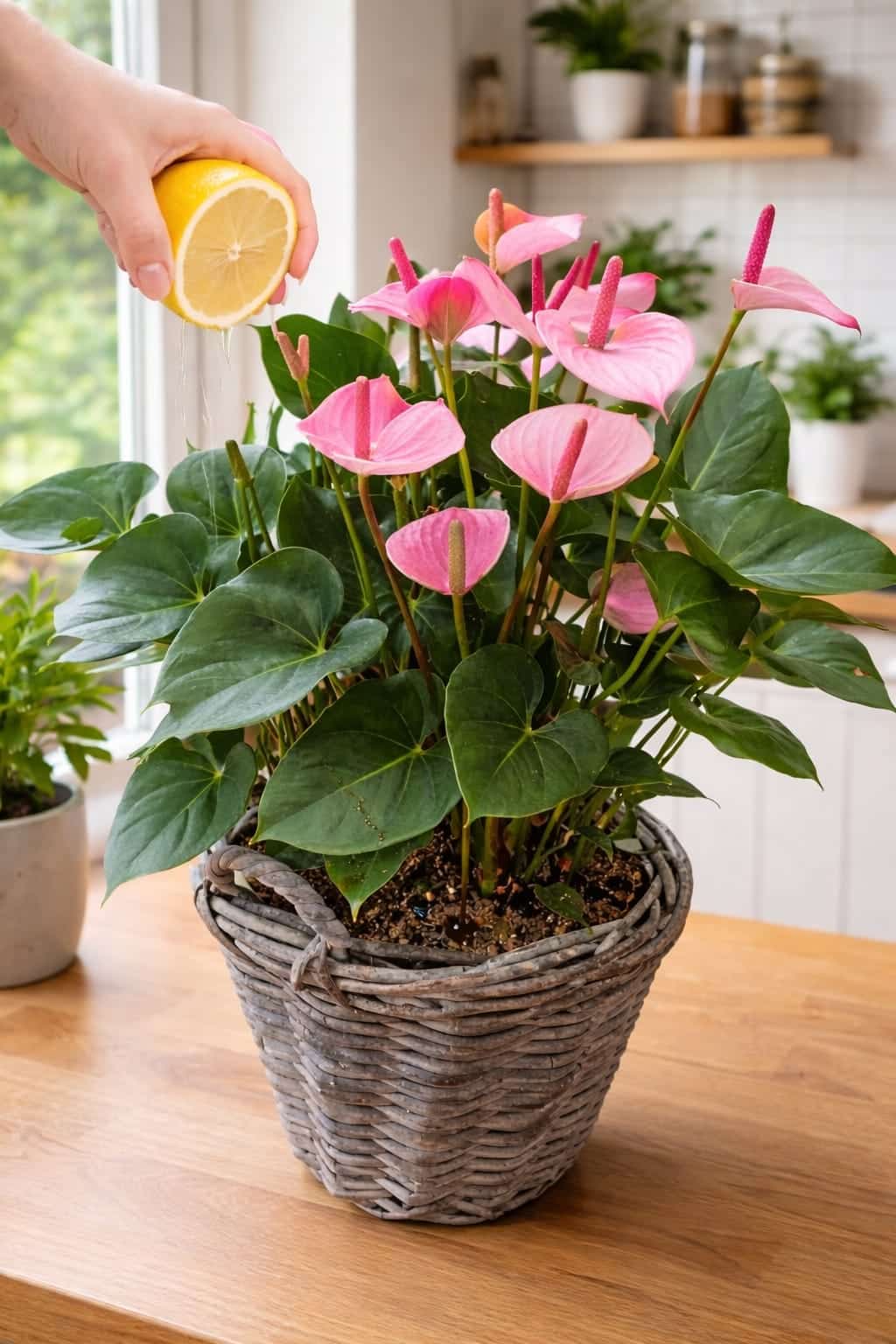
In images like the one associated with this topic, you often see lemon juice being squeezed near the plant. It looks dramatic, but pure lemon juice is not the best way to fertilize an anthurium. It is highly acidic and can irritate the soil environment if used too strongly or too often.
Lemon juice can temporarily lower soil pH, which might be helpful if your water is very alkaline. But anthuriums prefer a slightly acidic to neutral pH (5.5–6.5). A few drops of lemon juice in a gallon of water used occasionally is different from pouring concentrated juice directly into the pot.
So if you want your anthurium to bloom more, skip direct lemon juice and use gentler homemade organic methods instead. The risk of root burn and pH shock is not worth the minimal benefit.
What Actually Helps Anthuriums Bloom More
Before talking about fertilizer, you need to get the basics right. These are the real bloom triggers. Without them, no homemade tonic will make a difference.
- Bright Indirect Light
Anthuriums need good light to flower well. A bright spot near a window, out of harsh direct sun, is ideal.
· Best placement: East or north window, or a south/west window with a sheer curtain.
· How much: 10–12 hours of bright indirect light daily.
· Signs of too little light: Dark green leaves, long stems reaching toward light, no blooms.
· Signs of too much direct sun: Scorched, yellow, or brown leaf edges.
If your anthurium has not bloomed in months, move it closer to a light source. You may see new flower buds within 4–6 weeks.
- Loose, Airy Soil
Anthuriums are epiphytes in nature — they grow on trees, not in heavy ground soil. They need a chunky, well‑draining mix.
· Best mix: Orchid bark + perlite + a small amount of peat or coco coir.
· DIY recipe: 2 parts orchid bark, 1 part perlite, 1 part peat moss.
· Avoid: Regular potting soil alone. It is too dense and holds too much water.
Repot every 1–2 years to refresh the mix and prevent compaction.
- Even Moisture (Not Soggy)
Anthuriums like the soil to be lightly moist but never waterlogged. The goal is consistent moisture without saturation.
· Water when: The top inch of soil feels dry to the touch.
· How to water: Water thoroughly until it runs from the drainage holes, then empty the saucer.
· In winter: Reduce watering slightly, but do not let the plant dry out completely.
If you struggle with watering, use a pot with drainage holes and a mix that drains quickly.
- Warmth and Humidity
Anthuriums are tropical plants. They love a warm, slightly humid environment. Dry air can reduce bloom quality and cause flower buds to abort.
· Ideal temperature: 65–80°F (18–27°C). Avoid cold drafts and sudden drops below 60°F.
· Humidity: 60–80% is ideal. In dry homes, use a humidity tray, group plants together, or run a small humidifier.
· Signs of low humidity: Brown leaf tips, faded flowers, slow growth.
- Light Feeding
Anthuriums that bloom regularly need gentle nutrition. This is where homemade organic fertilizers can help — but only as a supplement, not a replacement for good care.
Homemade Organic Fertilizers That Make More Sense
Forget the lemon juice. These three homemade options are safer, gentler, and more effective for supporting anthurium blooms.
- Banana Peel Water (Potassium Boost)
Banana peels contain potassium, which is associated with flowering support, root health, and overall plant vigor.
How to make it:
· Cut 1 banana peel into small pieces.
· Soak in 1 liter (4 cups) of water for 24 to 48 hours.
· Strain out the peel pieces.
· Use the liquid within 2 days.
How to use it:
· Dilute 1 part banana water with 2 parts fresh water.
· Apply to the soil (not on leaves) once every 2–4 weeks during spring and summer.
· Use it lightly — a few tablespoons for a small pot, up to ½ cup for a larger pot.
Note: Banana water can ferment and smell if left too long. Always make a fresh batch.
- Rice Water (Trace Minerals)
Diluted rice water is a popular gentle plant tonic. It contains trace minerals, starches, and small amounts of nitrogen, phosphorus, and potassium.
How to make it:
· Rinse uncooked rice in water. Save the cloudy white water.
· Or soak rice in water for 30 minutes and strain.
· Do not use salted or seasoned rice water.
How to use it:
· Dilute 1 part rice water with 1 part fresh water.
· Apply to the soil every 2–3 weeks during active growth.
· Use the same day — do not store.
Rice water is very mild and unlikely to burn roots. It is a good choice for beginners.
- Compost Tea (Microbial Boost)
A weak compost tea can give a mild organic boost by adding beneficial microbes and trace nutrients. This is better for more experienced plant owners because too‑strong organic tea can overwhelm indoor pots.
Simple method:
· Place a small amount (¼ cup) of finished, high‑quality compost in a cloth bag or old stocking.
· Steep in 1 gallon of water for 24 hours, stirring occasionally.
· Remove the bag.
· Dilute the tea further (1 part tea to 3 parts water).
How to use it:
· Apply to the soil once a month during spring and summer.
· Do not use compost tea that smells bad or has visible mold.
Compost tea is potent. Start with a very weak dilution and observe your plant.
Continue to Page 2
Continue to page 2 for more details about this article and the key points many readers miss on the first page.