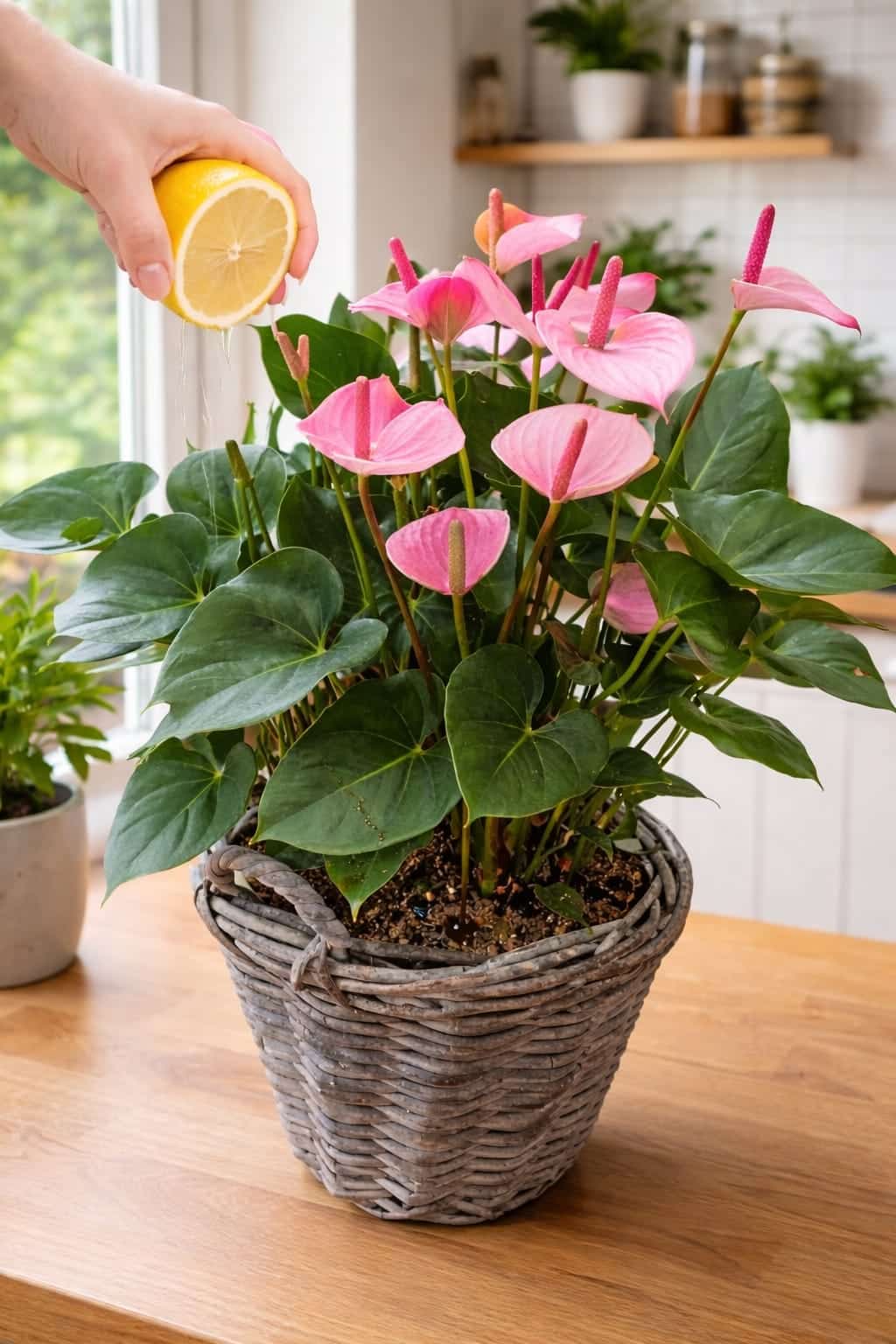
How to Apply Homemade Fertilizer Safely
This is the most important part. Improper use of homemade fertilizers can harm your anthurium.
Golden Rules:
· Apply only to the soil — never pour on leaves, flowers, or the crown (center of the plant).
· Use small amounts — a few tablespoons for a small pot, up to ½ cup for a large pot.
· Never apply to already soggy soil — wait until the top inch is dry.
· Do not use strong concentrations — always dilute more than you think you need.
· Stop if the soil starts smelling sour — that indicates fermentation or rot.
Signs You Have Overdone It:
· White mold on the soil surface
· A foul, rotten smell from the pot
· Fungus gnats appearing
· Leaves turning yellow or brown at the edges
· No new growth or blooms after several weeks
If you see any of these, stop all homemade fertilizers. Flush the soil with plain water and let it dry out before resuming normal care.
Best Feeding Schedule for Anthuriums
A safe routine is:
· Once every 2 to 4 weeks during active growth (spring and summer)
· Less often in cooler months (fall and winter — once every 6–8 weeks or not at all)
· Only when the plant looks actively growing and healthy
Do not feed a stressed or newly repotted anthurium. Wait 4–6 weeks for the roots to settle.
Sample Schedule:
Month Action
March (early spring) Begin feeding every 2–3 weeks with diluted banana water or rice water.
April – August Continue every 2–3 weeks. Alternate between different homemade tonics if desired.
September Reduce to once a month.
October – February Stop feeding or feed very lightly (once every 6–8 weeks) only if the plant is actively growing.
Homemade fertilizer should support the plant, not become the main care routine. Light, water, and humidity are far more important.
Signs Your Anthurium Is Responding Well
If your plant likes its conditions and your gentle feeding routine, you may notice:
· deeper green, glossy leaves (not pale or yellow)
· stronger, thicker stems
· new flower buds forming at the base of older leaves
· longer‑lasting colorful blooms (weeks instead of days)
· a fuller, healthier overall look
These are the signs that the routine is working. The blooms should appear more frequently — anthuriums can flower several times a year under good conditions.
Common Mistakes to Avoid
If you want more blooms, avoid these common errors.
Using Pure Lemon Juice Directly
Highly acidic. Can burn roots and shock the plant. If you want to use lemon, add a few drops to a gallon of water, not straight into the pot.
Overwatering
Soggy soil = root stress = no blooms. Anthuriums need moisture, not mud.
Keeping the Plant in Low Light
Low light = low energy = no flowers. Move it closer to a window.
Using Heavy Soil
Dense soil suffocates roots. Always use a chunky, airy mix.
Overfeeding with Homemade Mixtures
More is not better. Too much organic material can rot, smell, and attract pests.
Letting Water Sit Around the Roots
Always empty the saucer after watering. Stagnant water causes root rot.
Ignoring Humidity
Dry air leads to brown leaf tips and poor flower development. Use a humidifier or pebble tray.
Repotting Too Often
Anthuriums like to be slightly root‑bound. Repot only every 1–2 years or when roots are visibly crowded.
A Complete Anthurium Care Routine for Maximum Blooms
Here is a simple weekly and seasonal plan to keep your anthurium flowering.
Daily / Weekly
· Check soil moisture. Water when the top inch is dry.
· Wipe leaves with a damp cloth to remove dust.
· Check for pests (aphids, mealybugs, spider mites).
· Ensure the plant is not in a cold draft or near a heater.
Monthly
· Rotate the pot for even light exposure.
· If using homemade fertilizer, apply according to schedule.
· Remove any yellow or dead leaves.
Seasonal
Spring & Summer (Active growth)
· Bright indirect light (10–12 hours).
· Water when top inch is dry (usually every 5–7 days).
· Feed every 2–3 weeks with diluted homemade fertilizer.
· Maintain humidity (60–70%).
· Temperature 65–80°F.
Fall & Winter (Resting period)
· Still bright indirect light, but days are shorter — consider a grow light.
· Water less often (every 10–14 days).
· Reduce or stop feeding.
· Humidity can drop slightly, but keep above 50%.
· Do not repot.
Frequently Asked Questions (Anthurium Blooms)
How often do anthuriums bloom indoors?
With good care, anthuriums can bloom 2–3 times per year. Each flower (spathe) lasts 6–8 weeks. Some modern hybrids bloom almost continuously.
Why are my anthurium flowers turning green?
Flowers naturally age and turn green before fading. Also, too much fertilizer (especially high nitrogen) can cause green flowers. Reduce feeding.
Can I use coffee grounds on my anthurium?
Used sparingly, coffee grounds add organic matter and a little nitrogen. But they can compact the soil and make it acidic. A thin sprinkle mixed into the topsoil once every few months is safe. Do not overdo it.
Is Epsom salt good for anthurium blooms?
Epsom salt provides magnesium. If your plant shows signs of magnesium deficiency (yellowing between leaf veins), a diluted solution (1 teaspoon per gallon) once a month may help. It is not a direct bloom booster.
Why are my anthurium leaves turning yellow?
Usually overwatering. Check the soil. If it is wet, let it dry out. Also possible: too much direct sun, low humidity, or old age.
How do I get my anthurium to produce more flowers?
Focus on light first. Then ensure proper watering, humidity, and gentle feeding. A slightly root‑bound plant often blooms more than one in a huge pot.
Can I use eggshell water on anthuriums?
Eggshells provide calcium, but they break down very slowly. Crush them finely and sprinkle on soil. It will not cause instant blooms but is harmless in moderation.
What is the best commercial fertilizer for anthuriums?
A balanced liquid fertilizer (like 10‑10‑10 or 20‑20‑20) diluted to half strength, applied every 2–4 weeks during spring and summer. Look for formulas with micronutrients.
Final Thoughts
If you want your anthurium to bloom like never before, homemade organic fertilizer can help — but only as part of the full picture.
The real formula is:
· bright indirect light
· airy, well‑draining soil
· careful watering (even moisture, never soggy)
· warm, humid conditions
· gentle feeding (banana water, rice water, or weak compost tea)
Banana peel water, diluted rice water, or a weak compost tea can be nice supportive options. But the real magic comes from healthy roots and steady care.
Because when an anthurium is truly happy, it does not just survive. It keeps producing those glossy leaves and bold, beautiful blooms that make it one of the most stunning plants in the room.
So move it to a brighter spot. Water it correctly. Give it a little humidity. And once a month, offer a gentle homemade tonic. Then watch as your anthurium rewards you with flower after flower, month after month.
That is the secret. No harsh chemicals. No expensive products. Just smart, consistent care — and a little help from your kitchen.
Have you tried homemade fertilizer on your anthurium? Share your experience in the comments below. And if you found this guide helpful, save it for later or send it to a friend who wants bigger, brighter anthurium blooms.