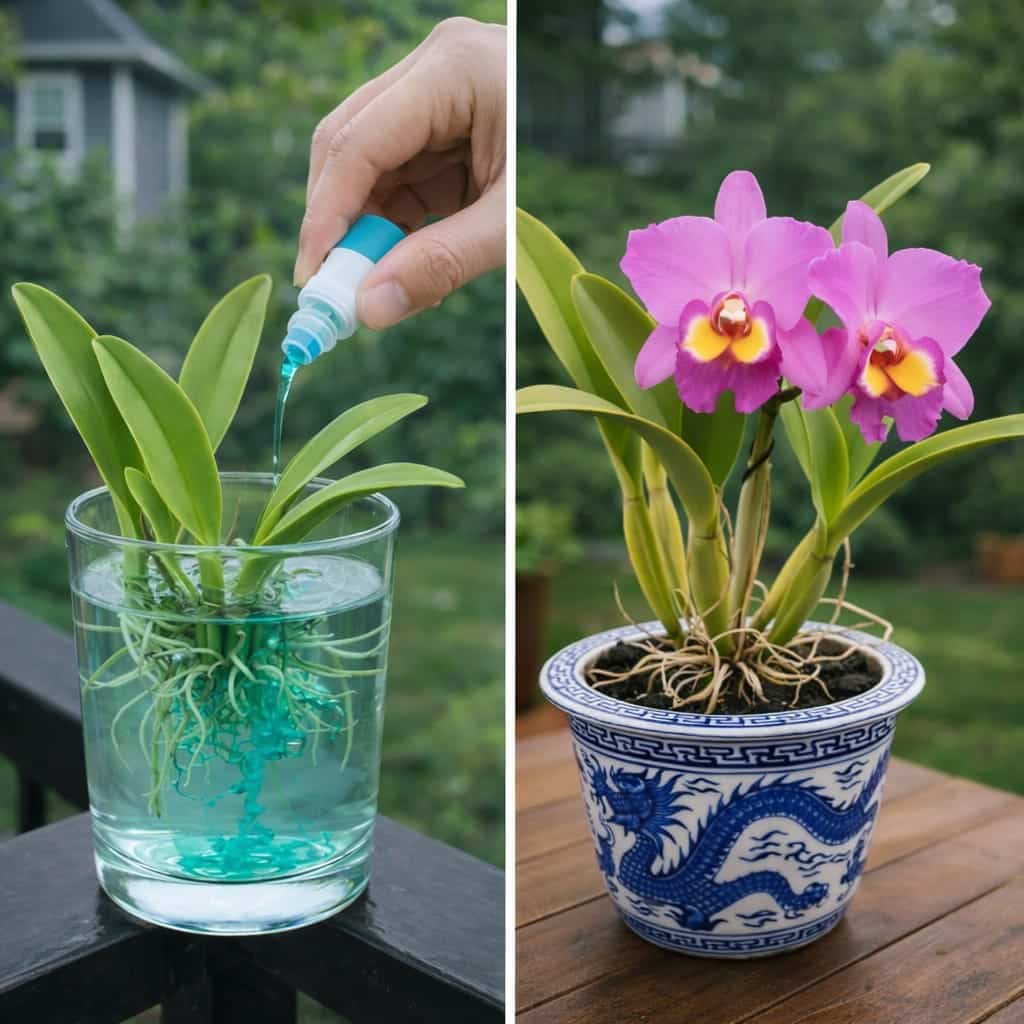
- Do Not Panic When Blooms Fall
One of the most common worries is when the flowers finally drop.
That does not mean the plant is dying.
It Usually Means:
· The blooming cycle ended naturally.
· The orchid is resting.
· It is preparing for future growth.
After Blooming, Focus On:
· Healthy leaves.
· Strong roots.
· Stable care.
· Patient recovery.
This stage is what builds the strength for the next blooming cycle.
- How to Encourage Reblooming
If you want your Phalaenopsis to bloom again, the plant needs to stay strong after flowering.
The Keys to Reblooming:
· Good light – bright indirect.
· Healthy roots – firm, green/silvery.
· Regular but careful watering – let bark approach dryness.
· Light feeding – during active growth.
· Slightly cooler nights – for a period (60–65°F / 15–18°C) to trigger spikes.
Sometimes an old flower spike can branch again, and sometimes the orchid produces a completely new spike. Both are normal.
Patience matters here. Orchids do not rush. New spikes can take 2–4 months to appear.
- Repot Only When Needed
Do not repot constantly. Orchids like stability.
Good Reasons to Repot:
· Bark has broken down (becomes mushy, holds too much water).
· Roots are crowded and the mix stays wet too long.
· The potting medium smells sour.
· Roots need a healthier environment.
Repotting Guidelines:
· Frequency: Every 1–2 years.
· Best time: Spring, after blooming.
· Medium: Fresh orchid bark mix – never dense potting soil.
· Pot: Clear plastic with drainage holes (monitor roots).
Pro tip: After repotting, wait 3–5 days before watering to allow cut roots to heal.
- Watch the Roots and Leaves for Clues
Your orchid will tell you how it feels.
Good Signs:
· Firm, medium‑green leaves.
· Active root tips (green or silvery).
· Silvery‑green healthy roots.
· Steady leaf growth.
· Future spike formation.
Warning Signs:
· Mushy, brown, or black roots – root rot.
· Yellowing leaves from the base (may be overwatering).
· Wrinkled, limp leaves – underwatering or root loss.
· Black spots in the crown – crown rot (often fatal).
· Sour‑smelling medium – old, broken‑down bark.
The faster you notice these, the easier it is to correct them.
How to Make the Blooms Last Longer
If your orchid is already flowering and you want to enjoy the blooms for as long as possible:
· Keep it in stable conditions – no moving around.
· Avoid hot vents and cold drafts.
· Water carefully – do not get water on flowers.
· Give bright indirect light.
· Do not fertilize while blooming.
A happy Phalaenopsis can hold flowers for many weeks, sometimes even months.
Phalaenopsis Orchid Care Summary Table
Factor Ideal Condition Why It Matters
Light Bright, indirect (east window) Energy for growth and blooms
Water Water when roots turn silvery; let drain Prevents root rot
Potting medium Airy orchid bark (not soil) Roots need oxygen
Humidity 40–60% (pebble tray or humidifier) Healthy leaves, longer blooms
Temperature Day 70–80°F, night 60–70°F Supports growth and spike formation
Feeding Diluted orchid fertilizer, weakly weekly (spring/summer) Gentle nutrient support
Repotting Every 1–2 years, when bark breaks down Fresh medium, healthy roots
After blooming Rest, maintain care, cool nights Prepares for reblooming
Troubleshooting – Common Phalaenopsis Problems & Solutions
Problem Likely Cause Solution
Yellow leaves at base Normal aging or overwatering Check roots; adjust watering.
Wrinkled, limp leaves Underwatering or root loss Water more consistently; check roots.
No blooms for over a year Insufficient light or no cool nights Move to brighter light; provide cooler nights (60–65°F).
Buds dropping before opening Dry air, temperature swings, or moving the plant Increase humidity; keep stable.
Black spots on leaves Sunburn or fungal infection Move out of direct sun; improve airflow.
Mushy, brown roots Overwatering, poor drainage Trim rotten roots; repot in fresh bark.
White fuzzy spots on bark Mold from excess moisture Scrape off; improve airflow; reduce watering.
Frequently Asked Questions (FAQs)
Q: How long do Phalaenopsis blooms last?
A: With good care, blooms can last 2–4 months. Some hybrids even longer.
Q: Should I cut the flower spike after blooming?
A: If the spike is green, you can cut it just above a node (the small bump) to encourage a secondary spike. If it turns brown and dry, cut it at the base.
Q: Can I use regular potting soil for orchids?
A: No – never. Use orchid bark mix. Soil suffocates orchid roots.
Q: Why are my orchid’s roots turning green?
A: That’s normal – orchid roots are silvery when dry and green when wet. It means they are healthy.
Q: How do I know if my orchid is getting too much light?
A: Leaves become yellow, reddish, or develop brown patches. Move to a spot with less direct sun.
Q: Is it better to water orchids with ice cubes?
A: Not recommended. Ice cubes can shock the roots. Use room‑temperature water.
Q: Can I put my Phalaenopsis outside in summer?
A: Yes – in a shady, protected spot (no direct sun). Bring inside before temperatures drop below 55°F.
Printable Phalaenopsis Orchid Care Checklist
☐ Place in bright, indirect light (east window).
☐ Use a clear pot with drainage holes.
☐ Fill with orchid bark mix – never soil.
☐ Water when roots turn silvery and bark is almost dry.
☐ Water thoroughly, then drain completely.
☐ Keep water out of the crown (center of leaves).
☐ Maintain humidity 40–60% (pebble tray or humidifier).
☐ Keep daytime temp 70–80°F, nighttime 60–70°F.
☐ Fertilize with diluted orchid fertilizer every 1–2 weeks in spring/summer.
☐ Stop fertilizing in fall/winter.
☐ After blooms fade, rest the plant – maintain good light and watering.
☐ Repot every 1–2 years when bark breaks down.
☐ Watch for root rot – trim mushy roots immediately.
☐ Be patient – reblooming takes time (2–4 months for new spikes).
Final Thoughts – Steady Care, Stunning Blooms
If you want your Phalaenopsis orchid to bloom beautifully for months, the formula is actually simple:
· Bright indirect light – east window is ideal.
· Airy roots – orchid bark, not soil.
· Careful watering – let roots dry slightly between waterings.
· Moderate humidity – pebble tray or humidifier.
· Light feeding – diluted fertilizer during active growth.
· Patience between bloom cycles.
That is what makes the difference.
Because the secret to a stunning orchid is not a dramatic trick.
👉 It is giving the plant the kind of steady care that lets it stay healthy, grow strong, and bloom again and again.
Now it’s your turn! Have you grown a Phalaenopsis orchid? What’s your best tip for keeping blooms long? Drop a comment below – I’d love to hear your experience.
And if you found this guide helpful, share it with a friend who loves orchids. Pin it for later, and subscribe to our newsletter for more practical plant care.
Stay bright, stay patient, and watch your orchid bloom. 🌸✨