Snake plants are some of the most reliable houseplants you can grow. They are bold, upright, modern, and surprisingly forgiving. Their sword-shaped leaves bring structure to a room, and their green patterns with yellow edges make them look decorative even when they are not flowering. A healthy snake plant can live for years with very little attention, which is why it is often recommended for beginners.
But many plant owners want more than survival. They want a fuller snake plant. They want new baby shoots pushing through the soil. They want the pot to look dense, strong, and full instead of having only a few leaves standing alone. When a snake plant sits in the same pot for months without producing pups, it can feel like the plant is frozen in time.
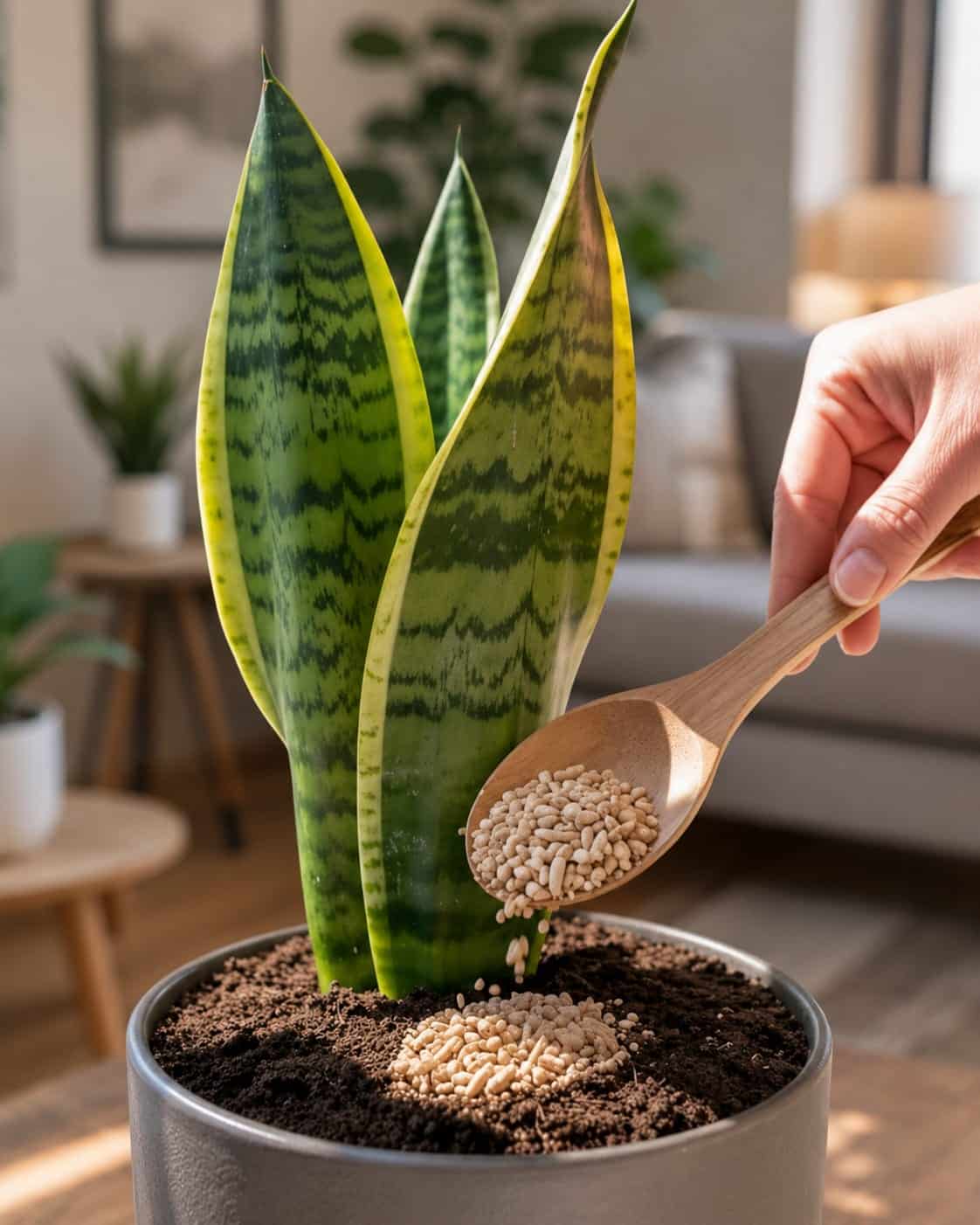
The image shows a snake plant with rice grains being added to the soil. This creates a simple natural plant-care idea: using rice to support fuller growth and encourage baby shoots. Rice is a common kitchen ingredient, and many gardeners use rice water as a gentle homemade tonic for plants. Rice contains starches and small traces of nutrients that may support soil microbes when used carefully. A healthier root environment can help a snake plant grow better over time.
However, rice must be used correctly. Dry rice should not be dumped heavily into the pot and left to rot. Cooked rice should never be added to indoor plant soil. Rice is not a complete fertilizer, and it will not magically force a snake plant to produce pups overnight. If used too much, rice can attract fungus gnats, mold, ants, or unpleasant smells. Snake plants need a clean, dry, airy root environment, so any homemade trick must be gentle.
The safest way to use rice for snake plants is usually rice water, not a pile of rice grains. A very mild rice rinse water can be used occasionally during the growing season. If you use dry rice grains, they should be used in very small amounts and only as a short-term surface treatment, not buried deep around the roots.
This guide explains how rice may help a snake plant, how to use it safely, what truly encourages more baby shoots, and which mistakes can damage the plant instead of helping it grow.
Why Snake Plants Produce Baby Shoots
Snake plant baby shoots are often called pups. They grow from underground rhizomes, which are thick storage structures beneath the soil. These rhizomes store water and energy. When the plant is healthy and conditions are right, new shoots rise from the rhizomes and eventually become full leaves.
This is why root health is the secret to a fuller snake plant. If the rhizomes are strong, firm, and active, the plant has a better chance of producing pups. If the rhizomes are rotting, crowded in poor soil, or sitting in damp conditions, the plant may stop growing.
A snake plant does not produce baby shoots just because something is sprinkled on top of the soil. Pups appear when the plant has enough light, healthy roots, a suitable pot, proper watering, and time. Rice can only support the routine in a small way. It cannot replace the conditions that make rhizomes active.
To grow a fuller snake plant, you must think below the surface. The leaves are what you see, but the roots and rhizomes decide whether new shoots will appear.
What Rice Can Do for Snake Plants
Rice is often used in plant care because rice rinse water contains starch and small traces of minerals released during washing. When diluted and used occasionally, rice water may support beneficial microbial activity in the soil. This can create a slightly more active root environment.
For snake plants, this support must be very gentle. Snake plants are not heavy feeders. They do not need rich, wet, organic soil. They prefer a fast-draining mix and a careful watering routine. Too much organic material can work against them by keeping the pot too damp.
Rice water may be useful as a mild occasional tonic during spring or summer when the plant is actively growing. It may help support the soil environment, but it should not be treated as a powerful fertilizer.
Dry rice grains, like the ones shown in the image, are more complicated. They may slowly break down on the soil surface, but in an indoor pot they can also attract pests or mold. If used at all, they should be used sparingly and removed if they show signs of swelling, softening, or molding.
Can Rice Make a Snake Plant Grow More Pups?
Rice does not directly force a snake plant to produce pups. Baby shoots come from healthy rhizomes and good growing conditions. Rice may support soil life slightly, but it is not a magic trigger.
If your snake plant is not producing pups, the first thing to check is light. Snake plants tolerate low light, but they grow much better in bright indirect light. A plant in a dim corner may stay alive for years while producing very little new growth.
The second thing to check is watering. Snake plants need the soil to dry between waterings. If the soil stays wet, the rhizomes can rot. Rotten rhizomes cannot produce healthy pups.
The third thing to check is pot size. A snake plant often produces pups when it is slightly snug in its pot, but not severely trapped. A pot that is too large can hold too much wet soil, while a pot that is extremely crowded can limit growth.
Rice can be a small helper, but the true pup-producing formula is bright indirect light, dry-down between waterings, fast-draining soil, a drainage pot, warmth, and patience.
Why Dry Rice in the Pot Can Be Risky
The image shows dry rice grains being placed on top of the soil. This looks simple, clean, and natural. But indoor plant pots are small environments, and dry food ingredients can create problems if used carelessly.
Rice absorbs moisture. If it sits on damp soil, it can swell and soften. Once soft, it may begin to break down. That can attract fungus gnats, ants, or mold. It may also create sour-smelling spots on the soil surface.
Snake plants are especially sensitive to overly moist conditions. They store water in their leaves and rhizomes, so they do not want the potting mix to stay damp for long. Anything that keeps moisture trapped near the surface should be used carefully.
Another issue is that rice does not provide balanced plant nutrition. Adding more rice does not mean faster growth. In fact, too much organic material in a snake plant pot can increase the risk of root problems.
If you want to use rice, the safest method is rice water. It gives a mild extract without leaving grains behind to rot.
🌱 Safe rice reminder: Rice water is gentler and cleaner than leaving dry rice grains in the pot. Always strain the rice and dilute the water before use.
The Safest Rice Water Recipe for Snake Plants
To make gentle rice water, use plain uncooked rice and clean water. Do not use cooked rice. Do not use salted rice. Do not use rice water that contains oil, seasoning, broth, butter, or spices.
Place two tablespoons of uncooked rice in a cup of water. Stir or swirl for one minute until the water becomes lightly cloudy. Strain out the rice completely. Then dilute the cloudy water with another cup of plain water.
The final mixture should be thin and lightly cloudy, not thick or starchy. If it looks heavy, add more water. A snake plant does not need a strong rice solution.
Use the rice water fresh. Do not let it sit for days until it smells sour or fermented. Fresh diluted rice water is safer for indoor plants than old rice water.
Apply it only when the snake plant is already due for watering. Pour it onto the soil, not onto the leaves. Let the pot drain fully afterward.
How Often to Use Rice Water on Snake Plants
Rice water should be used rarely. Once every six to eight weeks during active growth is enough. Many snake plants do not need it at all.
Do not use rice water every week. Do not use it every time you water. Do not use it during winter if the plant is not actively growing. Snake plants use less water in low light and cooler months, so organic liquids are more likely to sit in the pot and cause issues.
Between rice water treatments, use plain water. Keep the routine simple. Snake plants often grow best when they are not overhandled.
If you notice fungus gnats, mold, sour soil, or yellowing leaves after rice water, stop using it immediately. Return to plain water and let the soil dry properly.
How to Use Dry Rice Grains Safely
If you want to copy the visual method from the image, use dry rice very carefully. Place only a small pinch of uncooked rice on the soil surface, away from the base of the leaves. Do not bury it deep into the pot. Do not create a thick pile around the rhizomes.
Leave the rice on the surface for a short time only. If it begins to swell, soften, smell, or attract insects, remove it immediately. It is better to treat dry rice as a temporary surface experiment than as a permanent soil amendment.
For an indoor snake plant, the safest choice is to avoid leaving grains in the pot long-term. Rice water is cleaner and easier to control.
Never use cooked rice. Cooked rice breaks down quickly, can smell bad, and may attract pests. It is not suitable for indoor snake plant pots.
Continue to Page 2
Continue to page 2 for more details about this article and the key points many readers miss on the first page.