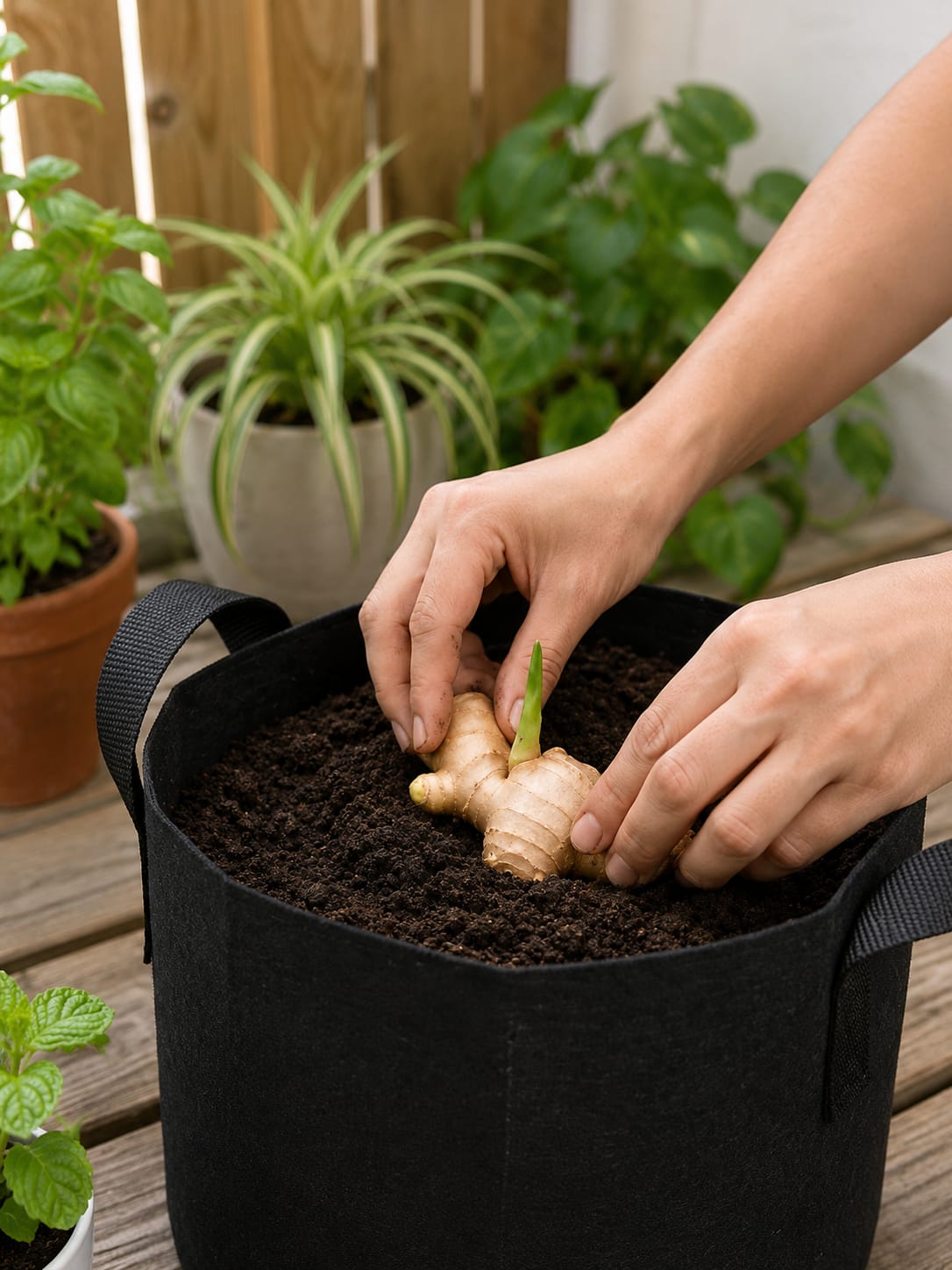
Ginger is one of those plants that feels almost magical once it starts growing. A small piece of ginger root, something many people already have in the kitchen, can slowly wake up, push out a bright green shoot, and turn into a lush tropical-looking plant. The best part is that ginger does not need a large garden to grow well. It can grow beautifully in a deep container, fabric grow bag, patio planter, balcony pot, or even a sunny indoor corner if the conditions are warm enough.
This ginger-growing trick is simple: place a healthy piece of ginger rhizome into loose, rich soil with the small growth buds facing upward, cover it lightly, water it gently, and keep it warm. Over time, the ginger begins to send up green shoots. Those shoots grow into tall leafy stems that look decorative while the edible rhizomes develop slowly under the soil.
Unlike fast-growing herbs such as basil or mint, ginger asks for patience. It grows best when the soil is warm, the pot is roomy, and the watering routine stays steady but not excessive. The reward is both practical and beautiful. You get a tropical-style plant with elegant green leaves, and later you can harvest fresh ginger from your own container garden.
This method is perfect for gardeners who want a plant that is useful, attractive, and satisfying to grow. Ginger can fit into a kitchen garden, balcony garden, patio corner, greenhouse, or indoor plant collection. With the right care, it becomes more than a cooking ingredient. It becomes a living decor feature that brings a fresh, natural, edible-garden feeling into the home.
What Makes Ginger So Easy to Start
Ginger grows from a rhizome, which is the thick underground stem people usually call ginger root. That piece of ginger stores energy. When it has the right warmth and moisture, small buds on the rhizome begin to swell and produce shoots.
A good ginger piece for planting should have:
- Firm texture
- Fresh skin
- No moldy smell
- No soft rotten spots
- Visible bumps or “eyes”
- A plump, healthy shape
Those little bumps are important because they are where new shoots can emerge. If the ginger is shriveled, very dry, or treated to prevent sprouting, it may grow slowly or fail to grow.
The Basic Ginger Container Trick
The simple trick is to plant the ginger shallowly rather than burying it too deep. Ginger does not need to be pushed far down into the pot. It grows best when it is placed near the surface, covered with a light layer of soil, and kept evenly warm.
Here is the basic method:
- Choose a wide container or fabric grow bag.
- Fill it with loose, rich, well-draining soil.
- Place the ginger rhizome horizontally on the soil.
- Keep the buds or eyes facing upward.
- Cover with about 2 to 5 cm of soil.
- Water gently until the soil is moist.
- Keep the container in a warm, bright location.
- Wait for green shoots to appear.
The reason this works is that ginger likes warmth, shallow planting, and steady moisture. If planted too deep in cold wet soil, it can rot before it wakes up.
Why a Fabric Grow Bag Works Well
Ginger can grow in many containers, but fabric grow bags are especially useful. They allow better airflow around the root zone and help prevent water from sitting too long. This matters because ginger likes moisture but does not like heavy, suffocating soil.
A fabric grow bag can help with:
- Better drainage
- Improved air movement
- Less risk of waterlogged soil
- Room for rhizomes to spread
- Easy movement around the patio or balcony
- Simple harvesting at the end of the season
If you use a plastic pot instead, make sure it has drainage holes. Ginger roots should never sit in stagnant water.
Best Soil for Growing Ginger
Ginger grows best in soil that is rich but not heavy. The soil should hold some moisture while still allowing extra water to drain away. A compact, clay-like soil can cause problems because it stays wet and makes it harder for rhizomes to expand.
A good ginger soil mix may include:
- High-quality potting mix
- Compost for nutrition
- Coco coir or peat moss for moisture balance
- Perlite for drainage
- A little bark or coarse material for airflow
The ideal texture should feel loose and crumbly. When you water it, the soil should become moist but not muddy.
How Deep Should Ginger Be Planted?
Ginger should be planted shallowly. The rhizome should sit close to the top of the soil, with only a light covering above it. This helps the shoot break through more easily and reduces the risk of rot.
A good rule is to cover the ginger with about 2 to 5 cm of soil. If the piece is very large, you can cover it slightly more, but avoid burying it deep at the bottom of the pot.
Shallow planting helps because:
- The rhizome warms faster
- New shoots emerge more easily
- You can monitor moisture better
- The plant is less likely to rot before sprouting
How to Choose Ginger From the Kitchen
You can often grow ginger from a store-bought piece, but not every piece is equally good. Choose ginger that looks alive and firm. Organic ginger may sprout more easily because some conventional ginger may be treated to slow sprouting.
Choose ginger that has:
- Plump sections
- Visible growth points
- Smooth fresh skin
- No mold
- No strong sour smell
- No black or mushy spots
If the ginger already has small green tips, that is a good sign. It means the rhizome is ready to grow.
Should You Soak Ginger Before Planting?
Some gardeners soak ginger before planting, especially if the rhizome looks slightly dry. Soaking can help rehydrate the piece and encourage sprouting. However, it should not be soaked for too long because excess moisture can increase the risk of rot.
A simple soaking method:
- Place the ginger in clean room-temperature water.
- Soak for a few hours or overnight.
- Remove it and let the surface dry slightly.
- Plant it shallowly in moist soil.
If the ginger is already fresh and firm, soaking is optional. Warmth is usually more important than soaking.
How Much Water Ginger Needs
Ginger likes consistent moisture, especially while it is actively growing. But consistent moisture does not mean soggy soil. The soil should feel lightly moist, not soaked. Watering too heavily before shoots appear can cause the rhizome to rot.
A good watering routine is:
- Water lightly after planting
- Keep the soil barely moist while waiting for shoots
- Increase watering when leaves appear
- Do not let the pot sit in standing water
- Reduce watering when growth slows
Once the plant is large, it may need more frequent watering, especially in warm weather. Fabric grow bags dry faster than plastic pots, so check the soil regularly.
How Long Ginger Takes to Sprout
Ginger is not always fast. In warm conditions, shoots may appear in two to four weeks. In cooler conditions, it may take much longer. Sometimes it can take six to eight weeks before the first green shoot appears.
Sprouting speed depends on:
- Temperature
- Freshness of the ginger
- Moisture level
- Soil quality
- Light conditions
- Whether the rhizome has active buds
The most important thing is not to dig it up constantly. If the soil is warm and lightly moist, give it time.
Best Light for Ginger
Ginger naturally grows in warm, humid areas with filtered light. It does not need harsh full sun all day. In fact, strong afternoon sun can scorch the leaves, especially in hot climates or containers.
Good light options include:
- Morning sun with afternoon shade
- Bright indirect light
- Dappled garden light
- A sheltered patio
- A bright balcony without intense afternoon heat
- A warm indoor spot near a bright window
If the leaves look pale or weak, the plant may need more light. If the leaves develop dry brown edges, it may be getting too much direct sun or too little moisture.
Why Warmth Is So Important
Warmth is one of the secrets to growing ginger successfully. Ginger is a tropical plant. It grows slowly in cool conditions and may not sprout at all if the soil remains cold.
For best growth, keep ginger in a warm place. If you are starting it indoors, a warm room or bright windowsill can help. Outdoors, wait until the weather is reliably warm before planting.
Ginger grows better when:
- Days are warm
- Nights are not cold
- The soil temperature stays comfortable
- The container is protected from cold wind
- The plant is not exposed to frost
Cold soil plus wet soil is one of the easiest ways to rot ginger before it grows.
Continue to Page 2
Continue to page 2 for more details about this article and the key points many readers miss on the first page.