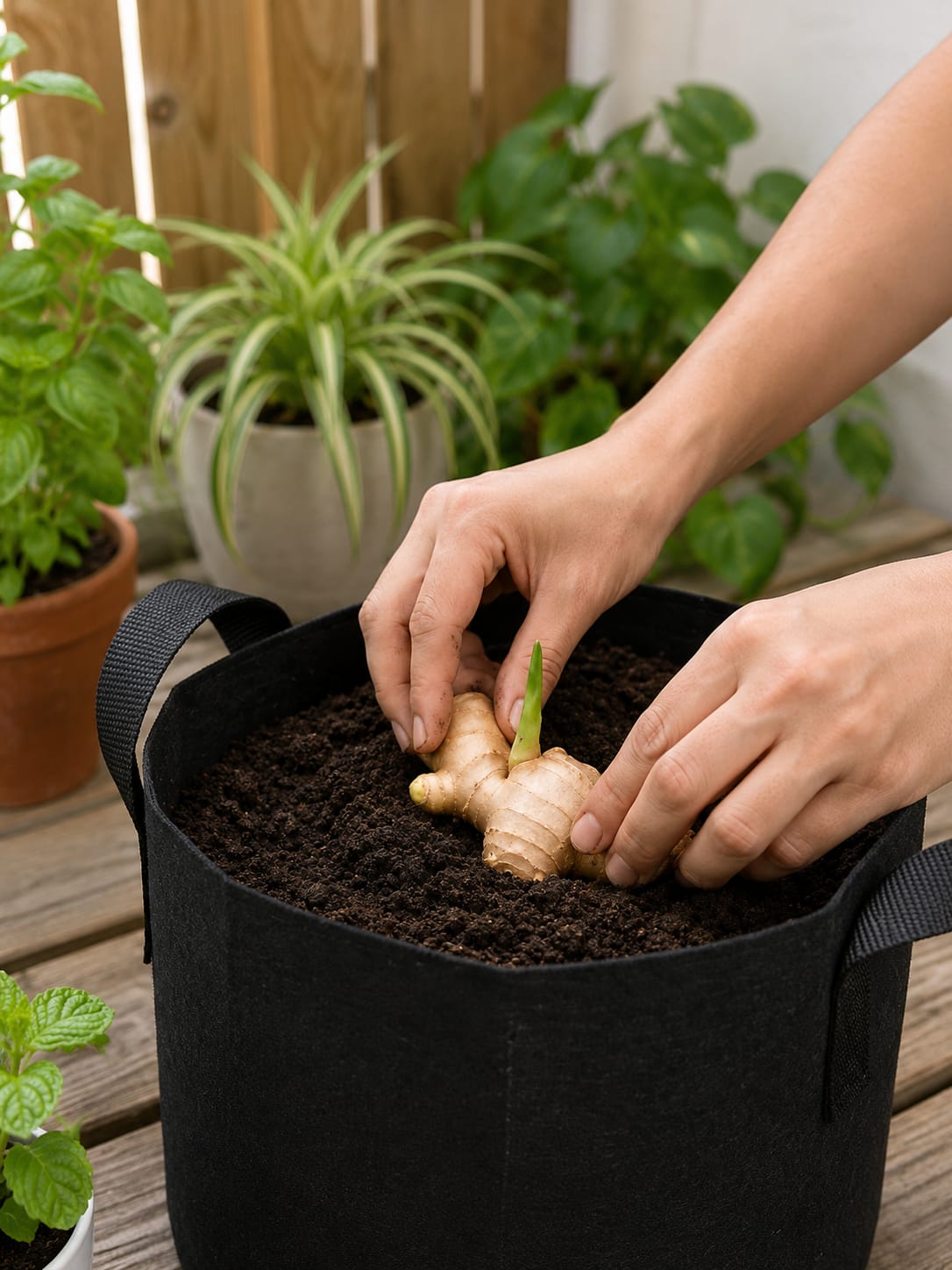
Feeding Ginger for Strong Growth
Ginger is a leafy plant while it grows, and it benefits from rich soil. Compost is one of the best additions because it supports steady growth without being too harsh. You can also use a gentle organic fertilizer during the growing season.
Good feeding options include:
- Compost mixed into the soil
- Worm castings
- Balanced organic fertilizer
- Diluted liquid plant food
- Slow-release vegetable fertilizer
Avoid overfeeding. Too much fertilizer can burn roots or produce lots of leaves without healthy rhizome development. Feed lightly and consistently rather than heavily.
How to Know Ginger Is Growing Well
A healthy ginger plant sends up green stems with narrow leaves. The stems should look upright, fresh, and bright. As the plant matures, more shoots may appear from the soil, creating a fuller display.
Good signs include:
- Fresh green shoots
- Firm stems
- New leaves unfolding
- No sour smell from the soil
- Soil that drains well
- Multiple shoots appearing over time
Ginger grows quietly underground, so do not worry if you cannot see the rhizomes expanding. The leafy top growth is a sign that the underground system is active.
Common Ginger Growing Problems
Ginger is not difficult, but it can struggle if the conditions are wrong. The most common problems are caused by cold, heavy soil, overwatering, or lack of light.
Common issues include:
- Rhizome rot before sprouting
- Yellow leaves from overwatering
- Dry leaf tips from low humidity or hot sun
- Weak growth from low light
- Slow sprouting from cool soil
- Fungal problems in soggy soil
If the plant smells bad or the soil becomes slimy, remove the ginger and check for rot. Healthy ginger should smell spicy and fresh, not sour.
Can Ginger Grow Indoors?
Yes, ginger can grow indoors if it gets warmth and bright light. It may not grow as large indoors as it would outside in a warm garden, but it can still produce beautiful foliage and small harvests.
Indoor ginger needs:
- A bright window
- Warm room temperatures
- A wide container
- Loose soil
- Careful watering
- Good airflow
It can look especially beautiful in a kitchen or sunroom because it connects the decor with edible gardening. A pot of ginger near a bright window gives the space a fresh, natural, useful look.
How to Harvest Ginger
Ginger takes time to mature. Young ginger can sometimes be harvested after several months, but fuller rhizomes usually need eight to ten months or more. When the leaves begin to yellow and die back naturally, the rhizomes are usually more mature.
To harvest:
- Wait until the plant has grown for several months.
- Reduce watering when the leaves begin to yellow naturally.
- Gently loosen the soil.
- Lift the rhizomes carefully.
- Save a healthy piece for replanting.
You do not always need to harvest the whole plant. You can gently remove a small side piece and leave the rest growing if the container is large enough.
How to Use Ginger as Decor
Ginger is not only useful in the kitchen. It also has a beautiful tropical look. The upright green stems and narrow leaves create a soft, elegant display that works well in natural interiors.
Ginger looks good with:
- Black fabric grow bags for a modern garden look
- Terracotta pots for warm rustic styling
- White ceramic planters for clean kitchen decor
- Wooden plant stands
- Balcony herb shelves
- Outdoor patio corners
- Kitchen window gardens
If you want the plant to look more polished, add a thin layer of mulch, small bark chips, or clean decorative stones around the top of the soil. Do not use a thick layer that traps too much moisture.
Best Places to Display Ginger
Because ginger has a fresh tropical look, it works well in places where greenery can soften the space. It is especially nice in areas connected to food, natural light, or relaxation.
Good places include:
- Kitchen windowsills
- Sunny balcony corners
- Patio garden tables
- Greenhouse shelves
- Warm living room corners
- Indoor herb garden stations
- Outdoor container gardens
- Covered porch displays
A black grow bag gives ginger a practical garden style, while a ceramic planter makes it feel more decorative indoors.
Ginger Care Table
| Care Factor | Best Choice | Why It Matters |
|---|---|---|
| Container | Wide pot or fabric grow bag | Gives rhizomes room to spread |
| Soil | Loose, rich, well-draining mix | Prevents rot and supports growth |
| Planting Depth | Shallow cover | Helps shoots emerge easily |
| Water | Lightly moist, not soggy | Supports growth without rotting rhizomes |
| Light | Bright indirect light or morning sun | Keeps leaves strong and fresh |
| Temperature | Warm conditions | Encourages sprouting and active growth |
Frequently Asked Questions
Can I plant ginger from the grocery store?
Yes. Choose a firm, fresh piece with visible growth buds. Organic ginger often sprouts more easily.
How long does ginger take to grow?
Shoots may appear in a few weeks, but full rhizome development usually takes several months. Mature ginger often needs eight months or more.
Does ginger need full sun?
No. Ginger prefers bright indirect light, morning sun, or filtered light. Harsh afternoon sun can burn the leaves.
Why is my ginger not sprouting?
The soil may be too cold, too wet, or the ginger may not have active buds. Keep it warm and lightly moist.
Can ginger grow in a pot indoors?
Yes. It needs warmth, bright light, loose soil, and careful watering.
Should ginger be planted deep?
No. Ginger grows best when planted shallowly with a light covering of soil.
Final Thoughts
Growing ginger in a container is a simple and rewarding plant-care trick. A healthy piece of ginger can turn into a fresh green plant when it is planted shallowly in loose soil, watered gently, and kept warm. The secret is not complicated. Ginger needs warmth, patience, good drainage, and steady moisture.
This method is perfect for anyone who wants an edible plant that also looks decorative. The bright green stems bring a tropical feeling to balconies, patios, kitchens, and indoor plant corners. With the right container and clean styling, ginger can look just as beautiful as many ornamental houseplants.
The best results come from starting with a firm rhizome, using a wide container, avoiding soggy soil, and giving the plant time. Once the shoots appear, the plant becomes both useful and attractive. It adds life to the home, supports a kitchen garden lifestyle, and eventually rewards you with fresh ginger grown from your own pot.