Snake plants are among the easiest houseplants to love. Their tall sword-like leaves, rich green patterns, and yellow-edged variegation make them look bold even when the rest of the room is simple. A healthy snake plant can turn a quiet corner, shelf, windowsill, entryway table, or office desk into a clean indoor plant display with very little effort.
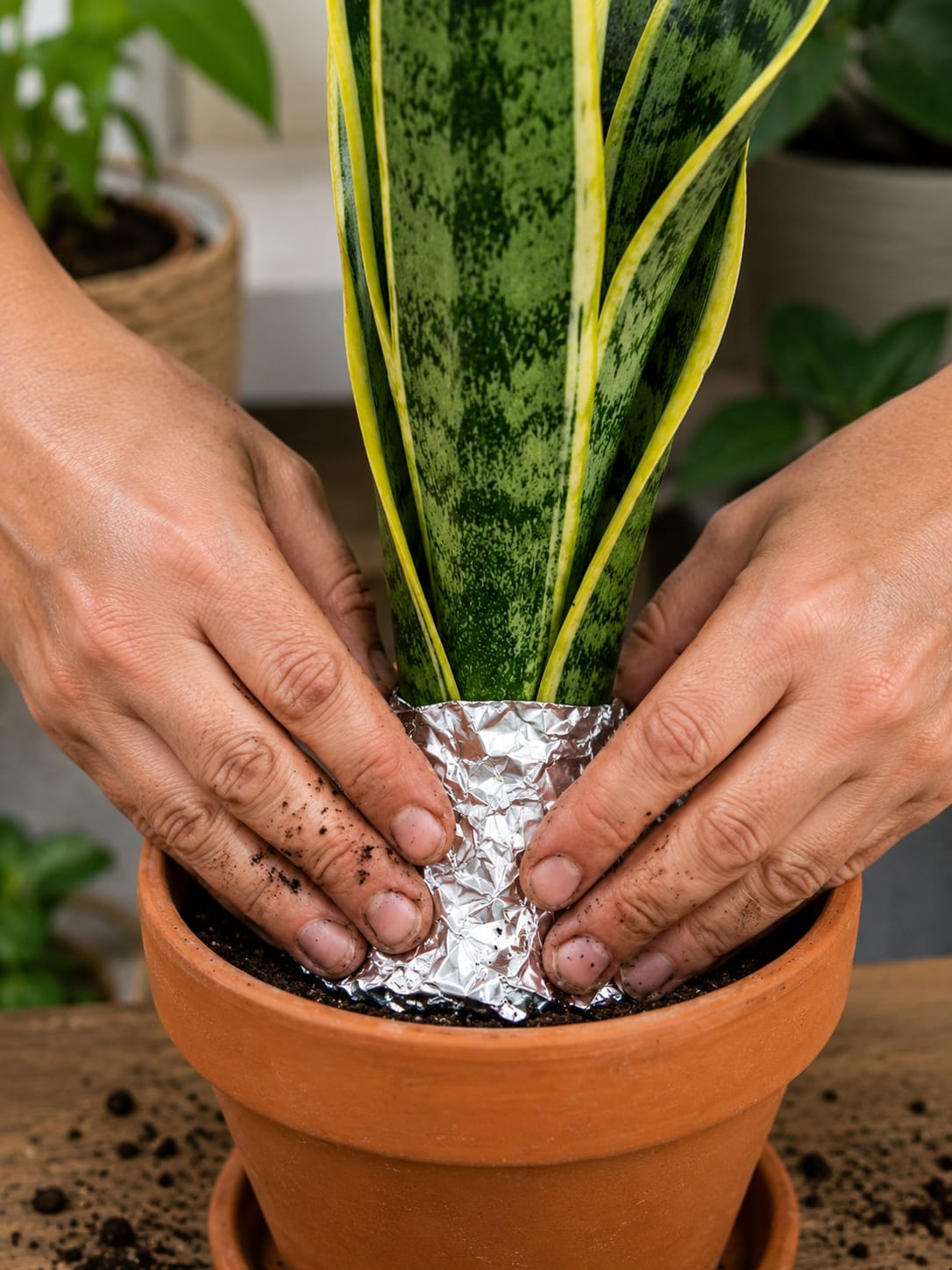
One unusual plant-care trick that many people are curious about is placing a small piece of aluminum foil around the base of a snake plant. The idea looks simple: the foil is shaped gently around the lower part of the plant, close to the soil surface, creating a shiny protective ring near the crown. It is not placed on the leaves as decoration, and it is not mixed deep into the soil. The focus is the base of the plant, where moisture, soil, pests, airflow, and root stability all matter.
This trick is often discussed as a way to keep the base area cleaner, reflect light around the lower leaves, discourage certain surface problems, and make the pot look more controlled. But like many houseplant tricks, it should be used carefully. Aluminum foil is not fertilizer. It does not replace good soil, correct watering, drainage, bright indirect light, or a healthy root system. It is better understood as a small supporting trick for plant hygiene and display, not as a miracle cure.
For snake plants, this detail matters because the plant may look strong above the soil while still being sensitive around the root zone. A snake plant can tolerate neglect, low water, and ordinary indoor air, but it does not tolerate soggy soil for long. Anything placed around the base must be used in a way that does not trap moisture against the leaves or block airflow. When used lightly and wisely, aluminum foil can be part of a neat plant-care routine. When used incorrectly, it can create hidden dampness and cause problems.
The Main Idea Behind the Aluminum Foil Trick
The aluminum foil trick is usually about protecting and controlling the surface area around the snake plant. A small piece of foil can act as a reflective and physical barrier near the base of the plant. It may help keep soil from splashing up during watering, reflect a little light into the lower part of the plant, and create a cleaner-looking pot surface.
The key word is “small.” This is not about wrapping the whole pot in foil or sealing the soil completely. Snake plants need airflow at the soil surface. A light collar or small foil piece around the plant base is very different from covering the entire pot like a lid.
This trick may be used for:
- Keeping the base of the plant cleaner
- Reducing soil splash on lower leaves
- Reflecting light around the crown area
- Creating a temporary barrier on the soil surface
- Making the pot look tidier
- Helping guide water away from the leaf crown
- Supporting a more polished indoor plant display
It is most useful when the plant is already healthy and the pot has good drainage. It should not be used to hide root rot, wet soil, fungus, pests, or poor care habits.
Why Snake Plants Need a Clean Base
The base of a snake plant is where the leaves meet the soil. This area should stay firm, dry enough, and well ventilated. If water sits around the base for too long, the lower leaves can soften. Once the base becomes mushy, the damage can spread quickly because snake plants store water in their thick tissues.
A clean base helps the plant:
- Stay upright
- Reduce the risk of rot
- Look more decorative
- Grow new shoots more easily
- Avoid soil stains on lower leaves
- Stay easier to inspect for pests or problems
Aluminum foil can help keep soil particles from sticking to the lower leaves, especially if the plant is watered from above. However, the best solution is still careful watering. Water should go onto the soil, not into the center of the plant. The crown should not stay wet.
What Aluminum Foil Can and Cannot Do
Aluminum foil is useful in some plant-care situations, but it has limits. It can reflect light, create a barrier, and help keep an area cleaner. It cannot feed the plant, heal rotting roots, cure yellow leaves, or force a snake plant to grow faster.
Aluminum foil can help with:
- Surface cleanliness
- Light reflection
- Soil splash reduction
- Temporary protection around the plant base
- Decorative neatness
Aluminum foil cannot fix:
- Root rot
- Overwatering
- Compacted soil
- Poor drainage
- Severe pest infestations
- Lack of light
- Cold damage
- Fertilizer burn
The trick works best as a finishing step, not as the foundation of care. The foundation is always light, soil, drainage, and watering.
How Aluminum Foil May Reflect Light
One reason people use aluminum foil around houseplants is reflection. Foil can bounce light onto nearby surfaces. Around a snake plant, a small foil collar may reflect a little light toward the lower leaves and base area.
This does not replace a bright window. A snake plant still needs proper placement. But if the plant is near soft indirect light, the foil may help brighten the lower section slightly. This can be especially useful in a darker corner where the lower leaves look shaded.
For best results, use foil only as a small reflective support. Do not rely on it as the main light source. If your snake plant is not growing, move it closer to bright indirect light instead of adding more foil.
How to Use Aluminum Foil Around a Snake Plant Safely
The safest way to use this trick is to keep the foil loose, small, and temporary. The foil should not squeeze the plant, cut into the leaves, or seal the soil surface.
A safe method looks like this:
- Start with a healthy snake plant.
- Check that the base is firm and not mushy.
- Make sure the soil is dry or only lightly moist.
- Cut a small piece of aluminum foil.
- Shape it gently around the base like a loose collar.
- Leave space for airflow.
- Do not press the foil tightly against the leaves.
- Do not cover the entire soil surface.
- Remove it occasionally to check the soil and base.
The foil should sit lightly. Think of it as a small protective accent, not a tight wrap.
Important Mistake to Avoid
The biggest mistake is wrapping the base too tightly. Snake plant leaves need space and airflow. If foil holds moisture against the base, the trick can become harmful instead of helpful.
Avoid these mistakes:
- Wrapping foil tightly around the leaves
- Covering the entire soil surface
- Leaving foil on wet soil for too long
- Using foil to hide mold or pests
- Watering directly into the foil collar
- Letting water collect under the foil
- Using foil on a plant with soft or rotting leaves
If you notice condensation, bad smell, soft leaf bases, or mold under the foil, remove it immediately.
Why This Trick Works Better With Dry-Loving Plants
Snake plants behave more like succulents than thirsty tropical plants. Their thick leaves store moisture, so they prefer dry periods between watering. This makes them better suited to careful surface tricks than plants that need constantly moist soil.
However, even with snake plants, the soil surface should not be sealed. Airflow helps prevent fungal growth and keeps the root zone healthier. Aluminum foil should never create a wet, closed environment.
The trick is safest when:
- The plant is in fast-draining soil
- The pot has drainage holes
- The room has good airflow
- The plant is not overwatered
- The foil is loose and easy to remove
Best Soil Before Trying Any Snake Plant Trick
Before using aluminum foil or any plant-care trick, make sure the soil is right. Snake plants need a loose, airy mix that drains quickly. Heavy soil is one of the main reasons snake plants develop root problems indoors.
A good snake plant soil mix can include:
- Cactus or succulent mix
- Perlite
- Pumice
- Coarse sand
- Small bark pieces
- A little regular potting soil for moisture balance
The goal is to let water pass through quickly. The roots should not sit in wet, compacted soil.
Watering Rules for Snake Plants
Watering is more important than aluminum foil. Most snake plant problems come from too much water. A snake plant should dry out between watering. The top of the soil drying is not always enough; check deeper if possible.
Good watering habits include:
- Water only when the soil is dry
- Use a pot with drainage holes
- Let excess water drain away
- Never leave the pot sitting in water
- Water less in winter
- Water less in low light
- Avoid pouring water into the leaf crown
If you use foil around the base, water even more carefully. Remove or lift the foil if needed so water does not collect underneath.
How Aluminum Foil Can Help With Soil Splash
When water hits dry soil too quickly, small particles can splash onto the lower leaves. This can make a snake plant look messy, especially in decorative indoor displays. A small foil collar can reduce this by shielding the base area.
This is helpful when the plant is placed in:
- A living room display
- A bedroom corner
- A white ceramic pot
- A bright windowsill
- A clean office shelf
- A minimalist interior
Still, slow watering is better. Pour water gently around the edge of the pot instead of dumping it into the center.
Can Aluminum Foil Keep Pests Away?
Some gardeners use reflective materials to confuse or discourage certain pests outdoors. Indoors, the effect is limited. Aluminum foil may help create a cleaner surface and make it easier to notice insects, but it should not be treated as a full pest-control method.
If your snake plant has pests, look for signs such as:
- Tiny crawling insects
- Sticky residue
- Fine webbing
- White cottony clusters
- Small flies around the soil
- Spots or scarring on leaves
For pests, use proper plant-safe treatment. Remove affected leaves if necessary, clean the plant, isolate it from other houseplants, and correct the moisture conditions.
Can Aluminum Foil Help a Weak Snake Plant?
Only in a very limited way. If a snake plant is weak because of low light, foil reflection may help a little. If it is weak because of messy watering or soil splash, foil may help keep the base cleaner. But if the plant has root rot, soft leaves, or severe yellowing, foil will not solve the real problem.
A weak snake plant needs:
- Root inspection
- Dryer conditions
- Fast-draining soil
- Better light
- Removal of rotten sections
- A pot with drainage
Use aluminum foil only after the plant is stable.
Continue to Page 2
Continue to page 2 for more details about this article and the key points many readers miss on the first page.