Pest Care
Poinsettias may attract whiteflies, spider mites, aphids, or mealybugs. Check the undersides of leaves and new growth regularly.
If pests appear, isolate the plant and wipe leaves gently. Insecticidal soap can help when used according to label directions.
Healthy airflow and clean leaves reduce pest problems.
Cleaning Poinsettia Leaves
Dust can collect on poinsettia leaves, especially indoors. Wipe the leaves gently with a damp cloth to keep them fresh and able to absorb light.
Be careful not to break stems. Poinsettia stems can be tender, especially on young plants.
Clean leaves make the plant look brighter and healthier.
Best Places to Display Poinsettias
Poinsettias look beautiful in bright indoor spaces. Good locations include sunny windowsills with filtered light, dining tables near windows, entryway consoles, living room plant stands, kitchen counters, and covered porches in mild weather.
Keep them away from cold windows, heaters, fireplaces, and drafty doors. Sudden temperature changes can cause leaf drop.
A stable bright location keeps the plant looking fresh longer.
Decor Styling Ideas
Poinsettias are perfect for seasonal decor. Their red bracts pair beautifully with terracotta, white ceramic, gold pots, woven baskets, deep green planters, and patterned holiday containers.
For a classic look, place a red poinsettia in a decorative ceramic pot near a window. For a rustic style, use a terracotta pot with pinecones and natural wood accents. For a modern style, use a matte white or black pot and keep the display simple.
Small propagated poinsettias can be grouped together as a table centerpiece or placed along a windowsill for a colorful winter display.
Growing Poinsettias After the Holidays
After the colorful season ends, do not throw the plant away. Keep it in bright light and water when the soil begins to dry. Some leaves may drop, but the plant can regrow.
In spring, prune the stems back to encourage fresh growth. Move the plant to a brighter warm location and begin light feeding once new growth appears.
With care, the plant can grow again and be prepared for color the next season.
Repotting Poinsettias
Repot poinsettias when roots fill the pot or the soil becomes old and compacted. Spring is a good time to repot.
Choose a pot only one size larger. Use fresh, light, well-draining soil. After repotting, water gently and keep the plant in bright indirect light while it settles.
Avoid oversized pots because they hold too much moisture around the roots.
Outdoor Summer Care
In warm weather, poinsettias can spend time outdoors in bright shade or morning sun. Outdoor light can help them grow stronger.
Do not place them directly into hot sun right away. Introduce outdoor light gradually. Protect them from heavy rain and strong wind.
Bring the plant indoors before temperatures become cool.
Common Mistakes to Avoid
Avoid these mistakes when growing poinsettias from cuttings:
- Taking cuttings from weak plants
- Using dirty scissors
- Letting leaves sit underwater
- Keeping cuttings in harsh sun
- Using heavy wet soil
- Overwatering young roots
- Putting plants near cold drafts
- Skipping the dark routine when trying to get red bracts
- Expecting instant color from a young cutting
Simple, steady care gives the best results.
A Simple Poinsettia Cutting Routine
Follow this easy routine for propagation:
- Choose a healthy stem
- Cut below a node
- Remove lower leaves
- Let the sap slow
- Root in water or light soil
- Keep in bright indirect light
- Maintain warmth
- Pot once roots develop
- Pinch for bushier growth
- Use the fall dark routine for red bracts
This routine supports strong roots and healthy growth.
Final Thoughts
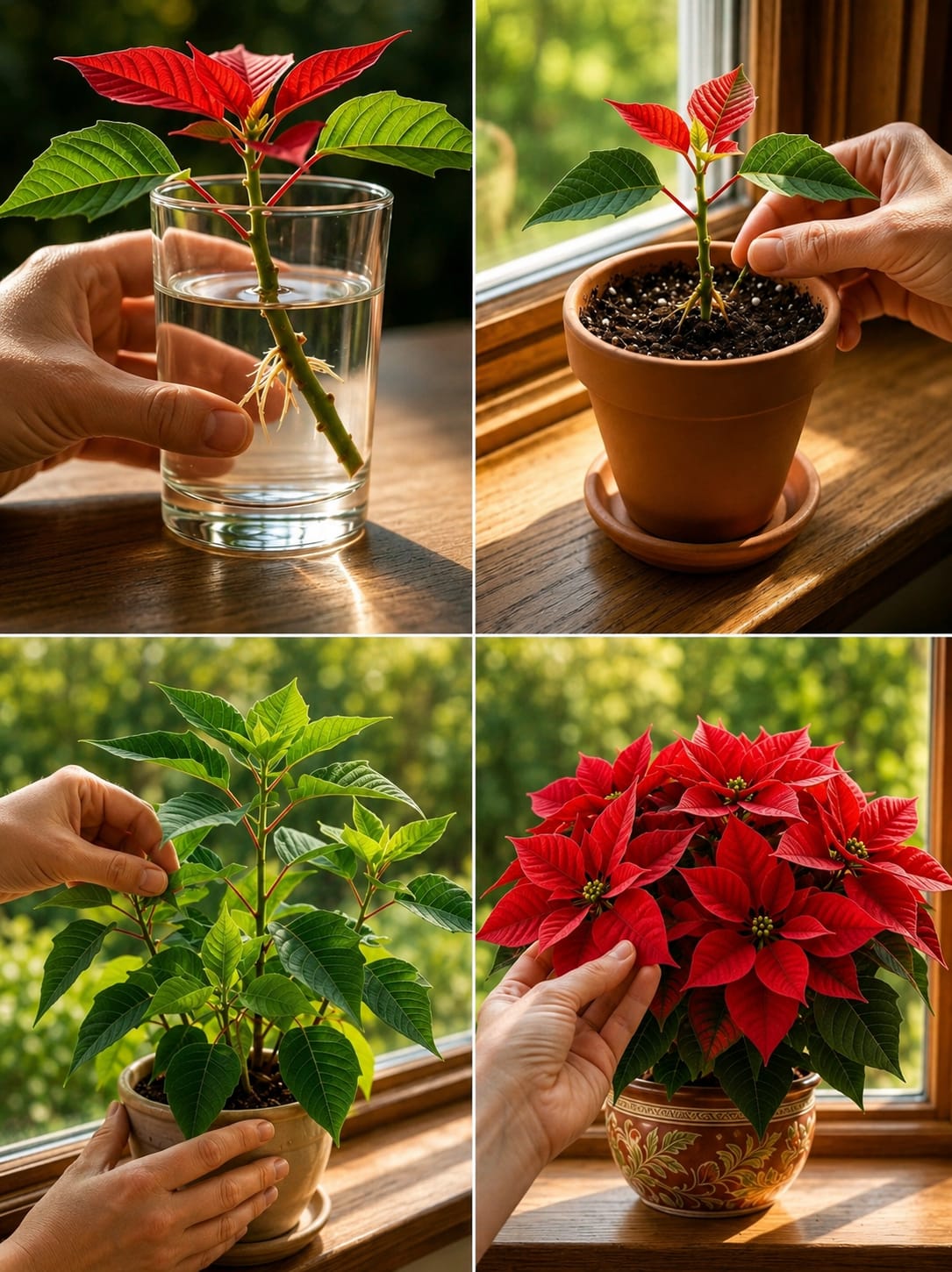
Growing poinsettias from cuttings is a beautiful way to keep a favorite plant going and create new festive plants for your home. The process starts with a healthy stem, clean cut, warm rooting conditions, bright indirect light, and careful watering. Once rooted, the young plant can be shaped, fed gently, and grown into a full decorative poinsettia.
The red holiday color comes later, after the plant is mature enough and receives the correct long-night routine. With patience, a small cutting can become a lush green plant and eventually develop the bright red bracts that make poinsettias so special.
With gentle care and steady attention, your poinsettia can become more than a seasonal decoration. It can become a long-lasting plant that brings color, warmth, and natural beauty to your home year after year.