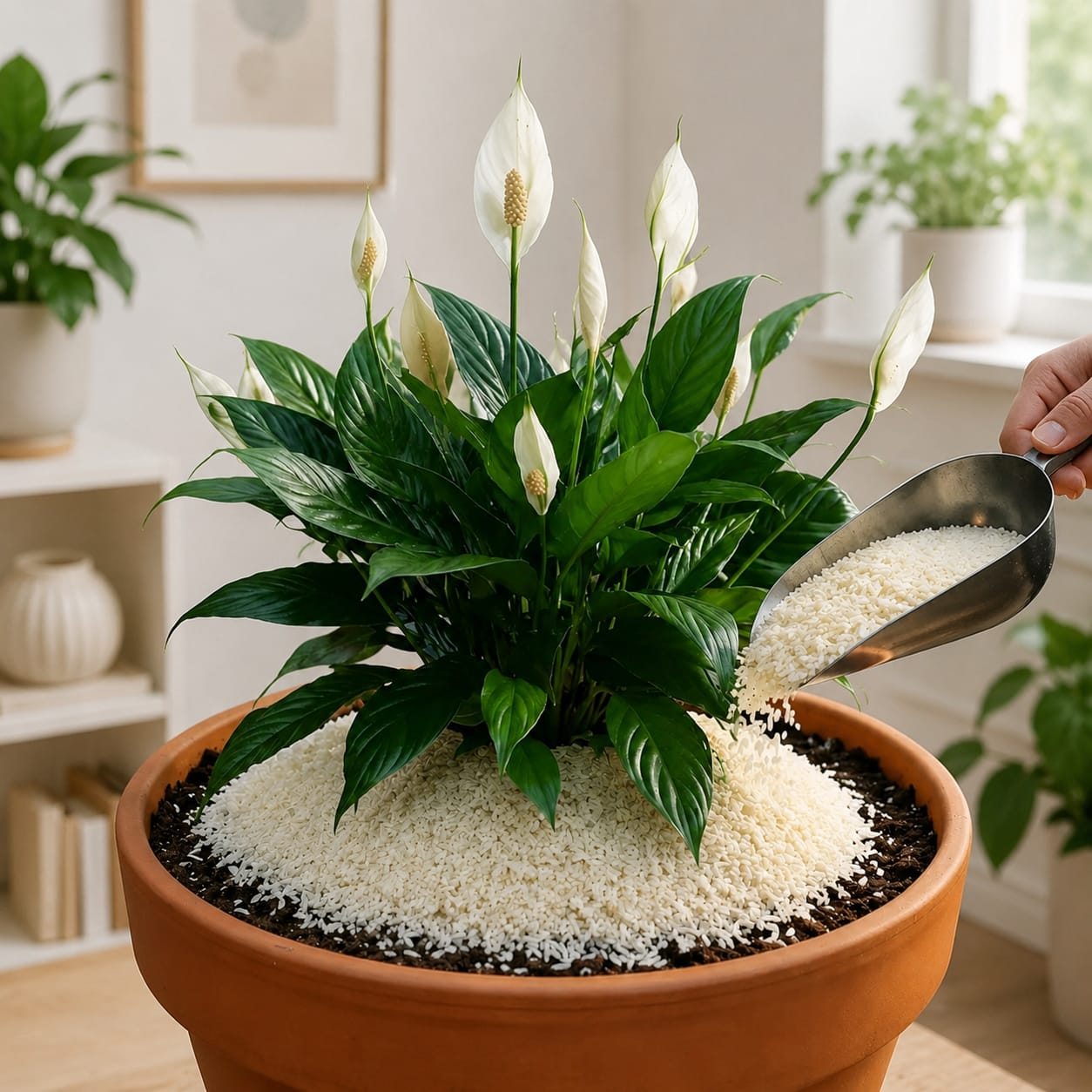
Peace lilies are among the most elegant indoor plants you can grow. Their deep green leaves, smooth upright stems, and graceful white blooms bring a clean, calm, and fresh feeling to almost any room. A healthy peace lily can soften a living room corner, brighten a bedroom, refresh a bathroom shelf, or turn a simple plant stand into a beautiful focal point. It is one of those plants that looks refined without needing a complicated display.
Many plant lovers look for simple natural ways to support peace lily growth and encourage more blooms. One popular idea is using rice as a gentle soil-care routine. Rice is often used in homemade plant-care tricks because it is simple, affordable, and easy to find in the kitchen. Some people use rice water, while others use small amounts of dry rice or ground rice as a soil amendment. The idea is to give the plant a mild natural boost while keeping the care routine simple.
However, this trick must be used carefully. Peace lilies enjoy steady moisture, but they do not like soggy, sour, or overloaded soil. Too much rice, especially if it is piled thickly on top of the soil, can attract insects, grow mold, or create an unpleasant smell as it breaks down. The best approach is gentle and occasional. Rice should never replace proper watering, light, drainage, humidity, and balanced feeding.
The real secret to a beautiful peace lily is not one ingredient. It is a complete routine. Bright indirect light, airy soil, good drainage, clean leaves, consistent watering, and gentle nutrition all work together. Rice can be a small supportive step, but it should never become the main care method.
What Is the Rice Trick for Peace Lilies?
The rice trick usually refers to using rice water or a small amount of finely ground rice as a mild plant-supporting routine. Rice water is the cloudy water left after rinsing or soaking rice. It contains tiny traces of starch and minerals. Some gardeners use it as a gentle occasional watering supplement for houseplants.
Ground rice or rice powder is sometimes used as a light soil amendment, but it must be used with extra caution indoors. If used too heavily, rice can sit on top of the soil, hold moisture, and attract fungus gnats or mold. Whole uncooked rice is not ideal as a regular top dressing because it may swell, ferment, or invite pests when watered.
For peace lilies, rice water is usually safer than piling dry rice over the soil. If you want to use rice in plant care, keep it diluted, strained, and occasional.
Why Peace Lilies Need Gentle Care
Peace lilies are tropical plants that prefer warm indoor conditions, filtered light, and soil that stays lightly moist without becoming waterlogged. Their roots need both water and oxygen. When the soil is too dense or too wet, the roots can suffocate and rot.
This is why homemade tricks must be used lightly. Peace lilies can react quickly to poor soil conditions. If the soil becomes sour, compacted, or full of decomposing material, the plant may droop, yellow, or stop blooming.
A gentle care routine works better than dramatic treatments. Peace lilies reward balance. They do not need heavy feeding or constant additives to look beautiful.
The Safest Rice Method: Diluted Rice Water
The safest way to use rice for peace lilies is diluted rice water. This is much gentler than adding piles of dry rice or thick rice paste to the soil.
To prepare a mild rice water tonic:
- Add 1 tablespoon of uncooked rice to a cup of clean water.
- Swirl or soak for 10 to 20 minutes.
- Strain out the rice completely.
- Dilute the cloudy water with 3 to 4 more cups of clean water.
- Use only a small amount when the plant is already due for watering.
The final liquid should be thin and watery. It should not be thick, sticky, or sour-smelling. If it smells fermented, throw it away.
How Often to Use Rice Water
Use rice water rarely. Once every 4 to 6 weeks during active growth is enough. Spring and summer are the best seasons because the peace lily is more likely to produce new leaves and blooms.
Do not use rice water every time you water. Too much starch and organic residue can build up in the soil. This may attract pests or create a sticky, unhealthy root environment.
During winter or low-light months, use plain water only. The plant grows more slowly and the soil dries more slowly, so extra organic liquid is not needed.
Why You Should Avoid Thick Rice Layers
A thick layer of rice on top of the soil may look like a strong plant trick, but it is not the safest choice for indoor peace lilies. When rice gets wet, it can swell and soften. Over time, it may break down, grow mold, or attract insects.
Peace lily soil needs airflow at the surface. A thick layer of rice can reduce airflow, trap moisture, and make it harder to judge when the plant needs water.
If you want to use rice powder, use only a tiny pinch and mix it lightly into the top layer of soil. Do not create a blanket around the plant base.
Can Rice Make Peace Lilies Bloom?
Rice water alone will not force a peace lily to bloom. Peace lily blooms depend mostly on plant maturity, bright indirect light, healthy roots, steady watering, and balanced nutrition.
If a peace lily has healthy leaves but no flowers, the first thing to check is light. Many peace lilies survive in low light but bloom poorly. Moving the plant to a brighter filtered-light location often helps more than any homemade tonic.
Rice water can be used as a mild support, but blooms come from overall plant health.
The Real Bloom Secret: Bright Indirect Light
Peace lilies are often described as low-light plants, but low light usually means survival, not heavy blooming. For the best white flowers, peace lilies need bright indirect light.
Place the plant near a window with filtered sun. Morning light is often gentle and helpful. Avoid harsh afternoon sun, which can scorch leaves and dry the plant too quickly.
If your peace lily is not blooming, move it gradually to a brighter spot. Do not place it suddenly in intense direct sun. Slow adjustment prevents leaf burn.
Watering Peace Lilies Correctly
Peace lilies like evenly moist soil, but they dislike soggy roots. Water when the top inch of soil begins to feel dry. If the soil is still wet, wait.
When watering, pour slowly until water drains from the bottom of the pot. Then empty the saucer. Do not let the pot sit in water for long periods.
If the plant droops and the soil is dry, it likely needs water. If it droops and the soil is wet, the roots may be struggling from too much moisture.
How Rice Water Fits Into Watering
Rice water should be treated as an occasional watering supplement. Use it only when the plant is already due for water. Do not pour rice water onto wet soil.
Before applying, touch the soil. If the top layer is dry and the pot feels ready, use a small amount of diluted rice water. If the soil is damp, wait and use plain water later.
After using rice water, return to normal watering with plain water for the next several waterings.
Drainage Is Essential
A peace lily should grow in a pot with drainage holes. Without drainage, water collects at the bottom and can cause root rot.
If you love decorative pots without holes, use them as cover pots. Keep the peace lily in a nursery pot with drainage and place that pot inside the decorative container. After watering, remove extra water from the bottom.
Drainage is more important than rice water, fertilizer, or any homemade trick.
The Best Soil for Peace Lilies
Peace lilies need a soil mix that holds some moisture but still allows air to reach the roots. Heavy garden soil is not ideal for indoor pots.
A good peace lily mix may include:
- Quality indoor potting mix
- Perlite
- Coco coir
- Fine orchid bark
- A small amount of compost
The soil should feel soft and airy. If it stays wet for too long or smells sour, it may need replacing.
Signs Your Peace Lily Likes the Routine
A peace lily that is happy will show steady fresh growth. The leaves will look firm, green, and glossy. New leaves may emerge from the center, and blooms may appear when light and maturity are right.
Positive signs include:
- Firm green leaves
- No sour smell from the soil
- Fresh new growth
- Soil drying at a normal pace
- Stable upright stems
- Occasional white flowers
If the plant looks healthy, avoid overcomplicating the routine. Too many treatments can disturb a stable plant.
Signs You Should Stop Using Rice Water
Stop using rice water if you notice mold, fungus gnats, sour soil smell, sticky soil surface, yellowing after application, or soil that stays wet too long.
If this happens, remove the top layer of soil and replace it with fresh mix. Water with plain water only until the plant stabilizes.
Homemade plant tonics should always be stopped at the first sign of soil trouble.
Brown Leaf Tips on Peace Lilies
Brown tips are common on peace lilies. They may come from dry air, inconsistent watering, mineral-heavy tap water, fertilizer buildup, direct sun, or root stress.
Rice water will not repair brown tips. Once a tip turns brown, it will stay brown. You can trim it with clean scissors, following the natural shape of the leaf.
To prevent more brown tips, improve humidity, avoid overfeeding, use filtered water if possible, and keep the watering routine consistent.
Yellow Leaves on Peace Lilies
Yellow leaves can happen for several reasons. One old leaf yellowing occasionally is normal. Many yellow leaves at once may signal overwatering, poor drainage, low light, or root problems.
Before using rice water on a yellowing peace lily, check the soil. If it is wet, do not add more liquid. If it smells bad, inspect the roots.
A struggling peace lily usually needs correction, not extra ingredients.
Cleaning Peace Lily Leaves
Peace lily leaves are large and glossy, so dust shows easily. Dust can block light and make the plant look dull.
Wipe leaves gently with a soft damp cloth every few weeks. Support each leaf from underneath while cleaning. Avoid oily leaf-shine products, because they can leave residue.
Clean leaves make the plant look healthier and help it use light more efficiently.
Humidity for Glossy Growth
Peace lilies enjoy moderate humidity. Dry indoor air can cause crispy tips and curled edges.
You can improve humidity by grouping plants together, using a pebble tray, placing the plant in a bright bathroom, or running a small humidifier nearby.
Do not overmist in rooms with poor airflow. Wet leaves that stay damp for too long may develop spots.
Feeding Peace Lilies Properly
Rice water is not a complete fertilizer. Peace lilies still benefit from a balanced houseplant fertilizer during active growth.
Use a diluted balanced fertilizer at half strength about once a month in spring and summer. Avoid strong feeding because peace lilies can develop brown tips from fertilizer buildup.
Do not fertilize during winter if the plant is not actively growing.
Continue to Page 2
Continue to page 2 for more details about this article and the key points many readers miss on the first page.