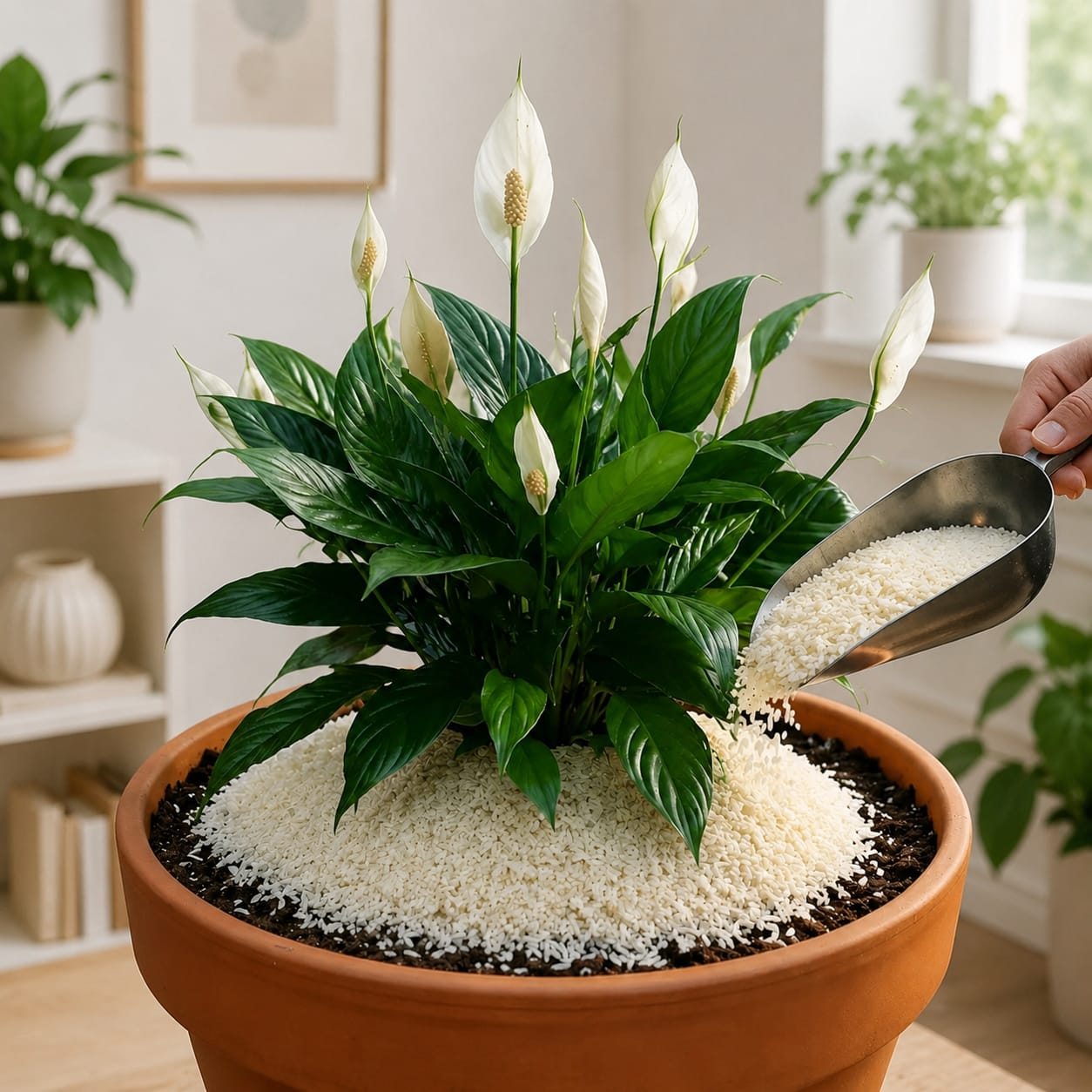
How to Combine Rice Water and Fertilizer
Do not use rice water and fertilizer on the same day. Space them apart. For example, fertilize lightly one month, then use diluted rice water several weeks later if the plant is healthy.
If the plant is growing well, you do not need both routines often. Peace lilies prefer gentle consistency.
When in doubt, use plain water and good light.
Removing Old Flowers
Peace lily flowers naturally fade over time. They may turn green, brown, or dry. Removing old blooms keeps the plant tidy and helps it focus on new growth.
Use clean scissors and cut the flower stem near the base. Do not pull old blooms by hand, because this can damage the plant crown.
A clean peace lily looks more elegant and decorative.
Repotting Peace Lilies
Repot a peace lily when roots fill the pot, the soil breaks down, or the plant dries out too quickly. Choose a pot only one size larger.
Repotting into a huge pot can hold too much moisture and increase the risk of root rot. Fresh airy soil and good drainage are more important than pot size.
After repotting, wait before using rice water or fertilizer. Let the plant settle first.
Best Places to Display Peace Lilies
Peace lilies look beautiful in many indoor spaces. Their white blooms and deep green leaves match almost any decor style.
Good display locations include:
- Bright living room corners
- Bedroom plant stands
- Home office desks
- Entryway tables
- Bathrooms with windows
- Kitchen corners away from direct heat
- Covered balconies with filtered light
Keep the plant away from cold drafts, heating vents, and harsh direct sun.
Decor Styling Ideas
A peace lily looks elegant in white ceramic pots, terracotta bowls, matte black planters, stone-style containers, and woven basket covers. Its clean white flowers make it especially useful for calm, minimal, natural, and modern interiors.
For a soft natural style, place it in a terracotta pot on a wooden plant stand. For a modern look, use a matte white pot near a bright window. For contrast, place it in a dark pot against a light wall.
Peace lilies pair beautifully with pothos, ferns, calatheas, snake plants, ZZ plants, and philodendrons.
Common Mistakes With the Rice Trick
Avoid these mistakes:
- Piling dry rice thickly on the soil
- Using rice water every watering
- Using fermented rice water indoors
- Pouring rice water onto wet soil
- Using rice instead of fertilizer
- Ignoring poor drainage
- Expecting instant blooms
- Adding sugar, milk, or other ingredients
The safest rice routine is diluted, strained, and occasional.
A Simple Peace Lily Rice Water Routine
Here is a balanced routine you can follow:
- Keep the plant in bright indirect light
- Water when the top inch of soil dries
- Use a pot with drainage holes
- Wipe leaves regularly
- Remove faded blooms
- Use diluted rice water once every 4 to 6 weeks during active growth
- Use plain water the rest of the time
- Stop if mold, gnats, or sour smell appear
This routine supports the plant gently without overwhelming the soil.
Final Thoughts
The rice trick for peace lilies can be used as a gentle natural plant-care routine, but it must be done carefully. Diluted rice water is safer than piling dry rice on top of the soil. Use it rarely, strain it well, and apply it only when the plant is already due for watering.
The real key to a beautiful peace lily is balanced care. Bright indirect light, proper watering, airy soil, drainage, humidity, clean leaves, and light feeding matter far more than any single homemade trick.
With gentle care and patience, your peace lily can stay glossy, full, and elegant, producing fresh green leaves and graceful white blooms that bring calm natural beauty into your home.