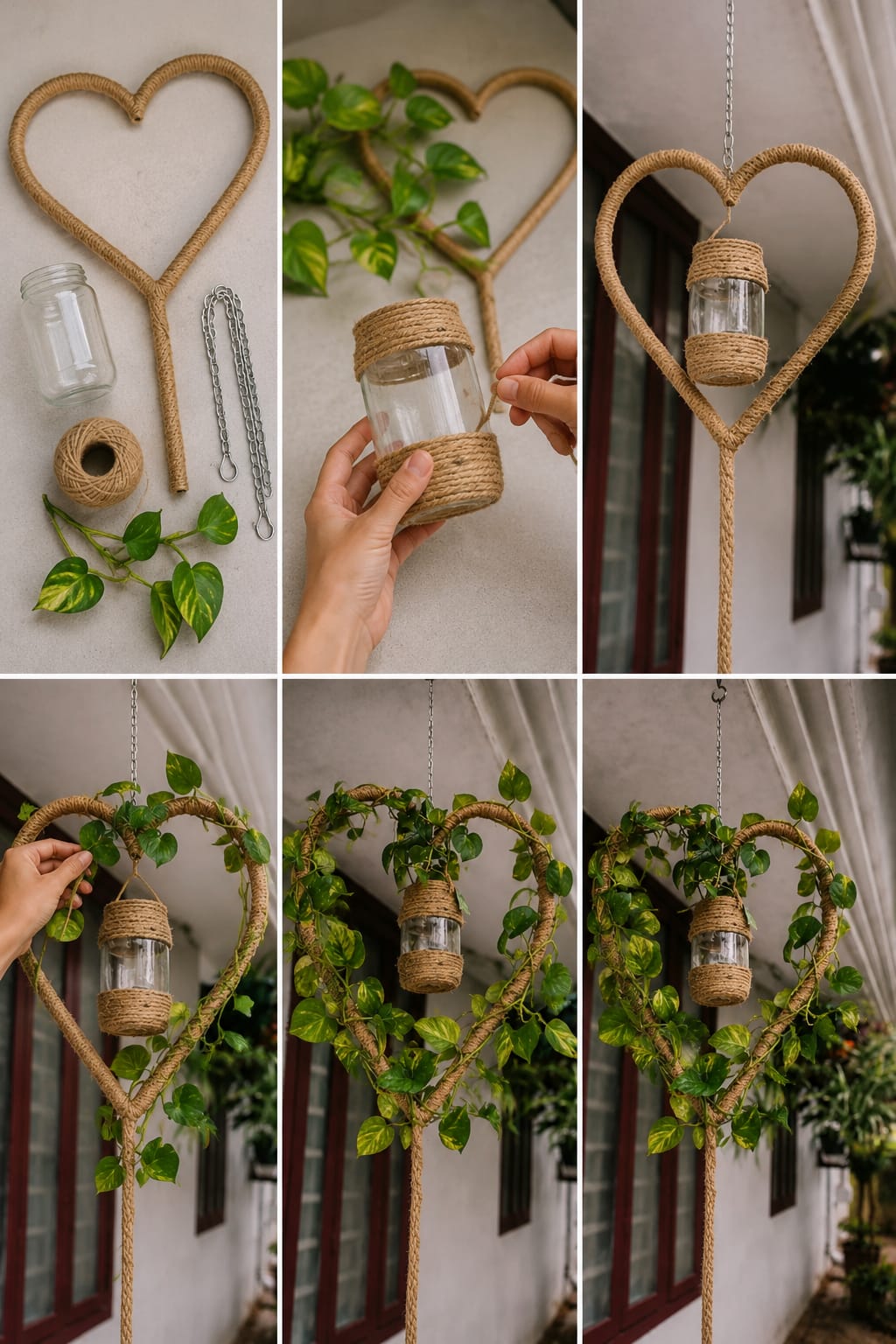
Pothos is one of the easiest and most beautiful trailing plants you can grow indoors. Its heart-shaped green leaves, soft vines, and forgiving nature make it perfect for shelves, windows, balconies, entryways, kitchens, bedrooms, and cozy plant corners. But when you guide pothos around a handmade heart-shaped frame and add a small hanging jar, the plant becomes more than a houseplant. It becomes living wall decor.
A heart-shaped pothos hanging jar planter is a creative way to combine plant care, simple craft materials, and natural indoor styling. The idea is simple: a heart-shaped support is wrapped with rope or jute, a small jar is attached in the middle, and pothos vines are trained around the frame. As the vines grow, the heart shape becomes fuller, softer, and more romantic. The clear jar can hold water for propagation, a small rooted cutting, or simply act as a decorative centerpiece inside the frame.
This project works beautifully because pothos is flexible. Its vines can be guided, wrapped, clipped, and trained without complicated tools. Over time, the plant naturally follows the support and creates a lush green heart. It is a lovely idea for plant lovers, small apartments, balconies, handmade gifts, indoor garden walls, and decorative plant displays.
Why Pothos Is Perfect for a Heart-Shaped Planter
Pothos is ideal for this project because it grows in long, flexible vines. The stems are soft enough to guide around a frame, yet strong enough to keep growing once supported. The leaves already have a heart-like shape, which makes the design feel even more natural.
Pothos also tolerates a range of indoor conditions. It grows well in bright indirect light and can survive in medium light. It roots easily in water, which makes it perfect for jars and propagation displays. A single cutting can become a full trailing plant with time.
Unlike some delicate plants, pothos does not require constant attention. Once the frame is made and the vines are placed, the main care is simple: give it light, keep the water clean if growing in water, and guide new vines as they grow.
What Makes This Decor Idea Special?
This planter has three beautiful elements in one design. First, the rope-wrapped heart frame adds warmth and handmade texture. Second, the glass jar gives a clean, simple, rustic look. Third, the pothos vines bring life, color, and movement.
The result is soft, natural, and decorative without feeling too busy. It can fit many home styles, including boho, farmhouse, cottage, rustic, minimalist, balcony garden, and cozy indoor jungle decor.
It also makes use of small materials. A jar, rope, chain, and a pothos cutting can become a unique hanging planter that looks much more expensive than it is.
Best Pothos Varieties for This Project
Many pothos varieties can work well on a heart-shaped frame. Choose one based on the look you want.
- Golden pothos: Green leaves with yellow variegation. Very easy and fast-growing.
- Marble queen pothos: White and green leaves. Elegant but needs brighter light.
- Neon pothos: Bright lime-green leaves. Great for a fresh modern look.
- Jade pothos: Solid green leaves. Strong, simple, and classic.
- N’Joy pothos: Smaller leaves with creamy variegation. Beautiful for delicate designs.
Golden pothos is often the easiest choice because it grows quickly and adapts well indoors.
Materials You Need
This project does not need complicated supplies. Most items are simple and affordable.
- A heart-shaped wire frame or thick bendable wire
- Natural jute rope or twine
- A small clear glass jar
- Metal chain or strong hanging cord
- Soft plant ties or thin jute string
- Scissors
- Hot glue or strong craft glue, optional
- A pothos cutting or small pothos vine
- Clean water if using the jar for propagation
- Small hook for hanging
Choose strong materials because the planter will hang. The frame should hold its shape, and the jar must be attached securely.
Choosing the Heart Frame
You can buy a heart-shaped metal frame, or you can make one from thick wire. If making it yourself, use wire that bends but does not collapse easily. Floral wire may be too soft unless doubled. A stronger craft wire or garden wire works better.
The heart shape should be wide enough for vines to wrap around. A medium-size frame is easier to decorate than a very tiny one because the leaves have room to spread.
If the frame is too thin, wrap it with jute rope to make it thicker and more natural-looking.
Wrapping the Frame With Jute Rope
Jute rope gives the frame a warm handmade look. It also gives pothos vines a slightly textured surface to rest against.
Start at the bottom of the heart frame. Wrap the rope tightly around the wire, moving slowly around the shape. Keep each wrap close to the last one so the wire does not show. Use a small amount of glue at the start and end if needed.
Do not leave sharp wire edges exposed. The frame should feel smooth and safe for the plant stems.
Preparing the Glass Jar
The jar is the centerpiece of the hanging design. It can hold water for pothos cuttings, or it can hold a small rooted cutting in water. Some people also use it as a tiny vase inside the frame.
Wash the jar well before using it. Remove labels, glue, dust, and food residue. Rinse thoroughly so no soap remains.
If you want a rustic look, wrap jute rope around the top and bottom of the jar. This makes it match the heart frame and hides any plain jar edges.
How to Wrap the Jar
Start near the top rim of the jar. Apply a small dot of glue or tie the jute tightly, then wrap the rope around several times. Keep the rows neat and close together. Repeat the same wrapping near the bottom of the jar.
Leave the center glass area visible so you can see the water and roots. The clear section makes the planter feel light and fresh.
Make sure the rope is secure, especially if it helps hold the jar to the frame.
Attaching the Jar to the Heart Frame
The jar should hang in the center of the heart. It must be attached firmly so it does not fall when filled with water.
You can attach it with strong wire, chain, jute rope, or a jar hanger. Wrap support around the neck of the jar and connect it to the top of the heart frame. You can also support the jar from the bottom with additional rope.
Before adding water or plants, gently test the planter. Hold it up and make sure the jar does not swing too much or slip.
Adding the Hanging Chain
A chain gives the planter strength and makes it easy to hang. Attach the chain to the top center of the heart frame. If using rope instead of chain, choose a strong cord that can handle the weight.
Remember that water adds weight. A small jar may feel light when empty but heavier when filled. The hook, chain, and frame should all be secure.
Hang the planter from a ceiling hook, wall bracket, balcony hook, or sturdy plant hanger.
Choosing the Pothos Cutting
Choose a healthy pothos vine with several leaves. If you are rooting it in the jar, cut below a node. The node is the small bump on the stem where roots can grow.
A good cutting should have:
- At least one node
- One to three healthy leaves
- A firm green stem
- No yellowing or mushy parts
- No pests
Remove any leaf that would sit underwater. Leaves in water can rot and make the jar cloudy.
Rooting Pothos in the Jar
Fill the jar with clean water and place the pothos cutting inside. Make sure the node is underwater, but the leaves stay above the waterline.
Place the hanging planter in bright indirect light. Roots usually begin to grow within a few weeks. Change the water every 5 to 7 days to keep it fresh.
Once roots are several inches long, you can keep the plant in water or move it to soil. For this heart planter, water growing looks especially decorative because the roots are visible inside the jar.
Training Pothos Around the Heart Frame
Once the vine grows longer, gently guide it along the heart frame. Use soft plant ties, jute string, or small clips to hold the vine loosely in place.
Do not tie the stem tightly. Pothos stems thicken as they grow, and tight ties can damage them. Leave a little space so the vine can breathe and move naturally.
Train the vine little by little. As new growth appears, wrap it around the frame and secure it softly.
How to Make the Heart Look Fuller
One cutting may look sparse at first. To make the heart fuller, add several pothos cuttings to the jar or train vines from a nearby potted pothos around the frame.
You can also trim long vines to encourage branching. Each cutting can be rooted and added back to the jar. Over time, the heart becomes more lush.
For the best look, spread leaves evenly around both sides of the heart frame.
Best Light for Pothos on a Heart Frame
Pothos grows best in bright indirect light. This keeps the leaves healthy and helps variegated varieties keep their color.
A spot near a bright window is ideal. Avoid harsh direct sun, especially hot afternoon sun, because it can scorch the leaves. If the planter is on a balcony, keep it in shade or filtered light.
If the plant is in low light, it may grow slowly and produce smaller leaves. Variegated pothos may also turn greener in low light.
Water Care for the Jar
If the pothos is growing in water, keep the water clean. Change it every week. Rinse the jar if it becomes cloudy or develops algae.
Use room-temperature water. Filtered water or water left out overnight can be gentler, especially if your tap water is very hard.
Never let the jar dry completely if the roots are growing in water. Roots that dry out suddenly may become damaged.
Feeding Water-Grown Pothos
Water-grown pothos can survive in plain water for a while, but it needs nutrients for long-term growth. Use a very weak liquid houseplant fertilizer once every 4 to 6 weeks during spring and summer.
Use only one-quarter strength. A small jar does not need much fertilizer. Too much can burn roots or create algae.
After feeding, refresh the water after a few days to prevent buildup.
Can You Plant Pothos in Soil Instead?
Yes. The heart frame can also be used with a small potted pothos. Instead of keeping the plant in water, place a small pot near or below the frame and train the vines upward.
Soil-grown pothos often grows faster and fuller than water-grown pothos. Water-grown pothos looks cleaner and more decorative in a jar. Both options work.
Choose based on the style you want.
Using the Jar as a Propagation Station
The hanging jar can be used as a propagation station. You can place different pothos cuttings inside and watch them root. Once rooted, you can plant them in soil or leave them in the jar.
This makes the heart planter useful and decorative at the same time. It becomes a living propagation display.
It is a great way to multiply your pothos while decorating your home.
How to Keep the Frame Neat
Check the frame every week. New vines may grow away from the heart shape. Gently guide them back around the frame before they become too long.
Remove yellow leaves, trim leggy stems, and adjust ties if they become tight.
Regular small maintenance keeps the heart shape clear and beautiful.
Pruning for Shape
Pruning helps pothos become fuller. If one vine becomes too long and thin, trim it just above a node. This may encourage new growth and keeps the design balanced.
The trimmed pieces can be rooted in the jar. This is one of the easiest ways to fill the heart frame over time.
Always use clean scissors when cutting stems.
How to Prevent Yellow Leaves
Yellow leaves can happen from old age, dirty water, low light, overfeeding, or root problems. One yellow leaf is normal. Many yellow leaves mean something needs attention.
For water-grown pothos, check the roots and water quality. If the water smells bad or looks cloudy, change it. If roots are brown and mushy, trim damaged parts and clean the jar.
For soil-grown pothos, check watering. Too much water is a common cause of yellow leaves.
How to Prevent Brown Tips
Brown tips can come from dry air, hard water, fertilizer buildup, or inconsistent moisture. Use clean water and avoid strong fertilizer.
If the air is very dry, group the pothos near other plants or place it in a room with moderate humidity. Pothos is forgiving, but it still looks better with stable care.
Trim brown tips if you want a cleaner look.
Dealing With Algae in the Jar
Algae can grow inside clear jars when there is light and nutrients in the water. It may appear as green film on the glass.
To reduce algae:
- Keep the jar out of direct sun
- Use weak fertilizer only rarely
- Change water regularly
- Wash the jar when needed
- Remove dead leaves quickly
A little algae is common, but a clean jar looks much better.
Keeping the Heart Frame Strong
Because the frame is wrapped with rope, it may collect dust or moisture over time. Keep it dry and clean. If it is outdoors, protect it from heavy rain.
Jute and natural rope can weaken if they stay wet for long periods. For outdoor use, place the planter in a covered area.
Check the chain and hanging points often to make sure everything remains secure.
Indoor Decor Ideas
A heart-shaped pothos hanging jar planter works beautifully in many indoor spaces. It adds greenery without taking up table space, and the heart shape gives it a soft personal touch.
Try these decor ideas:
- Hang it near a bright kitchen window.
- Place it on a balcony wall in filtered light.
- Use it as living wall art in a bedroom.
- Hang it near a reading corner.
- Display it in an entryway for a welcoming look.
- Use it as handmade plant decor for a cozy living room.
- Pair it with macrame hangers and terracotta pots.
The natural rope and green leaves create a warm, relaxed look.
Balcony and Patio Styling
This project also works well on covered balconies and patios. The heart frame can hang near a wall, railing, or shaded corner.
Protect it from strong direct sun, heavy rain, and strong wind. Pothos prefers warm filtered light. Strong sun can burn the leaves, and rain can soak the rope and weaken the frame.
A covered balcony with soft light is perfect.
Gift Idea for Plant Lovers
A heart-shaped pothos planter makes a thoughtful handmade gift. It is personal, decorative, and alive. You can prepare it with a rooted pothos cutting and a clean jar of water.
It works well for housewarming gifts, birthdays, plant swaps, Mother’s Day, Valentine’s Day, or simple handmade decor gifts.
Add a small care note with watering and light instructions so the recipient can keep it healthy.
Continue to Page 2
Continue to page 2 for more details about this article and the key points many readers miss on the first page.