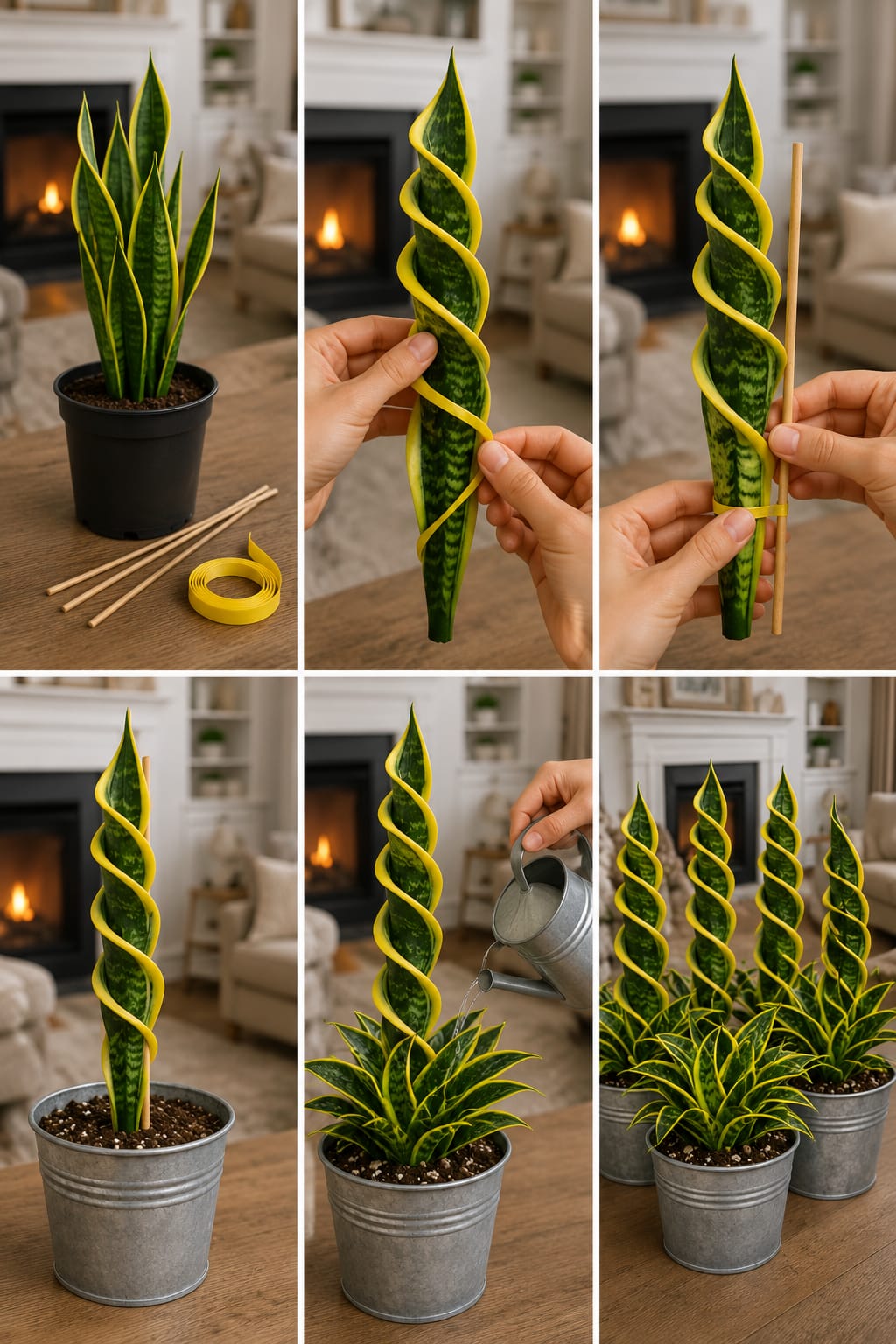
Snake plants are already famous for their bold shape, strong leaves, and easy indoor care. They look modern, clean, and architectural even when grown in a simple pot. But with a little creativity, a snake plant can become more than a regular houseplant. It can become a living sculpture. One of the most eye-catching ideas is the spiral snake plant topiary trick, where a tall snake plant leaf is gently styled with a spiral accent and supported upright to create a twisted, elegant display.
This plant styling method turns the natural sword-like shape of a snake plant into a decorative feature that looks handmade, artistic, and surprisingly refined. The spiral detail adds movement, while the upright leaf gives height. When several spiral leaves are displayed together in one pot, the result can look like a row of botanical towers rising above a compact base of fresh snake plant pups.
The key to this trick is patience. Snake plant leaves are thick and firm. They should not be forced, folded sharply, or squeezed tightly. The goal is to style the plant gently without damaging the leaf. With soft support, bright indirect light, careful watering, and the right soil, this design can become a beautiful indoor plant statement for living rooms, offices, shelves, windowsills, and cozy plant corners.
What Is the Spiral Snake Plant Topiary Trick?
The spiral snake plant topiary trick is a decorative styling method that uses a tall snake plant leaf as the main vertical feature. A flexible decorative strip, plant tie, or colored support is wrapped around the leaf in a spiral pattern. A thin wooden stick or bamboo stake may be placed beside the leaf to keep it upright. The styled leaf is then positioned in a pot, often with smaller snake plant pups planted around the base.
The finished look is clean and sculptural. The spiral creates movement, the leaf gives structure, and the smaller plants at the bottom make the pot look full and balanced.
This is not a method for forcing the plant to grow in a spiral naturally overnight. It is a gentle styling idea. The plant remains the main focus, and the added spiral support simply enhances its shape.
Why This Design Looks So Beautiful
Snake plants have naturally strong vertical lines. Their leaves are upright, pointed, and patterned with green stripes. Many varieties also have yellow edges, which already create a striking outline. When a spiral accent follows the length of the leaf, the design becomes more dramatic.
The spiral adds a soft curve to the straight leaf. This mix of straight and curved lines creates visual interest. It feels modern but still natural. It also works beautifully with simple planters, metal containers, terracotta pots, black ceramic pots, or stone-textured bowls.
When several spiral leaves are grouped together, the display looks like a miniature indoor garden sculpture. It can become a centerpiece rather than just another plant in the room.
Is This Safe for Snake Plants?
This method can be safe if done gently. Snake plant leaves are strong, but they are not flexible like pothos vines or philodendron stems. They can crack, split, or crease if bent too sharply. That is why the spiral should be wrapped around the leaf, not used to twist the leaf aggressively.
The leaf should remain mostly in its natural shape. The support should guide and decorate, not squeeze or force. Any tie, ribbon, or strip should be loose enough that it does not cut into the leaf surface.
If the leaf shows cracking, soft spots, or damage, do not style it. Choose a healthy leaf instead.
Best Snake Plant Varieties for This Trick
The best snake plants for this project have tall, firm, upright leaves. Varieties with yellow edges look especially beautiful because the spiral detail can follow the natural border of the leaf.
Good options include:
- Sansevieria trifasciata Laurentii
- Classic upright snake plant varieties
- Tall green snake plants with firm leaves
- Yellow-edged snake plants
- Healthy mature leaves from a strong plant
Very short bird’s nest snake plants are not ideal for the tall spiral leaf itself, but they are perfect for filling the base of the pot. Their compact rosette shape creates a beautiful contrast under the upright spiral leaves.
Best Time to Try This Method
The best time to create a spiral snake plant topiary is during spring or summer, when the plant is actively growing. During this period, the plant is stronger and more able to handle light styling or repotting.
Avoid heavy styling during winter if the plant is in low light and growing slowly. Cold rooms and dry indoor air can make leaves more brittle.
Choose a day when the plant is hydrated but not waterlogged. Leaves that are severely dehydrated may be more likely to wrinkle or crack.
Materials You Need
This project uses simple materials. The most important thing is to choose soft, gentle supports that will not damage the leaf.
- A healthy snake plant with tall leaves
- A pot with drainage holes
- Fast-draining succulent soil
- A bamboo stick or thin wooden dowel
- Soft plant tape or flexible decorative strip
- Small snake plant pups for the base
- Clean scissors
- A small trowel
- Decorative pebbles, optional
- A stable planter or metal container
Avoid rough wire directly on the leaf. Avoid tight rubber bands. Avoid anything sharp, sticky, or stiff that can scratch or cut the plant.
Step 1: Choose a Strong Leaf
Start with one tall, healthy snake plant leaf. It should be firm, upright, and free from cracks. The leaf should not be mushy, wrinkled, yellowing, or damaged at the base.
A leaf with a clean pointed tip looks best because it creates a strong topiary shape. Yellow-edged leaves are especially attractive because their natural border adds extra color to the spiral look.
If you are styling several leaves, choose leaves of similar height for a balanced display, or use different heights for a more natural arrangement.
Step 2: Prepare the Support Stick
A bamboo stick or wooden dowel helps keep the leaf upright. Place the stick beside the leaf, not through it. The support should be close enough to guide the leaf but not press harshly against it.
The stick should be slightly shorter than the leaf or about the same height. If it is too tall, it may distract from the plant. If it is too short, it may not support the design properly.
Natural bamboo works well because it blends with plant decor and does not look too artificial.
Step 3: Add the Spiral Accent
Use a soft flexible strip or plant tape to create the spiral. Begin near the base of the leaf and wrap upward in a gentle curve. Do not pull tightly. The spiral should sit lightly against the leaf.
Keep the spacing even as you move upward. A smooth spiral looks more elegant than a tight, crowded one. The strip should follow the leaf naturally without forcing it to bend.
When you reach the top, secure the end softly. Make sure nothing is squeezing the leaf.
Step 4: Check for Pressure Points
After wrapping the spiral, look closely at the leaf. The support should not press into the surface. There should be no pinched areas, sharp bends, or creases.
If the leaf looks squeezed, loosen the strip. If the leaf begins to fold or crack, remove the spiral and choose a different leaf.
The plant should always come before the design.
Step 5: Plant the Styled Leaf
If the leaf is attached to a rooted plant, keep the roots intact and position it in the pot. If you are using a rooted division, plant it firmly in a fast-draining soil mix.
Place the spiral leaf slightly toward the back or center of the pot. This creates height. Then plant smaller snake plant pups around the base to fill the front and sides.
Do not bury the crown too deeply. Snake plants can rot if the base sits too low in wet soil.
Step 6: Add Smaller Snake Plant Pups
Small snake plant pups make the display look fuller and more natural. They also hide the support base and create a layered effect.
Place the pups around the tall spiral leaf, leaving space for airflow. Do not overcrowd the pot. Snake plants like a snug pot, but they still need room for roots and drainage.
Firm the soil gently around each plant so they stand upright.
Step 7: Water Lightly After Planting
If the soil is dry, water lightly after planting. If the soil is already moist, wait a few days. Snake plants do not need heavy watering after styling.
Always let extra water drain from the pot. Do not leave the planter sitting in water.
After the first watering, return to a normal snake plant routine and water only when the soil has dried well.
Best Soil for a Spiral Snake Plant Display
Snake plants need fast-draining soil. A heavy potting mix can hold too much water and cause root rot. This is especially important in decorative arrangements because the pot may contain several plants close together.
A good soil mix can include:
- Cactus or succulent soil
- Perlite
- Pumice
- Coarse sand
- Small bark chips
- A small amount of regular potting mix
The soil should feel loose and gritty, not muddy or dense.
Choosing the Right Pot
A spiral snake plant topiary looks best in a stable pot. Since the tall styled leaves add height, the container should not be too lightweight. Metal planters, terracotta pots, ceramic bowls, and stone-look pots can all work well.
The pot must have drainage holes. If you use a decorative outer container without holes, keep the plant in a nursery pot inside it and empty any water after watering.
A wide pot gives the arrangement better balance and prevents tipping.
Why Drainage Matters
Snake plants are drought-tolerant and store moisture in their thick leaves and rhizomes. They do not like sitting in soggy soil. Poor drainage is one of the fastest ways to damage the roots.
A beautiful topiary display will not last if the roots rot. Good drainage keeps the plant strong, upright, and healthy.
Always choose drainage before decoration.
Watering Routine
Water snake plants only when the soil is dry. In many homes, this may mean every 2 to 4 weeks, but the exact timing depends on light, temperature, pot size, and soil mix.
Check the soil before watering. If it still feels damp below the surface, wait. When you do water, water thoroughly and let it drain completely.
In winter, water less often because the plant grows more slowly.
Signs of Overwatering
Overwatering can damage snake plants quickly. Watch for these signs:
- Soft mushy leaves
- Yellowing leaves
- Leaves falling over
- Wet soil for many days
- Bad smell from the pot
- Black or brown roots
- Mushy base near the soil
If these signs appear, stop watering and check the roots. Repot into dry, fresh succulent soil if needed.
Signs of Underwatering
Snake plants tolerate dryness well, but they can still become too dry. Signs include wrinkled leaves, curling edges, and soil pulling away from the pot.
If the plant is very dry, water thoroughly and let it drain. Do not compensate by watering every day afterward. Return to a balanced dry-down routine.
Snake plants recover better from dryness than from soggy soil.
Best Light for Spiral Snake Plants
Snake plants can tolerate low light, but they look best in bright indirect light. Good light keeps the leaves strong, upright, and colorful. Variegated leaves with yellow edges need enough brightness to maintain their pattern.
Place the plant near a bright window, but protect it from harsh direct afternoon sun. Gentle morning sun can be helpful.
In low light, the plant may grow slowly and the display may not stay as strong.
Can It Grow Near a Fireplace?
A spiral snake plant can look beautiful in a living room near a fireplace, but be careful with heat. Do not place the plant too close to direct heat, hot air, or dry drafts.
Heat can dry the leaves and soil unevenly. It may also weaken the plant over time.
Place the plant where it gets the cozy visual effect of the room without being exposed to intense heat.
How to Keep the Spiral Shape Neat
Check the spiral every couple of weeks. If the strip becomes tight, loosen it. If the leaf grows or shifts, adjust the support gently.
The support should never dig into the leaf. Snake plant leaves grow slowly, but pressure marks can still appear over time.
If the spiral accent becomes dirty or worn, replace it carefully.
Should the Spiral Be Removed Later?
You can keep the spiral accent as long as it does not damage the leaf. If the leaf starts to show pressure marks, remove it. If you want a more natural look later, you can also remove the support and let the plant stand on its own.
Some leaves may hold their shape better than others. Remember that this is a decorative style, not a permanent plant transformation.
Regular checks keep the plant safe.
Cleaning the Leaves
Snake plant leaves collect dust, especially when displayed indoors. Dust makes the leaves look dull and reduces light absorption.
Wipe the leaves gently with a soft damp cloth. Be careful around the spiral area. Support the leaf with one hand while cleaning with the other.
Do not use heavy leaf shine products. Clean water is usually enough.
Feeding Snake Plants
Snake plants are light feeders. During spring and summer, you can use a diluted cactus or succulent fertilizer once every 6 to 8 weeks.
Do not overfeed. Too much fertilizer can cause weak growth or root stress. In winter, skip fertilizer unless the plant is actively growing in strong light.
Healthy light and proper watering are more important than frequent feeding.
How to Encourage More Pups
More pups can make the base of the spiral display look fuller. To encourage pups, give the plant bright indirect light, use a snug pot, and avoid overwatering.
Snake plants often produce pups when they are healthy and slightly root-bound. Do not move them into a much larger pot too soon.
When pups grow large enough, you can leave them for a fuller look or divide them into new pots.
Repotting a Spiral Snake Plant Arrangement
Repot when the plant becomes crowded, the soil breaks down, or roots push strongly against the pot. Spring or early summer is best.
Remove the plant gently and keep the styled leaf supported. Repot into fresh fast-draining soil and a container only slightly larger than the old one.
After repotting, wait before watering if the roots were disturbed. This reduces the risk of rot.
Dividing Snake Plant Pups
Snake plant pups grow from underground rhizomes. To divide them, remove the plant from the pot and gently separate the pup with roots attached. Use clean scissors or a clean knife if needed.
Let any cut rhizome dry for a day before planting if it looks wet. Then plant in dry or lightly moist succulent soil.
Divisions can be used to create more spiral arrangements or fill the base of an existing one.
Indoor Decor Ideas
The spiral snake plant topiary is perfect for decor because it has a strong sculptural look. It works especially well in modern, rustic, farmhouse, minimalist, and cozy living room interiors.
Try these styling ideas:
- Place it on a coffee table as a living centerpiece.
- Use a galvanized metal pot for a farmhouse look.
- Choose a matte black pot for modern contrast.
- Place it near a bright fireplace wall, away from heat.
- Group three spiral pots together for a dramatic display.
- Use decorative pebbles on the soil surface for a finished look.
- Place it on a wooden console table near filtered light.
The upright spiral leaves add height without taking up too much floor space.
Continue to Page 2
Continue to page 2 for more details about this article and the key points many readers miss on the first page.