Best Rooms for This Plant Display
Good rooms include living rooms, bedrooms, offices, entryways, sunrooms, and bright hallways. Snake plants tolerate normal indoor conditions well, making them easy to style in many spaces.
For the best look, choose a place with bright indirect light. The plant can survive in lower light, but the color and shape will be stronger with more brightness.
Avoid bathrooms or dark corners with very little light if you want the display to stay bold.
Using Several Spiral Leaves Together
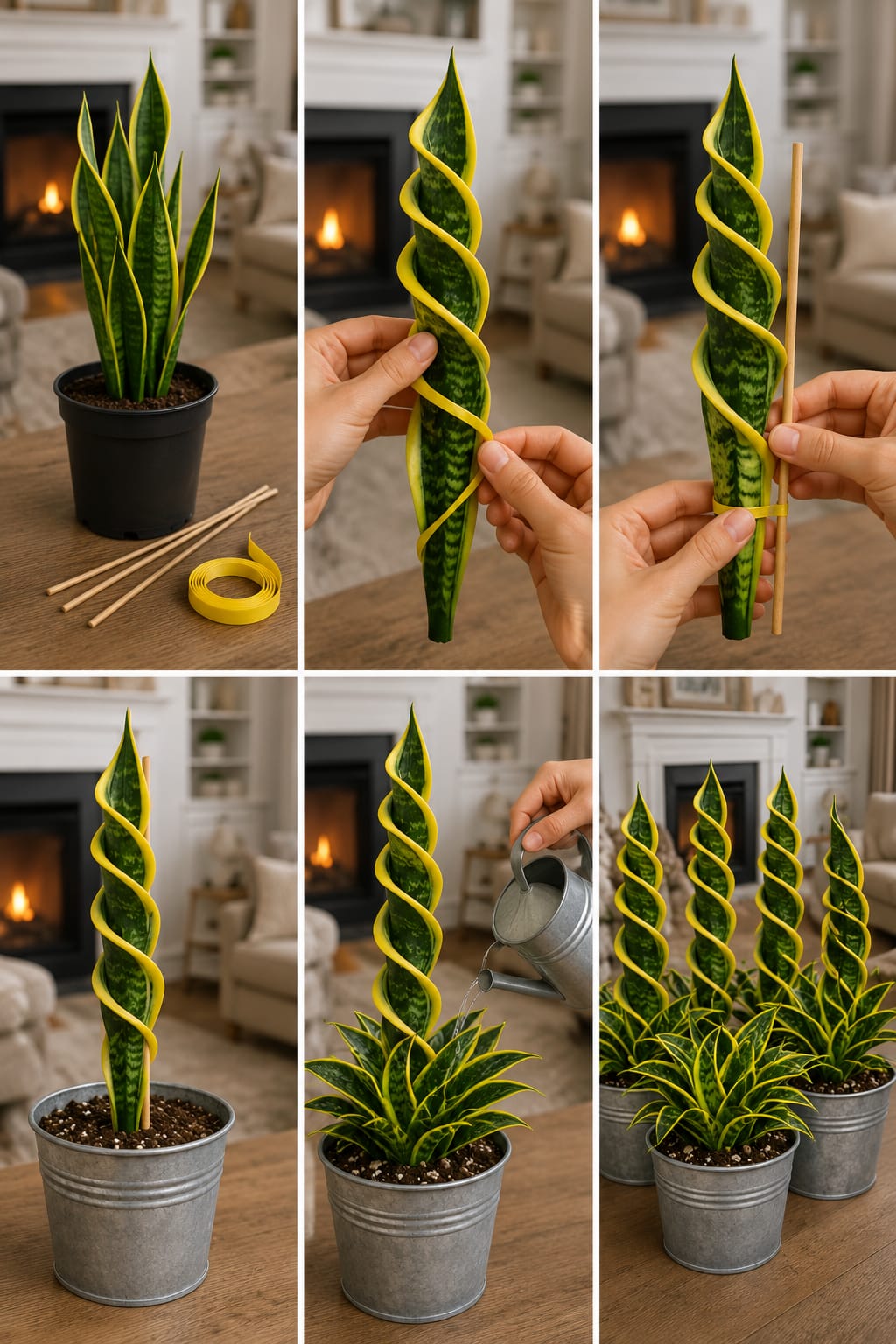
A group of spiral leaves can create a beautiful statement. Use different heights for a natural rhythm, or keep them similar for a clean symmetrical look.
When grouping several styled leaves in one pot, make sure the pot is wide and heavy enough. Each leaf should have enough space so the spiral details remain visible.
Do not overcrowd the roots. A crowded pot can dry unevenly and make care harder.
Can This Be Done With Cut Leaves?
Snake plant leaves can root from cuttings, but a cut leaf used as a decorative topiary may not always stay fresh long-term if it has no roots. For a lasting display, use rooted leaves or divisions whenever possible.
If using a cut leaf, allow the cut end to callus before planting in dry succulent mix. Rooting can take time, and not every cutting will succeed.
A rooted plant is more reliable for a decorative arrangement.
Common Problems With This Trick
Common issues include leaf cracking, tight spiral marks, leaning, overwatering, and unstable pots. Most problems can be avoided by using gentle support and proper care.
If the leaf cracks, remove the spiral support and let the plant rest. If the plant leans, add a hidden stake. If the soil stays wet, improve drainage and reduce watering.
The design should always support the plant, not stress it.
Common Mistakes to Avoid
Avoid these mistakes:
- Wrapping the spiral too tightly
- Forcing the leaf to twist
- Using rough wire directly on the leaf
- Choosing a weak or damaged leaf
- Using heavy wet soil
- Watering too often
- Using a pot without drainage
- Placing the plant too close to heat
- Ignoring pressure marks
Gentle styling is the safest way to keep the display beautiful.
A Simple Care Routine
Use this routine for a healthy spiral snake plant display:
- Place in bright indirect light.
- Use fast-draining succulent soil.
- Water only when the soil is dry.
- Use a pot with drainage holes.
- Check the spiral support every 2 weeks.
- Loosen ties if they press into the leaf.
- Wipe dust from leaves gently.
- Feed lightly during spring and summer.
- Keep away from strong heat and cold drafts.
This routine keeps both the plant and the design in good condition.
Final Thoughts
The spiral snake plant topiary trick is a creative way to turn a simple snake plant into a striking living sculpture. With a tall healthy leaf, soft spiral support, a stable stake, and a full base of smaller snake plant pups, you can create a plant display that looks modern, artistic, and unique.
The most important rule is to protect the plant. Do not force the leaf, do not wrap too tightly, and do not overwater after styling. Use bright indirect light, fast-draining soil, a stable pot, and gentle maintenance.
With patience, the spiral snake plant display can become a beautiful feature in your home. It adds height, texture, movement, and natural greenery while keeping the strong low-care character that makes snake plants so popular.