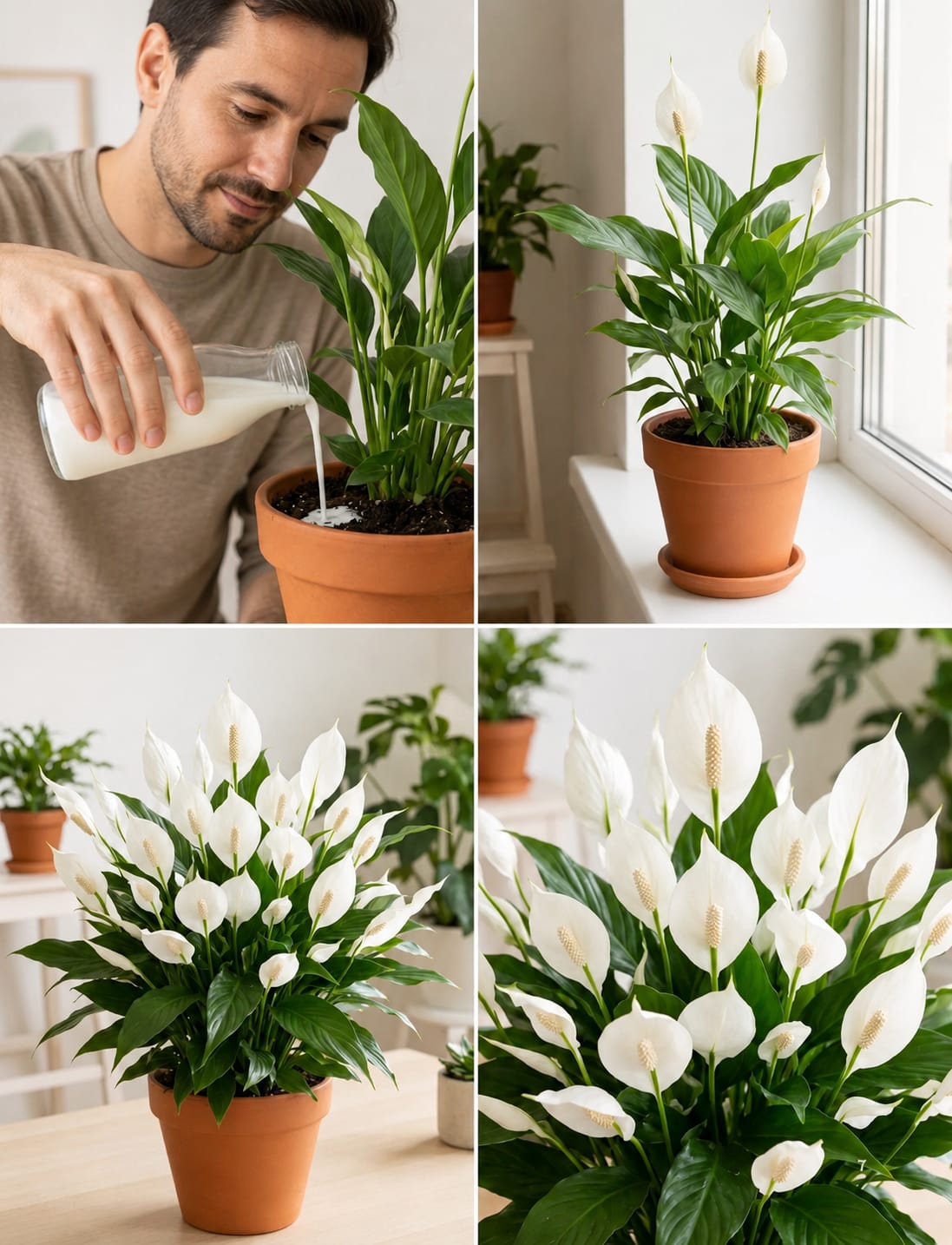
Peace lilies are some of the most elegant indoor plants you can grow at home. Their deep green leaves, graceful upright shape, and soft white blooms make them perfect for bright windowsills, cozy corners, bedrooms, offices, living rooms, and clean modern plant displays. A healthy peace lily can make a room feel fresh, calm, and naturally beautiful without needing complicated care.
One plant-care idea that often gets attention is using a gentle milk water mixture for peace lilies. The idea is simple: a small amount of milk is diluted heavily with water and used as an occasional plant tonic. Some plant lovers use this method because milk contains small amounts of calcium and other nutrients. Others like it because it feels natural, easy, and inexpensive.
But peace lilies have sensitive roots, so this trick must be handled carefully. Milk should never be poured straight into the soil. It should never be used often. It should never be thick, sour, sweetened, flavored, or left sitting in the pot. Used incorrectly, milk can create bad smells, mold, fungus gnats, sticky soil, and root stress.
The safest version is a very weak milk water mixture used rarely, only on a healthy plant, and only when the soil is already ready for watering. The real secret to a beautiful peace lily is still the basics: bright indirect light, good drainage, lightly moist soil, warm temperatures, clean leaves, moderate humidity, and gentle feeding.
What Is the Milk Water Trick?
The milk water trick means mixing a small amount of plain milk with plenty of clean water, then applying it lightly to the soil. The mixture should be thin and watery. It should not look creamy or thick.
This trick is not a complete fertilizer. It is not a bloom booster by itself. It is not a cure for yellow leaves, root rot, brown tips, or weak growth. Think of it as an occasional mild tonic, not the main care routine.
Peace lilies grow best when their roots stay healthy. If the roots are sitting in wet, sour, or compacted soil, no homemade mixture will fix the problem. Good care must come first.
Why Milk Water Must Be Diluted
Milk contains organic material. In a plant pot, organic liquids can break down quickly. If milk is too strong, it may smell bad, attract pests, or encourage mold. This is especially risky indoors where airflow is limited.
A peace lily pot is a small environment. Anything poured into it stays around the roots until it drains or breaks down. That is why strong homemade liquids can cause problems faster than people expect.
Dilution makes the mixture safer. A very weak mixture reduces the chance of sour soil and root irritation.
Safe Milk Water Recipe for Peace Lilies
Use only plain unsweetened milk. Do not use flavored milk, chocolate milk, condensed milk, evaporated milk, cream, or milk mixed with sugar.
A gentle recipe:
- Mix 1 tablespoon of plain milk with 1 cup of clean water.
- Stir well until fully combined.
- Use only a small amount around the soil.
- Do not pour it over the leaves or flowers.
- Use it only once every 6 to 8 weeks if desired.
For extra caution, dilute it even more by adding another cup of water. The weaker the mixture, the safer it is for indoor use.
How Often to Use Milk Water
Use milk water rarely. Once every 6 to 8 weeks is enough. Many peace lilies do not need it at all. Plain water and a balanced houseplant fertilizer are usually more reliable.
Do not use milk water weekly. Do not use it every time you water. Repeated milk mixtures can create buildup in the soil and may lead to odor, mold, or fungus gnats.
During winter, avoid this trick if the plant is growing slowly. Peace lilies use less water and nutrition when light is lower and temperatures are cooler.
When Not to Use Milk Water
Do not use milk water on a stressed peace lily. If the plant is already struggling, fix the cause first.
Avoid milk water if you notice:
- Soil staying wet for many days
- Yellow leaves from overwatering
- Brown mushy roots
- Soft stems near the base
- Fungus gnats
- Mold on the soil
- Sour smell from the pot
- A pot without drainage holes
- Recent repotting stress
If any of these signs appear, stop all homemade mixtures and return to clean water only until the plant recovers.
Apply It Only to the Soil
Milk water should be applied to the soil, not poured over the leaves. Peace lily leaves are beautiful and glossy, but they should not be coated with milk. Milk residue on leaves can dry sticky, attract dust, and create an unpleasant smell.
Pour the mixture slowly around the outer soil area. Avoid the crown where the stems meet the soil. Too much moisture around the crown can encourage rot.
After applying, let the pot drain fully and empty the saucer.
Why Drainage Is Essential
Peace lilies need pots with drainage holes. This is especially important when using any homemade liquid. Without drainage, extra liquid collects at the bottom of the pot. This can suffocate roots and create sour soil.
If your decorative pot has no drainage holes, keep the peace lily inside a nursery pot with holes. Place that inside the decorative pot. After watering, remove the nursery pot or pour away any standing water from the outer container.
Healthy drainage keeps roots breathing.
The Best Soil for Peace Lilies
Peace lilies like soil that holds some moisture but still drains well. Heavy, dense soil can stay wet too long. Very dry, gritty soil can make the plant droop too often. The best mix is balanced.
A good peace lily soil mix can include:
- Quality indoor potting mix
- Perlite for drainage
- Coco coir for moisture
- Fine orchid bark for airflow
- A small amount of compost or worm castings
The soil should feel light and slightly springy, not muddy or compacted. When the soil is healthy, every watering routine becomes safer.
Why Heavy Soil Causes Problems
Peace lilies like moisture, but they still need oxygen around the roots. Heavy soil blocks air and holds water for too long. This can lead to root rot, yellow leaves, and drooping even when the soil is wet.
If milk water is added to heavy wet soil, the risk becomes higher. The organic mixture can sit in the pot and break down slowly, creating odor or mold.
Before trying any tonic, make sure the soil drains properly.
Watering Peace Lilies Correctly
Peace lilies prefer soil that stays lightly moist but not soaked. Water when the top inch of soil begins to dry. If the plant droops slightly and the soil is dry, it likely needs water.
When watering, pour slowly until water drains from the bottom. Then empty the saucer. This keeps the entire root ball hydrated without leaving the plant sitting in water.
Do not water only by calendar. Check the soil first.
Signs Your Peace Lily Needs Water
Peace lilies are famous for drooping when thirsty. This can be useful because the plant clearly shows when it needs moisture. But do not let it collapse completely every time, because repeated severe wilting can weaken the plant.
Signs of thirst include:
- Drooping leaves
- Dry top soil
- Lightweight pot
- Dull-looking leaves
- Slight leaf curling
If the soil is dry, water thoroughly. If the soil is wet and the plant is drooping, check the roots instead of adding more water.
Signs of Overwatering
Overwatering is one of the most common peace lily problems. It can look confusing because an overwatered peace lily may droop like a thirsty one. The soil tells the truth.
Signs of overwatering include:
- Yellow leaves
- Wet soil for many days
- Soft stems
- Brown mushy roots
- Sour smell
- Fungus gnats
- Drooping while soil is damp
If these signs appear, stop milk water, fertilizer, and all tonics. Let the soil dry slightly and inspect the roots if needed.
Does Milk Water Make Peace Lilies Bloom?
Milk water does not directly force peace lilies to bloom. Peace lily flowers depend mostly on maturity, light, root health, steady moisture, and overall plant strength.
If a peace lily has healthy leaves but no blooms, it often needs brighter indirect light. Low light may keep the plant alive, but it can reduce flowering.
For more blooms, focus on bright filtered light and balanced feeding. Milk water alone will not create flowers.
Best Light for Peace Lilies
Peace lilies grow best in bright indirect light. They can tolerate lower light, but they usually bloom better with more brightness.
A spot near a window with filtered light is ideal. Morning sun can be gentle and helpful. Harsh afternoon sun can burn the leaves, especially if the plant is close to hot glass.
If the leaves turn pale or scorched, move the plant farther from direct sun. If the plant grows leaves but never blooms, move it to brighter indirect light.
How to Encourage More White Blooms
To encourage peace lily blooms, give the plant the right conditions consistently.
- Place it in bright indirect light.
- Keep soil lightly moist, not soggy.
- Use a pot with drainage holes.
- Feed lightly during spring and summer.
- Keep the plant warm.
- Improve humidity if air is dry.
- Remove old faded blooms.
Peace lilies bloom best when they are comfortable and stable.
Feeding Peace Lilies Properly
Peace lilies are not heavy feeders. Too much fertilizer can cause brown leaf tips and root stress. Use a balanced liquid houseplant fertilizer at half strength once every 4 to 6 weeks during active growth.
Do not fertilize in winter if growth is slow. Do not fertilize a plant with root rot or wet soil.
Use plain water between feeding days to prevent buildup.
Can Milk Water Replace Fertilizer?
No. Milk water is not a complete fertilizer. It may contain small amounts of calcium and other elements, but it does not provide balanced nutrition in reliable amounts.
A proper houseplant fertilizer gives nitrogen, phosphorus, potassium, and trace minerals in a controlled way. Milk water is only an optional occasional tonic, not a full feeding plan.
For predictable results, use diluted fertilizer during active growth.
Combining Milk Water and Fertilizer
Do not use milk water and fertilizer on the same day. Too many treatments at once can stress the plant. Space them apart by several weeks.
A simple routine can look like this:
- Plain water as needed
- Diluted fertilizer once every 4 to 6 weeks in active growth
- Optional weak milk water once every 6 to 8 weeks
- No milk water during stress or root problems
Peace lilies respond best to gentle consistency.
Cleaning Peace Lily Leaves
Peace lily leaves are broad and glossy, so they collect dust easily. Dust blocks light and makes the plant look dull. Clean leaves help the plant absorb light and stay attractive.
Use a soft damp cloth to wipe each leaf. Support the leaf with one hand while wiping with the other. Avoid heavy leaf shine products because they can leave residue.
Never use milk as a leaf shine. It can smell, attract dust, and leave sticky marks.
Removing Old Blooms
Peace lily blooms eventually fade from white to green, brown, or dry. Remove old flowers by cutting the flower stem near the base with clean scissors.
This keeps the plant tidy and helps it redirect energy into new leaves and future blooms.
Do not pull old stems harshly because this can damage the crown.
Removing Yellow Leaves
One yellow leaf now and then is normal, especially if it is old. Cut it near the base with clean scissors.
If many leaves turn yellow at the same time, check watering, drainage, light, and root health. Yellow leaves can be caused by overwatering, underwatering, old soil, too much fertilizer, low light, or root stress.
Milk water will not fix yellowing unless the main care issue is corrected.
Brown Leaf Tips
Brown tips are common on peace lilies. They may come from dry air, inconsistent watering, fertilizer buildup, hard tap water, direct sun, or root stress.
To reduce brown tips:
- Water consistently
- Avoid strong fertilizer
- Use filtered water if tap water is harsh
- Keep humidity moderate
- Avoid direct hot sun
- Flush soil occasionally with plain water
Once a tip turns brown, it will not turn green again. Trim it neatly if desired.
Continue to Page 2
Continue to page 2 for more details about this article and the key points many readers miss on the first page.