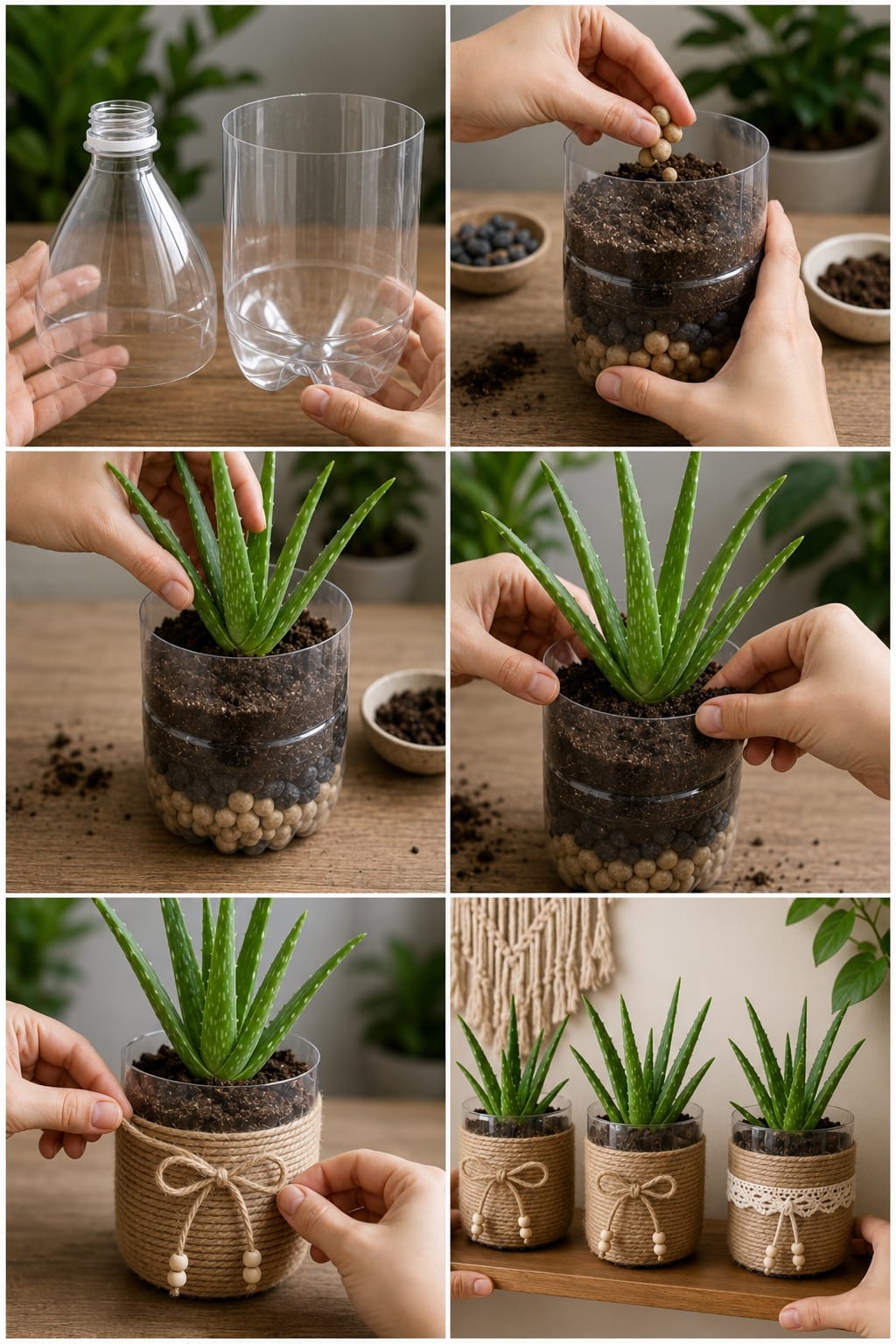
Can You Use This Planter for Other Plants?
Yes. This recycled bottle planter works well for many small plants, especially those that like small containers.
Good choices include:
- Small succulents
- Haworthia
- Gasteria
- Baby snake plants
- Small herbs
- Spider plant babies
- Pothos cuttings
Choose the soil and watering routine based on the plant. Succulents need dry soil, while herbs may need more moisture.
Decor Ideas for Recycled Bottle Aloe Planters
These planters look beautiful in groups. Make three or more and place them together on a shelf or windowsill. Use matching rope and lace for a coordinated look.
- Place them on a wooden shelf for rustic charm.
- Use them on a kitchen windowsill with herbs.
- Style them on a desk for clean greenery.
- Group them with candles and books.
- Place them near macrame wall decor.
- Use them as small handmade gifts.
- Set them on a balcony table for a cozy garden look.
The natural rope softens the look of the plastic and makes the planter feel warm and handmade.
Best Rooms for This Aloe Planter
This planter works well in bright rooms. Good places include kitchens, bedrooms, home offices, living rooms, sunrooms, and covered balconies.
Avoid dark bathrooms, cold corners, and places with no natural light. Aloe vera needs brightness to stay compact and healthy.
If your room is too dark, use a grow light or move the plant to a brighter window.
How to Make the Planter Look More Expensive
Small details make a big difference. Use neat rope wrapping, clean white stones, and a simple matching bow. Keep the plant centered and upright.
You can also paint the top rim, add a small wooden label, or use matching rope colors across several planters.
A clean finish makes a recycled bottle look like a boutique handmade planter.
Common Mistakes to Avoid
- Forgetting drainage holes
- Using heavy garden soil
- Watering too often
- Burying the aloe crown too deeply
- Using a bottle that is too small
- Keeping the plant in low light
- Letting water sit under the planter
- Wrapping rope before checking drainage
- Using glue inside the soil area
These small mistakes can make the planter fail. Build it carefully from the start.
How to Refresh the Planter
After several months, the soil may settle. Add a little fresh succulent mix if needed. If the aloe grows too large, move it into a bigger pot and use the bottle planter for a smaller pup.
If the rope gets dusty, brush it gently. If it becomes stained, you can rewrap the outside with fresh twine.
Refresh the planter whenever it begins to look crowded or worn.
When to Repot Aloe Vera
Repot aloe vera when the roots fill the container, pups become crowded, or the plant becomes top-heavy. A recycled bottle planter is best for young aloe plants, not very large mature ones.
When the plant outgrows the bottle, move it into a terracotta pot with drainage holes and fresh succulent soil.
You can then use the bottle planter for a new small aloe pup.
Simple Care Routine
- Place in bright light.
- Use cactus or succulent soil.
- Add drainage holes to the bottle.
- Water only when soil is fully dry.
- Let extra water drain completely.
- Keep the crown above the soil line.
- Clean leaves gently when dusty.
- Protect rope from constant moisture.
- Repot when the aloe becomes crowded.
This routine keeps the planter attractive and the aloe healthy.
Final Thoughts
A recycled plastic bottle aloe vera planter is a simple and beautiful way to turn waste into decor. With a cut bottle, drainage holes, pebbles, fast-draining soil, and a healthy aloe plant, you can create a small indoor planter that looks clean and natural.
The jute rope and lace decoration give the planter a rustic handmade style, while the aloe vera adds fresh green structure. It is perfect for windowsills, desks, shelves, balconies, and cozy plant corners.
The most important care rule is to avoid excess water. Aloe vera likes dry soil, bright light, and good drainage. If you build the planter correctly and water carefully, this small DIY display can stay beautiful for a long time.