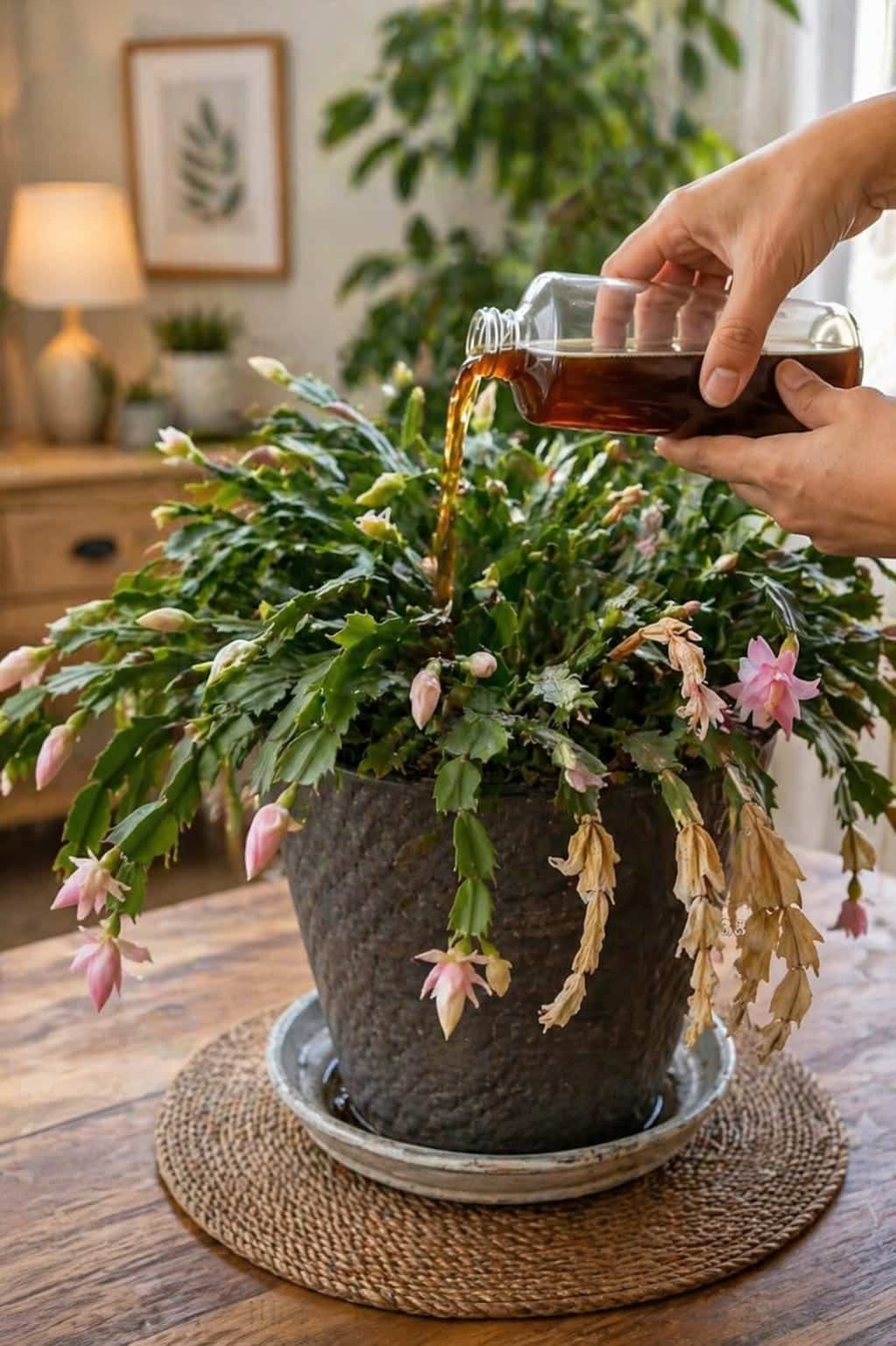
How to Prevent Bud Drop
Bud drop is one of the most frustrating Christmas cactus problems. The plant forms buds, you get excited, and then the buds fall off before opening. This usually happens because of sudden stress.
Common causes of bud drop include moving the plant to a new location, sudden temperature changes, drafts, overwatering, underwatering, low humidity, too much fertilizer, or lack of light after buds form.
Once buds appear, keep the plant steady. Do not rotate it constantly. Do not move it from a cool room to a hot room suddenly. Keep the soil lightly moist, but not soggy. Keep it away from heating vents, fireplaces, cold drafts, and doors that open frequently.
Humidity can also help. Dry indoor air may cause buds to dry or drop. Group plants together or place the pot near a humidity tray, making sure the pot is not sitting directly in water.
What to Do After Christmas Cactus Blooms
After blooming, Christmas cactus needs a short rest. Flowers will naturally fade and fall. Remove faded blooms gently. Reduce watering slightly for a few weeks, but do not let the plant completely shrivel.
Keep the plant in bright indirect light. Do not fertilize immediately after flowering. Let it rest before the spring growth period begins.
After this rest, usually in spring, you can begin normal watering and light feeding again. This is when the plant starts building strength for the next bloom cycle.
How to Prune Christmas Cactus
Pruning helps keep Christmas cactus full and bushy. The best time to prune is after blooming, usually in late winter or spring. Simply twist or pinch off a few stem segments where they naturally join. This encourages branching and creates a fuller plant with more potential bloom tips.
Do not prune heavily right before the bud-setting season, because flowers form at the ends of the stems. If you remove too many tips in fall, you may remove future blooms.
The segments you remove can be propagated. Let them dry for a day, then place them in lightly moist potting mix. Many Christmas cactus plants are shared this way.
How to Fertilize for Yearly Blooms
Christmas cactus benefits from gentle feeding during spring and summer. Use a balanced houseplant fertilizer at half strength once a month, or use a mild brown liquid feed every four to six weeks. Do not overfeed.
Stop fertilizing in late summer or early fall as you prepare the plant for bud formation. Too much fertilizer at the wrong time can encourage new stem growth instead of flowers.
If using the brown liquid trick, use it as a supplement during active growth. Do not rely on it as the only feeding method forever, especially if the plant is in old soil. A balanced fertilizer provides more predictable nutrition.
Can Brown Liquid Make Christmas Cactus Bloom?
The brown liquid can help support overall plant health, but it does not directly force blooms. Christmas cactus blooms are triggered mainly by long nights, cooler temperatures, and proper seasonal care.
Think of brown liquid feed as preparation. It helps the plant grow strong during spring and summer, so it has enough energy to bloom later. But once fall arrives, the plant needs rest and darkness more than feeding.
If your Christmas cactus is not blooming, do not keep adding more plant tea. Instead, check whether it received enough darkness and cooler nights.
Why Your Christmas Cactus Has Buds but No Flowers
If buds form but never open, the plant may be stressed. Check watering first. Soil that is too dry can cause buds to shrivel. Soil that is too wet can damage roots and cause buds to drop. The soil should be lightly moist during bud development.
Check temperature next. Hot, dry air from heaters can cause bud drop. Cold drafts can do the same. Keep the plant in a stable location.
Also consider movement. Christmas cactus often dislikes being moved after buds form. If you move it from one room to another, the light, humidity, and temperature may change enough to cause bud drop.
The best rule is: once buds appear, keep everything steady.
Why Your Christmas Cactus Grows but Does Not Bloom
If your plant grows lots of green segments but no flowers, it may be getting too much warmth, too much nighttime light, or too much fertilizer late in the season. It may also not be receiving enough bright indirect light during the day.
Give it a fall rest period. Stop feeding. Reduce watering slightly. Provide 12 to 14 hours of darkness nightly for six to eight weeks. Keep nights cool. This should encourage bud formation.
Also avoid repotting into a huge pot. A slightly rootbound Christmas cactus often blooms better than one in a very large container.
How to Repot Christmas Cactus Without Losing Blooms
Repot Christmas cactus after blooming, not before or during bud formation. The plant can be sensitive to disturbance, and repotting at the wrong time may cause buds or flowers to drop.
Choose a pot only one size larger. Use a well-draining soil mix. Gently remove the plant from its old pot, loosen the roots slightly, and place it at the same depth in the new pot. Water lightly after repotting and keep the plant in bright indirect light.
Do not fertilize immediately after repotting. Let the roots adjust for a few weeks.
Seasonal Care Calendar for Christmas Cactus
Winter
Enjoy the blooms. Keep the soil lightly moist, avoid drafts, and do not move the plant too much. After flowering, reduce watering slightly and let the plant rest.
Spring
New growth begins. Resume normal watering when the top inch of soil dries. Prune after blooming if needed. Start gentle feeding.
Summer
Continue bright indirect light, regular watering, and monthly light feeding. You can use the brown liquid feed occasionally. Avoid harsh direct sun.
Late Summer
Begin reducing fertilizer. Keep the plant healthy but do not push too much new growth.
Fall
Start the bloom trigger routine. Give 12 to 14 hours of darkness nightly, cooler temperatures, and slightly reduced watering. Stop feeding.
Early Winter
Buds should appear. Keep conditions steady. Return to normal bright indirect light and avoid sudden changes.
Can Christmas Cactus Bloom More Than Once a Year?
Yes, sometimes Christmas cactus can bloom more than once a year. Many plants bloom around the holidays and may bloom again lightly in spring if conditions are right. However, the main bloom usually happens after the fall darkness and cool-temperature period.
If your plant reblooms, enjoy it, but do not force constant flowering. Plants need time to rest and rebuild energy. A healthy yearly bloom is better than exhausting the plant with too much stress or feeding.
How Long Can a Christmas Cactus Live?
Christmas cactus can live for decades with proper care. Some families keep the same plant for 20, 30, 40, or even more years. This is one reason the plant feels special. It can become part of family traditions.
Long-lived plants need occasional pruning, fresh soil, proper watering, and a consistent bloom cycle. They do not need constant fussing. In fact, Christmas cactus often performs best when care is steady and seasonal.
Can You Propagate Christmas Cactus?
Yes, Christmas cactus is easy to propagate from stem segments. After blooming, twist off a cutting with two to four segments. Let the cutting dry for a day. Then place the bottom segment into lightly moist potting mix.
Keep the cutting in bright indirect light and avoid overwatering. Roots should develop over time. Once rooted, the new plant can be cared for like the parent plant.
Propagating is a wonderful way to share a blooming plant with friends and family.
Common Christmas Cactus Problems
Wrinkled Stems
Wrinkled stems may mean underwatering, but they can also mean root damage from overwatering. Check the soil and roots before watering heavily.
Red or Purple Stems
Reddish stems can happen from too much light, stress, or cool temperatures. Move the plant away from harsh sun if needed.
Bud Drop
Bud drop usually comes from sudden changes in light, temperature, watering, or humidity. Keep care steady once buds form.
No Blooms
No blooms usually means the plant did not receive enough darkness, cool nights, or bright daytime light. Follow the fall rest routine.
Soft Mushy Stems
Soft mushy stems may indicate rot. Check roots and soil immediately.
Frequently Asked Questions
How do I make Christmas cactus bloom every year?
Give it bright indirect light during the day, 12 to 14 hours of darkness each night for six to eight weeks in fall, cooler nights, reduced watering, and no fertilizer during bud formation.
What is the brown liquid used on Christmas cactus?
It is often diluted banana peel tea, worm casting tea, compost tea, or weak organic fertilizer. It should be used lightly during spring and summer, not heavily during bud formation.
Can banana peel water make Christmas cactus bloom?
It may support plant health, but it does not trigger blooms by itself. Long nights and cool temperatures are more important.
Why are my Christmas cactus buds falling off?
Bud drop can happen from sudden movement, temperature changes, drafts, overwatering, underwatering, low humidity, or too much fertilizer.
Should I water more when buds appear?
Keep the soil lightly moist, but not soggy. Do not let the plant dry severely, but do not overwater.
Does Christmas cactus need darkness to bloom?
Yes, long uninterrupted nights help trigger bud formation. Aim for 12 to 14 hours of darkness nightly for several weeks in fall.
Can I keep Christmas cactus in a bright window?
Yes, but bright indirect light is best. Avoid harsh direct afternoon sun, which can stress the stems.
When should I stop fertilizing?
Stop fertilizing in late summer or early fall before the bud-setting period begins.
When should I repot Christmas cactus?
Repot after blooming, usually in late winter or spring. Avoid repotting when buds are forming.
Can Christmas cactus live for many years?
Yes, with good care, Christmas cactus can live and bloom for decades.
Final Thoughts
Making a Christmas cactus bloom year after year is not about one magic ingredient. It is about understanding the plant’s natural rhythm. During spring and summer, help it grow strong with bright indirect light, proper watering, and gentle feeding. A weak brown liquid feed, such as banana peel tea or worm casting tea, can be used occasionally during this active growth stage.
Then, as fall approaches, change the routine. Stop feeding. Reduce watering slightly. Give the plant long, dark nights and cooler temperatures for six to eight weeks. This rest period is the true secret behind reliable blooms.
Once buds appear, keep everything steady. Do not move the plant too much. Avoid drafts, heat vents, soggy soil, and sudden changes. Keep the soil lightly moist and let the flowers open naturally.
After blooming, give the plant a short rest, then begin the cycle again. With this simple seasonal rhythm, your Christmas cactus can become a dependable holiday bloomer, returning year after year with beautiful flowers.
The brown liquid trick can be a lovely part of the routine, but the real magic is consistency. Give your Christmas cactus the right care at the right time, and it can reward you not just once, but for many winters to come.