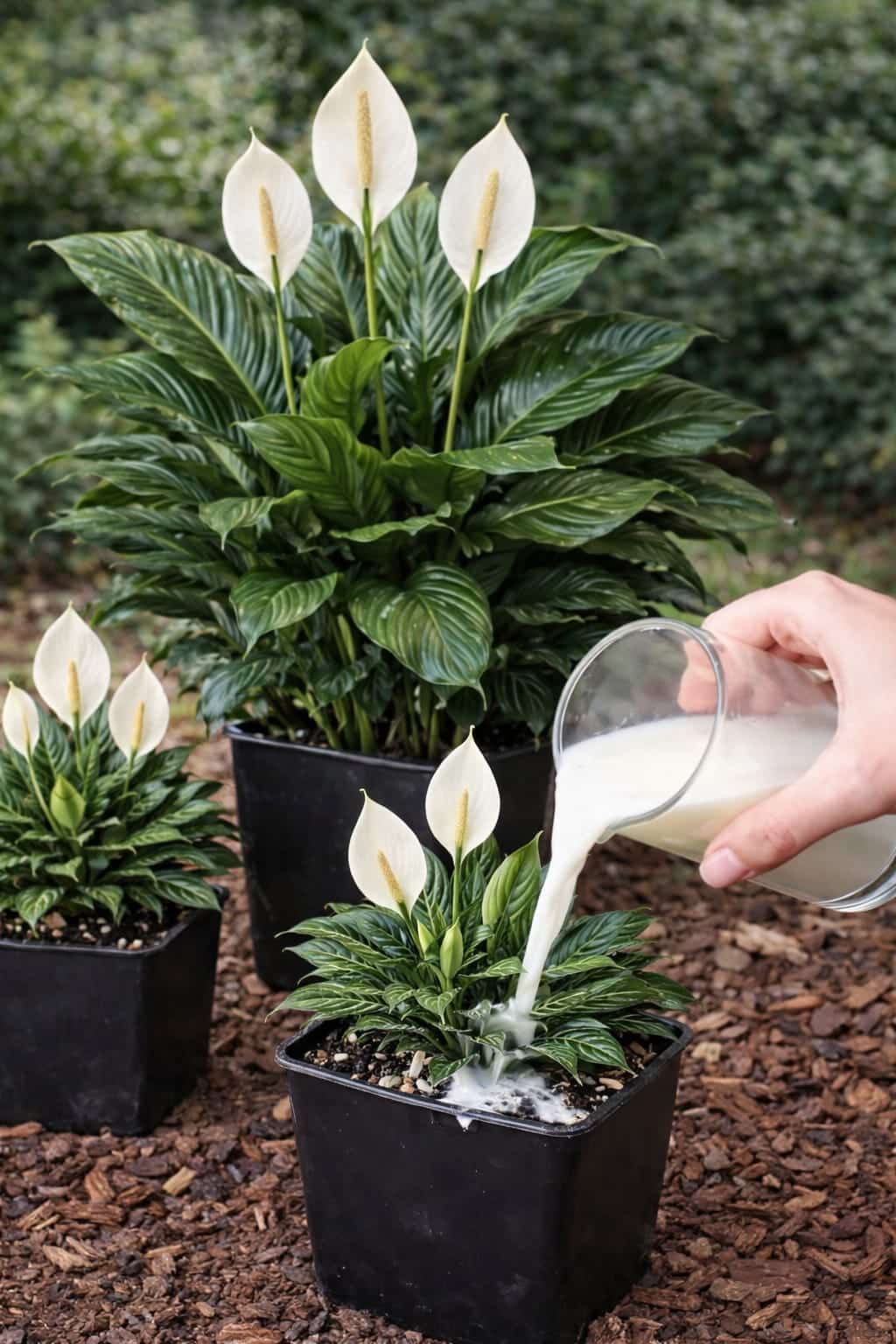
Water Correctly, Not Constantly
Peace lilies are famous for drooping when thirsty, but that does not mean they want wet soil all the time.
A Better Routine Is:
· water when the top inch of soil feels slightly dry to the touch
· water thoroughly until water runs from the drainage holes
· let all excess water drain away completely
· never leave the roots sitting in stagnant water (empty the saucer)
This balance matters enormously. When the roots stay too wet, the plant becomes stressed. Stressed roots mean weaker growth, yellowing leaves, and few or no flowers.
On the other hand, letting the plant wilt severely before watering also stresses it. The goal is consistent, moderate moisture.
Use a Pot with Drainage (Non‑Negotiable)
This sounds simple, but it changes everything.
A peace lily in a pot without good drainage holes is much more likely to struggle. Water can collect at the bottom, roots can weaken and rot, and the plant may stop blooming well even if the leaves still look green.
Choose a Pot That Has:
· multiple drainage holes
· a saucer to catch excess water (empty it after watering)
· breathable material like terracotta or glazed ceramic with drainage
Avoid decorative pots with no holes. If you love a cachepot, keep the peace lily in a nursery pot inside it, and remove it for watering.
Healthy roots are the foundation of a thriving peace lily.
Feed Lightly During Active Growth
If your peace lily is healthy but not blooming much, light feeding can help.
Peace lilies are not heavy feeders, but they do benefit from occasional nutrients — especially if they have been in the same potting mix for a while.
What to Use:
· a balanced houseplant fertilizer (like 20‑20‑20 or 10‑10‑10)
· diluted to half or quarter strength
· applied during spring and summer only (the active growing season)
· every 4–6 weeks
Too much fertilizer can burn the roots or push weak, leggy growth. But gentle feeding during active growth helps the plant build the energy it needs for better flowering.
Think of feeding as support, not force. And always water first before applying fertilizer to prevent root burn.
Humidity Helps More Than People Realize
Peace lilies are tropical plants. They love a little humidity. Dry indoor air — especially in winter from heating systems — can make the leaves crisp at the edges and can also reduce how fresh and beautiful the blooms look.
You Do Not Need Anything Extreme. Even Small Improvements Help:
· keep the plant away from dry heating vents and air conditioners
· group it near other houseplants (they create a microclimate)
· use a humidity tray nearby (a shallow tray with pebbles and water)
· mist the leaves lightly in the morning (but not too often, to avoid fungal issues)
A more comfortable, slightly humid environment helps the whole plant stay softer, greener, and more vigorous.
Remove Old Blooms and Damaged Leaves
This is one of the easiest ways to improve both appearance and performance.
When flowers fade, cut them off. When leaves are badly yellowed or damaged, remove them cleanly.
How to Do It:
· Use clean, sharp scissors or pruning shears.
· Cut spent flower stalks as close to the base as possible.
· Remove yellow or brown leaves at the stem.
· Do not pull; always cut.
This helps the plant:
· look tidier right away
· redirect energy into new growth instead of maintaining old tissue
· focus on producing fresh leaves and blooms
· reduce the risk of pests or disease hiding in dead material
Make this a regular part of your peace lily care routine.
Repot When the Plant Tells You To
Peace lilies do not mind being slightly root‑bound, but they eventually need fresh soil and more space.
Signs It Is Time to Repot:
· roots growing out of the drainage holes
· the plant wilting very soon after watering
· soil that stays soggy or dries out too fast (both indicate soil breakdown)
· the plant has not bloomed in over a year despite good light and water
How to Repot a Peace Lily:
- Choose a pot only 1–2 inches larger in diameter.
- Use fresh, high‑quality potting mix (well‑draining, with perlite or orchid bark).
- Gently loosen the root ball and remove old, dead roots.
- Place the plant at the same depth it was growing before.
- Water thoroughly after repotting.
Do not repot too often. Every 1–2 years is plenty.
Why Peace Lilies Sometimes Refuse to Bloom (And How to Fix It)
If your peace lily is green and growing but never produces flowers, work through this checklist.
Possible Cause #1 – Not Enough Light
Fix: Move to a brighter location. Within 4–6 weeks, you should see bud development.
Possible Cause #2 – Too Much Fertilizer (Especially High Nitrogen)
Fix: Flush the soil with water. Switch to a balanced fertilizer or one with higher phosphorus (middle number) to encourage blooming.
Possible Cause #3 – Plant Is Still Young or Recently Repotted
Fix: Be patient. Young peace lilies may take a year or more to bloom. After repotting, the plant focuses on root growth before flowers.
Possible Cause #4 – Irregular Watering
Fix: Establish a consistent routine. Do not let the plant wilt severely between waterings.
Possible Cause #5 – Old Blooms Were Never Removed
Fix: Cut off any remaining old stalks. This signals the plant to produce new ones.
The Best Homemade Peace Lily Care Routine (No Milk Needed)
Here is a simple, weekly and seasonal routine that works better than any viral hack.
Weekly
· Check soil moisture. Water if top inch is dry.
· Remove any yellow or dead leaves.
· Rotate the pot a quarter turn for even light exposure.
Monthly
· Wipe leaves with a damp cloth to remove dust (improves photosynthesis).
· Check for pests (mealybugs, spider mites, scale).
· Flush the soil with plain water if you use fertilizer to prevent salt buildup.
Spring and Summer
· Provide bright indirect light.
· Fertilize lightly every 4–6 weeks.
· Increase watering slightly as growth accelerates.
Fall and Winter
· Reduce watering (soil stays moist longer).
· Stop fertilizing.
· Move to a slightly brighter spot if days are short.
· Do not worry if blooms are fewer; this is natural.
Annually
· Inspect roots. Repot if needed.
· Refresh top layer of soil if not repotting.
Common Peace Lily Problems and Solutions
Yellow Leaves
Cause: Usually overwatering, but sometimes underwatering or old age.
Solution: Check soil moisture. Adjust watering. Remove yellow leaves.
Brown Leaf Tips
Cause: Dry air, fluoride in tap water, or fertilizer burn.
Solution: Increase humidity. Use filtered or distilled water. Reduce fertilizer.
Drooping Stems (Not Just Thirsty)
Cause: Could be root rot, extreme heat, or severe underwatering.
Solution: Check roots. Remove any mushy, black roots. Repot if needed.
No Blooms
Cause: Low light is the #1 reason.
Solution: Move to brighter location. Also check fertilizer type and watering consistency.
Small, Green Blooms (Not White)
Cause: Immature flowers or too much nitrogen.
Solution: Give it time. Switch to a bloom‑boosting fertilizer (higher phosphorus).
Frequently Asked Questions (Peace Lily Care)
Can I use coffee grounds on my peace lily?
Used sparingly, coffee grounds can add organic matter. But too many can compact the soil and cause mold. A thin sprinkle on top, mixed in lightly, is safer. Diluted coffee (weak, black) can be used occasionally.
Is milk good for peace lilies?
Generally no. Milk can sour, attract pests, and cause soil problems. Stick with balanced fertilizer for reliable results.
How often do peace lilies bloom?
With good care, a peace lily blooms 2–3 times per year. Each bloom lasts several weeks. Some varieties bloom more often.
Should I cut off brown leaf tips?
You can trim them for appearance. Cut at an angle following the natural leaf shape. Do not cut into healthy green tissue.
Can peace lilies grow in water alone?
Yes, but they will not bloom as well. Water‑grown peace lilies need dilute hydroponic fertilizer. Soil‑grown plants generally produce more flowers.
Are peace lilies toxic to pets?
Yes. Peace lilies contain calcium oxalate crystals, which are toxic to cats and dogs. Keep them out of reach.
Why are my peace lily flowers turning green?
As flowers age, they naturally turn green. Cut them off to encourage new blooms. Sometimes too much fertilizer also causes greening.
Can I put my peace lily outside in summer?
Yes, but keep it in shade or filtered light. Direct sun burns leaves. Bring it back indoors before temperatures drop below 55°F (13°C).
Final Thoughts: Thriving, Not Just Surviving
A peace lily does not need milk, magic potions, or complicated tricks to thrive.
It needs:
· bright indirect light
· consistent, moderate watering
· a pot with drainage
· light feeding during growing season
· occasional humidity
· regular removal of old leaves and spent blooms
That is the real secret. That is what turns a tired, barely‑alive plant into a lush, blooming centerpiece.
So move your peace lily closer to the window. Water it when the soil tells you to. Feed it gently in spring and summer. And watch it reward you with those elegant white blooms, over and over again.
No milk required.
Have you struggled to get your peace lily to bloom? What worked for you? Leave a comment below. And if you found this guide helpful, save it for later or share it with a friend who needs some peace lily wisdom.