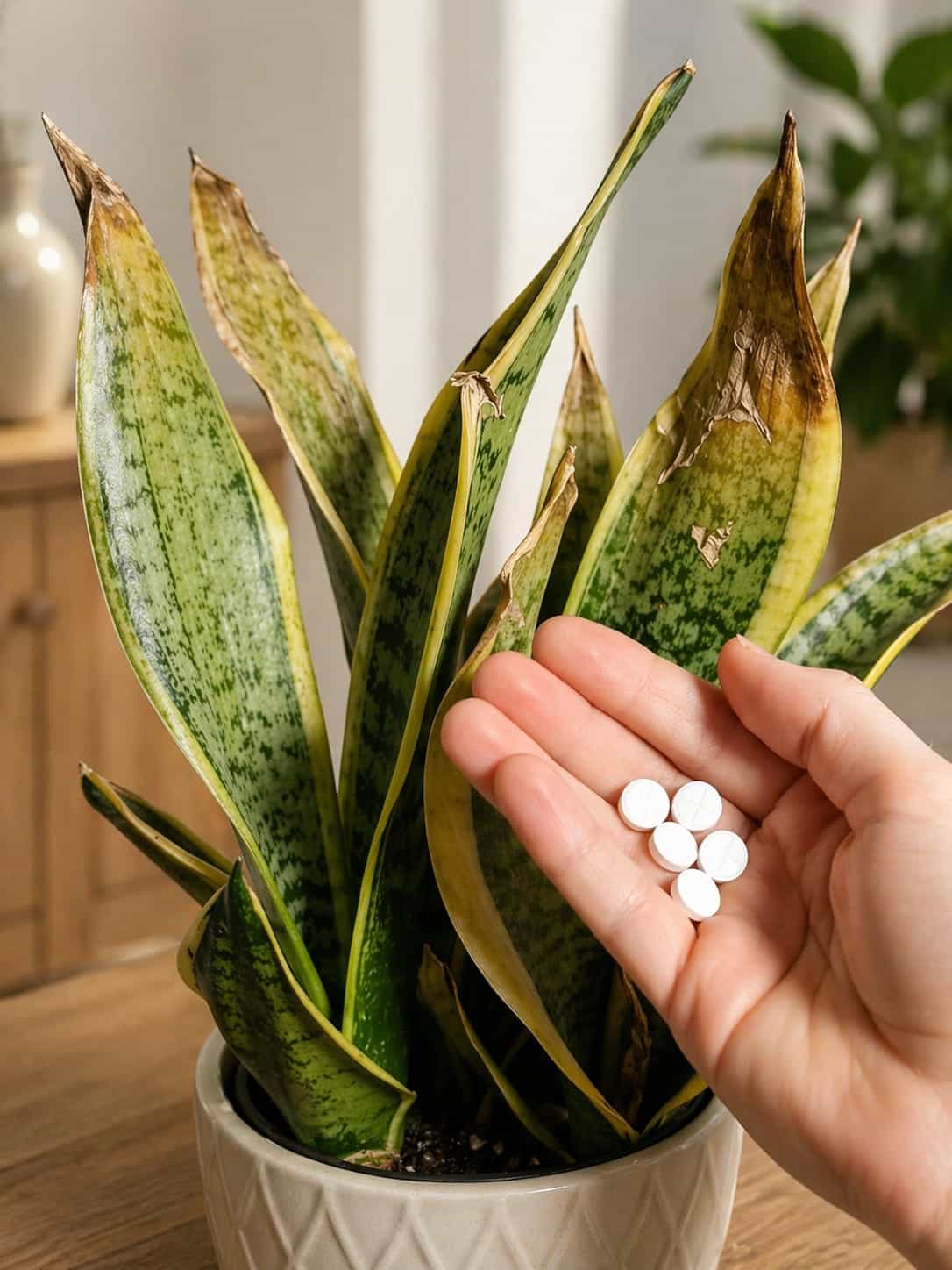
Snake plants (Sansevieria, now Dracaena trifasciata) are known for being tough and low‑maintenance. They survive low light, missed waterings, and dry indoor air better than almost any other houseplant. But even the mighty snake plant can start to struggle if conditions go wrong for too long.
If you notice yellowing leaves, brown crispy tips, soft mushy spots, or leaves that flop over, your plant is asking for help. The good news is that reviving a dying snake plant is easier than you think. You do not need to be a plant expert. You just need to follow a few simple, proven steps.
In this guide, you will learn how to identify what is wrong, fix watering habits, treat root rot, repot correctly, improve light, and avoid risky shortcuts. By the end, you will have a clear action plan to bring your snake plant back to life.
Identify the Problem First (Before You Do Anything)
Before you start cutting, repotting, or changing routines, take a close look at your plant. Snake plants are expressive — their leaves tell you exactly what is wrong.
Common Symptoms and Their Causes
Symptom Most Likely Cause
Yellow leaves Overwatering, soggy soil
Brown, crispy tips Dry air, inconsistent watering, fluoride in tap water
Soft, mushy leaves Root rot (advanced overwatering)
Leaves flopping over Root loss, weak roots, or pot‑bound
Dry, wrinkled leaves Underwatering (but rare; snake plants are drought‑tolerant)
White crust on soil Fertilizer salt buildup or hard water minerals
Understanding the cause is the first step to saving your plant. Do not skip this step. Treating the wrong problem can make things worse.
Fix the Watering Routine (The #1 Mistake)
The most common mistake with snake plants is overwatering. Snake plants are succulents. They store water in their thick leaves and underground rhizomes. They want to dry out completely between waterings. Constant moisture leads to root rot.
How to Water Correctly
· Let the soil dry out completely before watering. Stick your finger into the soil. If it is dry at least 2 inches down, water. If it feels damp, wait.
· Water deeply but infrequently. When you water, pour slowly until water runs from the drainage holes. Let all excess drain away. Empty the saucer.
· Water less often in winter. In most homes, water every 2–4 weeks in spring/summer, and once a month or less in fall/winter.
· Always use a pot with drainage holes. This is non‑negotiable.
Signs You Are Overwatering
· Leaves turn yellow, starting from the bottom.
· Leaves feel soft or mushy.
· The soil stays wet for more than a week.
· A sour, musty smell comes from the pot.
If you see these signs, stop watering immediately. Let the soil dry out completely. If the plant does not improve, you need to check the roots.
Check and Treat the Roots (Root Rot Rescue)
If your plant looks very weak, or if you have been overwatering for a long time, the roots may be rotting. Root rot is a fungal condition that turns roots black, mushy, and smelly. If left untreated, it will kill the plant.
How to Check the Roots
- Gently remove the plant from its pot. Turn the pot sideways and slide it out. If stuck, squeeze the sides of a plastic pot or tap the rim of a terracotta pot.
- Shake off old soil. Use your fingers to gently remove as much soil as possible.
- Inspect the roots.
· Healthy roots: Firm, white or tan, smell earthy.
· Unhealthy roots: Black, brown, mushy, hollow, or stringy. They may smell sour or rotten.
How to Treat Root Rot
- Cut off all rotten roots. Use clean, sharp scissors or pruning shears. Cut back to healthy tissue. If more than half the roots are rotten, the plant is in critical condition but may still be saved.
- Trim affected leaves. If any leaves are mushy at the base, cut them off completely.
- Let the roots dry. Place the plant on a paper towel in a shaded area for 24–48 hours. This allows cut surfaces to callus over.
- Optional: Dust with cinnamon. Cinnamon is a natural antifungal. Lightly dust the cut root ends with cinnamon powder. Do not use too much.
This step stops rot from spreading and gives the plant a chance to grow new, healthy roots.
Repot in Fresh Soil (A Fresh Start)
Old, compacted soil can suffocate roots even if you fix watering. After treating root rot, you must repot your snake plant into fresh, well‑draining soil.
Choosing the Right Soil
Use a cactus or succulent potting mix. Do not use regular potting soil alone — it holds too much moisture. If you only have regular potting soil, mix it with 30% perlite or coarse sand.
Choosing the Right Pot
· Use a pot with drainage holes (terracotta is ideal because it wicks away moisture).
· Choose a pot that is only 1–2 inches larger than the remaining root ball. A pot that is too large holds excess moisture.
· If you are reusing an old pot, wash it with soap and water to remove any pathogens.
Step‑by‑Step Repotting
- Add a layer of fresh soil to the bottom of the pot.
- Place the snake plant in the center, at the same depth it was growing before. Do not bury the leaves deeper than they were.
- Fill around the roots with fresh soil, tapping the pot to settle the mix. Do not pack tightly — roots need oxygen.
- Do not water immediately. Wait 3–5 days to allow any remaining cut roots to heal.
- Place in bright indirect light. Do not fertilize for 4–6 weeks.
Fresh soil gives your plant a fresh start. It improves drainage, provides trace nutrients, and reduces the risk of further rot.
Improve Light Conditions (Energy for Recovery)
Snake plants tolerate low light, but they thrive and recover faster in bright indirect light. After repotting, light is one of the most important factors for new growth.
Ideal Light for Recovery
· East‑facing window – Gentle morning sun, perfect for recovery.
· North‑facing window – Bright indirect light all day.
· South or west window with a sheer curtain – Diffuses harsh afternoon rays.
· Full‑spectrum LED grow light – If your home is dark, use a grow light for 10–12 hours daily.
What to Avoid
· Low light corners – The plant may survive but will recover slowly or not at all.
· Harsh direct sun – Scorches leaves, causing brown patches.
If your plant has been in a dark corner, move it closer to a window. You will see new growth within a few months.
Continue to Page 2
Continue to page 2 for more details about this article and the key points many readers miss on the first page.