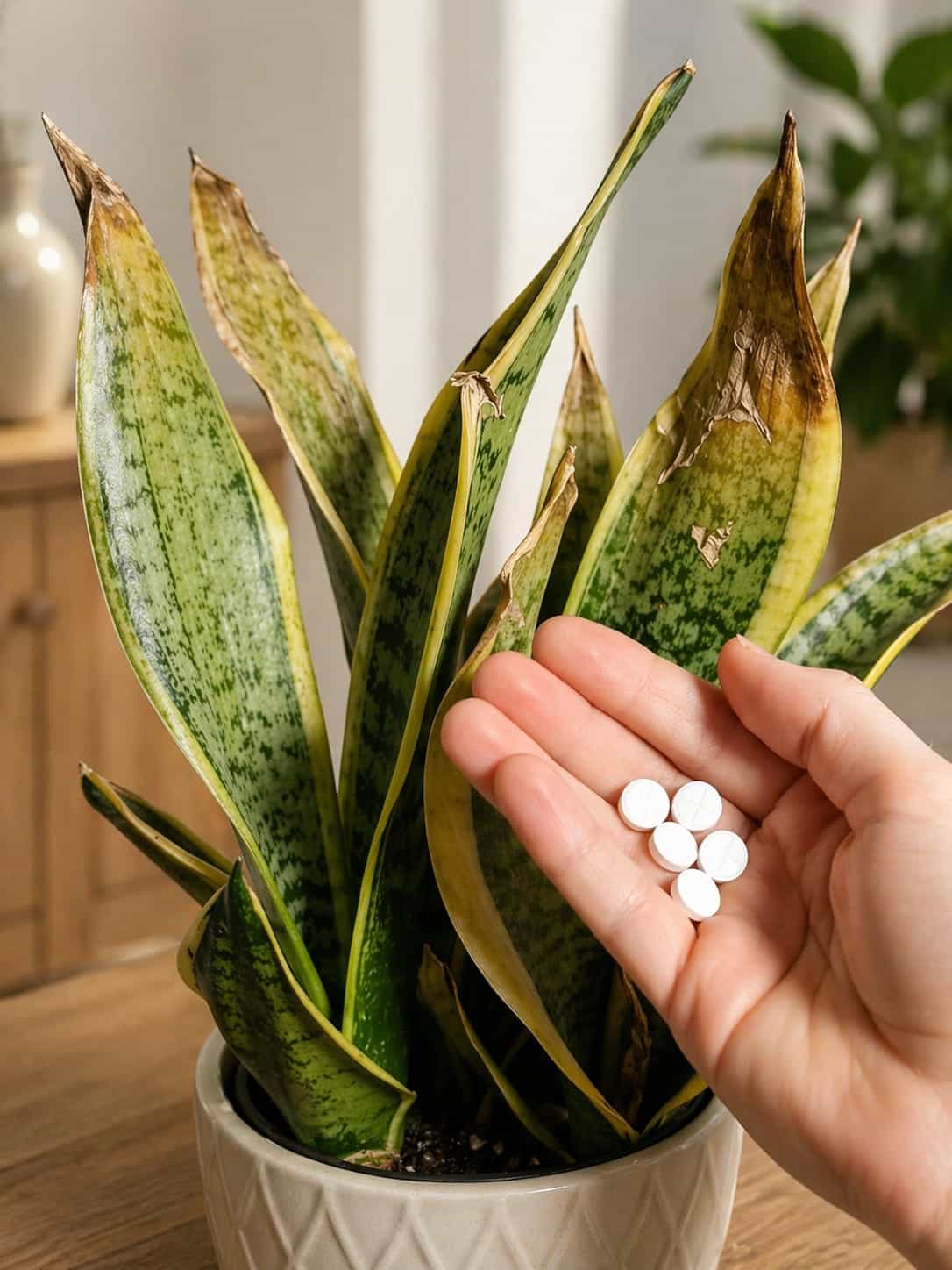
Skip Random “Pill” Hacks (And Other Risky Shortcuts)
You might see tips online about adding tablets, pills, or powders to the soil to “fix” a dying snake plant. Be careful — most of these are not designed for plants and can do more harm than good.
What to Avoid
· Human vitamins – Not formulated for plants; may contain binders and sugars.
· Aspirin – No reliable evidence it revives dying plants.
· Calcium tablets – Unnecessary and can raise soil pH.
· Baking soda – Alters soil pH and can burn roots.
· Coffee grounds – Can compact soil and encourage mold.
What to Use Instead
· Proper succulent fertilizer – Only after the plant has recovered (4–6 weeks after repotting). Use half strength.
· Fresh, well‑draining soil – Already provides nutrients.
· Patience – The best “medicine” for a recovering plant.
Stick to proper plant care instead of risky shortcuts. A healthy root system, good light, and correct watering are what truly revive a snake plant.
Signs Your Snake Plant Is Recovering
After following these steps, you will not see improvement overnight. Recovery takes time. Watch for these positive signs over 4–8 weeks:
· Firmer leaves – Leaves feel solid, not soft or wrinkled.
· New growth in the center – Fresh leaves emerging from the middle.
· No further yellowing – Existing damage may remain, but no new yellow leaves.
· Pups appearing – Baby shoots at the base indicate the plant is thriving.
· No foul smell – The soil should smell earthy, not sour.
If you see new growth, your rescue worked. Continue with proper care.
A Simple Snake Plant Recovery Routine (Week by Week)
Here is a timeline to follow after repotting.
Week 1 – Rest
· Place in bright indirect light.
· Do not water. Let the soil stay dry.
· Do not fertilize.
Week 2 – First Water
· Check soil moisture. If completely dry, water lightly.
· Do not soak. Use about ¼ of the normal amount.
Week 3 – Observation
· Look for signs of new growth.
· Continue to let soil dry completely between waterings.
Week 4 – Resume Normal Care
· If the plant is stable, return to normal watering (dry between).
· Do not fertilize yet.
Week 6–8 – Light Feeding (Optional)
· If new leaves have emerged, you can feed with half‑strength succulent fertilizer once.
· Do not overfeed.
Ongoing
· Water only when soil is completely dry.
· Keep in bright indirect light.
· Do not repot again for at least 1 year.
Preventing Future Problems (Long‑Term Snake Plant Health)
Once your snake plant has recovered, maintain these habits to keep it healthy.
Watering
· Always check soil before watering. Dry = water. Damp = wait.
· In winter, water even less (once a month or less).
Light
· Bright indirect light is best. Rotate the pot occasionally for even growth.
Soil and Pot
· Repot every 2–3 years with fresh cactus mix.
· Do not oversize the pot.
Feeding
· Feed once in spring and once in summer with half‑strength succulent fertilizer.
· Do not fertilize in fall and winter.
Cleaning
· Wipe leaves with a damp cloth every few weeks to remove dust.
Frequently Asked Questions (Reviving Snake Plants)
Can I save a snake plant with no roots?
If the leaves are still firm and green, you can try propagating leaf cuttings. Cut healthy leaves into 3‑4 inch sections, let them callus for 2 days, then place in water or moist soil. New roots and eventually new plants will form. This takes months but works.
How long does it take for a snake plant to recover from root rot?
Root recovery takes 4–8 weeks. New leaves may take 2–3 months. Be patient. Do not overwater during recovery.
Why are my snake plant leaves still yellow after fixing watering?
Yellow leaves will not turn green again. Remove them at the base. Focus on new growth.
Can I use hydrogen peroxide to treat root rot?
Diluted hydrogen peroxide (3% mixed with equal parts water) can be used to disinfect roots. Spray lightly on cut roots, let it fizz, then rinse. Do not soak. This is an advanced step; for most cases, trimming and fresh soil are enough.
Should I cut off all the leaves if they look bad?
No. Leave any green, firm leaves. They provide energy for recovery. Only remove leaves that are fully yellow, brown, or mushy.
Is it better to underwater or overwater a snake plant?
Underwater. Snake plants are drought‑tolerant. They recover much faster from underwatering than from root rot.
Can I use coffee grounds to revive my snake plant?
Not recommended. Coffee grounds can compact the soil and acidify it. Stick to fresh cactus mix and proper watering.
My snake plant is leaning. How do I fix it?
Leaning is often caused by uneven light or weak roots. Rotate the pot regularly. If roots are weak, follow the root rot treatment and repot. Stake the plant temporarily for support.
Final Thoughts
A dying snake plant is not a lost cause. With the right care — proper watering, healthy roots, good soil, better light, and a little patience — you can bring it back to life. Sometimes, all your plant needs is a reset and a chance to start over.
Do not be afraid to unpot it, trim the rot, and repot in fresh soil. Do not fall for risky shortcuts or mystery pills. The basics work: dry soil, bright light, and time.
Your snake plant is tougher than you think. Help it get back on its feet, and it will reward you with years of upright, glossy, architectural beauty.
Have you revived a dying snake plant using these steps? Share your experience in the comments below. And if you found this guide helpful, save it for later or send it to a friend who needs a snake plant rescue plan.
This article is for informational purposes only. Growing conditions vary. Always observe your plant and adjust care as needed. When in doubt, focus on roots, soil, and water before any supplement.