The Christmas cactus is one of the most beautiful indoor plants, known for its vibrant flowers that brighten up any space. But what if you could make those blooms last even longer? What if that cascade of pink, red, white, or purple flowers could stay fresh and colorful for weeks instead of days?
With a few simple care techniques, you can extend the blooming season and keep your plant looking stunning long after the holidays have passed. You do not need expensive products or complicated tricks. Just consistent, thoughtful care that builds a strong plant and maintains stable conditions while it flowers.
In this guide, you will learn how to start with healthy growth, when and how to repot, the right way to feed your Christmas cactus, how to control light and temperature for longer blooms, and the watering habits that keep flowers fresh. Plus, you will discover a complete year‑round care routine that ensures spectacular blooms season after season.
Why Christmas Cactus Blooms Are Worth Protecting
Christmas cactus (Schlumbergera x buckleyi) is unique among holiday plants. Unlike poinsettias that are often discarded after the holidays, a well‑cared‑for Christmas cactus can live for decades, blooming more abundantly each year. Each flower, when properly supported, can last 5–7 days, and the overall blooming period can stretch from 4 to 6 weeks.
However, without the right care, blooms may drop early, fade quickly, or never appear at all. By focusing on the plant’s health before, during, and after blooming, you can enjoy a longer, more vibrant display.
Start with Healthy Growth (The Foundation of Long Blooms)
A strong, healthy plant is the key to longer blooms. Regular pruning not only shapes your Christmas cactus but also encourages new growth and prepares it for future flowering. Think of it as building energy reserves for the next bloom cycle.
When to Prune
The best time to prune your Christmas cactus is right after it finishes blooming, usually in late winter or early spring. Pruning at the wrong time can remove flower buds before they form.
How to Prune
· Use clean, sharp scissors or your fingers to twist off segments at the joints (not in the middle of a segment).
· Remove 1–2 segments per stem, focusing on leggy or overgrown areas.
· Do not remove more than one‑third of the plant at once.
What to Do with Pruned Segments
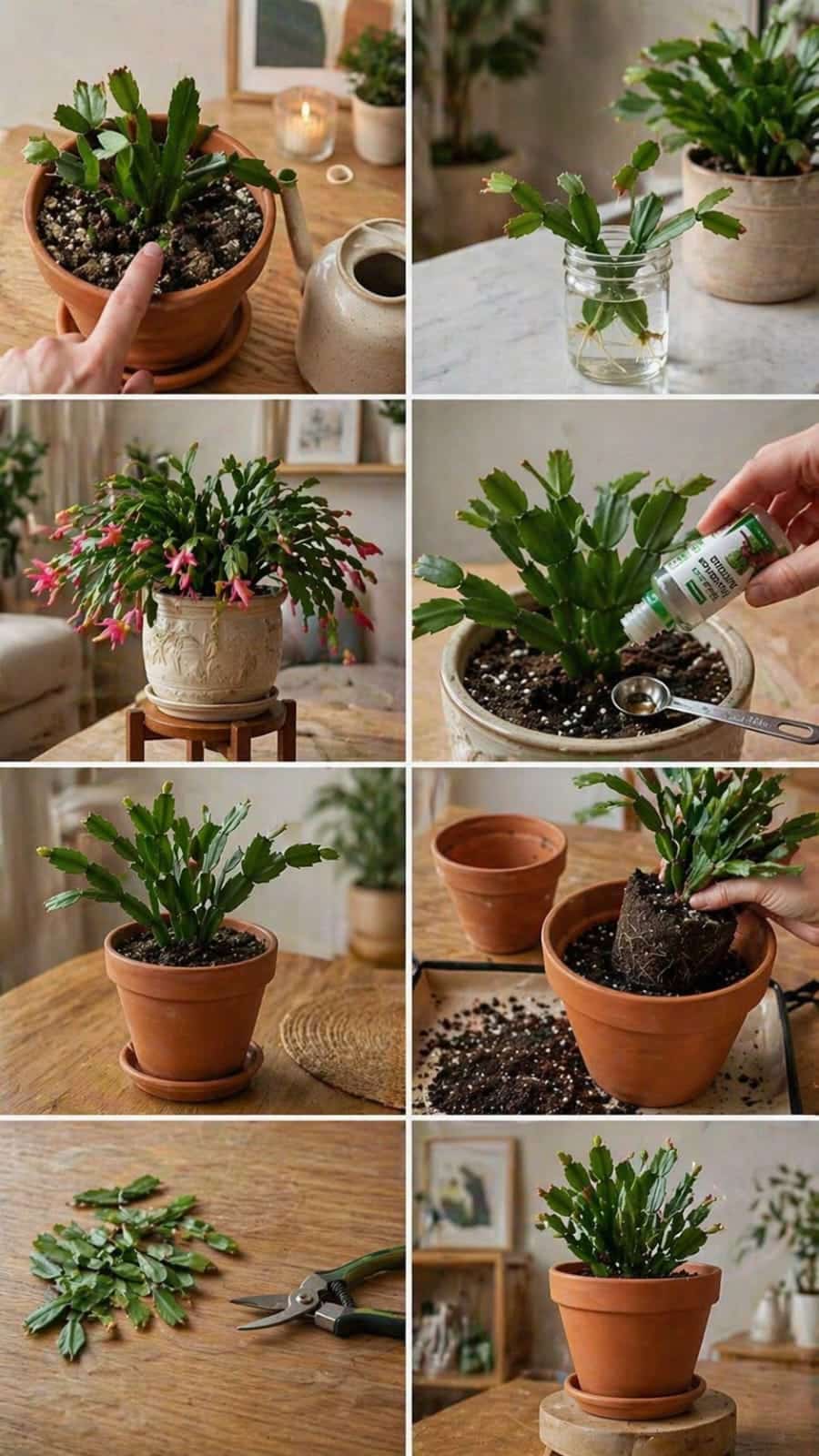
Do not throw them away! Christmas cactus cuttings root easily in water or soil. Here is how to turn pruned segments into new plants:
· Place 2–3 segment cuttings in a small glass of water, with the bottom ½ inch submerged.
· Change the water every 3–4 days.
· Roots will appear in 2–4 weeks.
· Once roots are 1–2 inches long, plant them in a small pot with well‑draining cactus mix.
· Water lightly and keep in bright indirect light.
This not only refreshes your original plant but also gives you new plants to share or expand your collection.
Why Pruning Helps Blooms Last Longer
When you remove old, tired segments, the plant redirects its energy to new growth. A healthier plant with fresh segments has more resources to support longer‑lasting flowers when the next bloom season arrives.
Repot for Better Results (Timing Matters)
If your Christmas cactus has outgrown its pot, repotting can make a big difference in overall health and bloom longevity. A pot‑bound plant may produce fewer flowers, and stressed roots can cause buds to drop early.
When to Repot
The best time to repot is early spring, right after flowering and before new growth begins. Do not repot in fall or winter, as this can interfere with bud formation.
How Often to Repot
Every 2–3 years, or when you see:
· Roots growing out of the drainage holes
· The plant becoming top‑heavy
· Soil that dries out very quickly or stays wet too long
Choosing the Right Pot
· Pick a pot only 1–2 inches larger in diameter than the current one.
· Use a pot with drainage holes (terracotta is excellent).
· Avoid oversized pots, which hold excess moisture and can lead to root rot.
Best Soil Mix for Christmas Cactus
Use a well‑draining cactus or succulent potting mix. You can also make your own:
· 2 parts all‑purpose potting soil
· 1 part perlite
· 1 part orchid bark or coarse sand
Step‑by‑Step Repotting
- Gently remove the plant from its old pot. Loosen the root ball with your fingers.
- Inspect the roots. Trim any brown, mushy, or dead roots with clean scissors.
- Add a layer of fresh soil to the bottom of the new pot.
- Place the plant in the center, at the same depth it was growing before.
- Fill around the roots with fresh soil, pressing lightly.
- Water lightly and place in bright indirect light. Do not fertilize for 4–6 weeks.
Fresh soil provides nutrients that help support longer‑lasting blooms. It also improves drainage and aeration, reducing stress on the plant during the critical blooming period.
Feed Your Plant Properly (But at the Right Time)
Using the right nutrients is essential during the growing season. However, feeding at the wrong time can actually reduce blooming. The key is to feed before the bloom season, not during.
When to Feed
· Spring and summer (active growth): Apply a balanced liquid fertilizer every 2–4 weeks.
· Early fall: Stop feeding completely. This allows the plant to enter a rest period and set buds.
· During blooming: Do not fertilize. Feeding while flowers are open can cause bud drop and shorten bloom life.
What Fertilizer to Use
Use a balanced, water‑soluble fertilizer (like 20‑20‑20 or 10‑10‑10) diluted to half strength. For the best bloom support, switch to a formula with higher phosphorus (the middle number, e.g., 10‑20‑10) in late summer, just before the bloom prep period.
Avoid Over‑Fertilizing
Too much fertilizer, especially high nitrogen, promotes leafy growth at the expense of flowers. Signs of over‑fertilizing include:
· Yellow or brown leaf tips
· White crust on the soil surface
· Weak, leggy growth
· Few or no buds
If you see these signs, flush the soil with plain water and stop feeding for 2–3 months.
Fertilizer Tablets vs. Liquid
Slow‑release fertilizer tablets can be used in spring for a “set it and forget it” approach, but liquid fertilizer gives you more control. For extending blooms, the timing of feeding is more important than the form.
- Control Light and Temperature (Stability Is Key)
Environmental conditions play a huge role in how long your cactus blooms. Once the flowers open, any sudden change can cause them to drop prematurely.
Light During Blooming
Place your Christmas cactus in bright, indirect sunlight. An east window or a south/west window with a sheer curtain is ideal. Too much direct sun can fade the flowers and cause the segments to turn reddish. Too little light weakens the plant and may cause buds to drop.
Temperature for Longer Blooms
· Daytime: 65–75°F (18–24°C)
· Nighttime: Slightly cooler, but not cold. Avoid temperatures below 50°F (10°C).
· Keep stable – Avoid placing the plant near heating vents, air conditioners, or drafty windows. Sudden temperature swings are one of the fastest ways to lose buds.
Do Not Move the Plant
Once buds appear, do not move your Christmas cactus. Even turning the pot a few degrees can stress the plant and cause bud drop. If you want to display it in a different location, move it before buds form. During blooming, stability is everything.
What About Darkness?
The dark period (12–14 hours of uninterrupted darkness) is essential for triggering bud formation, but once flowers open, you can return the plant to normal light conditions. However, still avoid harsh direct sun and drastic location changes.
Continue to Page 2
Continue to page 2 for more details about this article and the key points many readers miss on the first page.