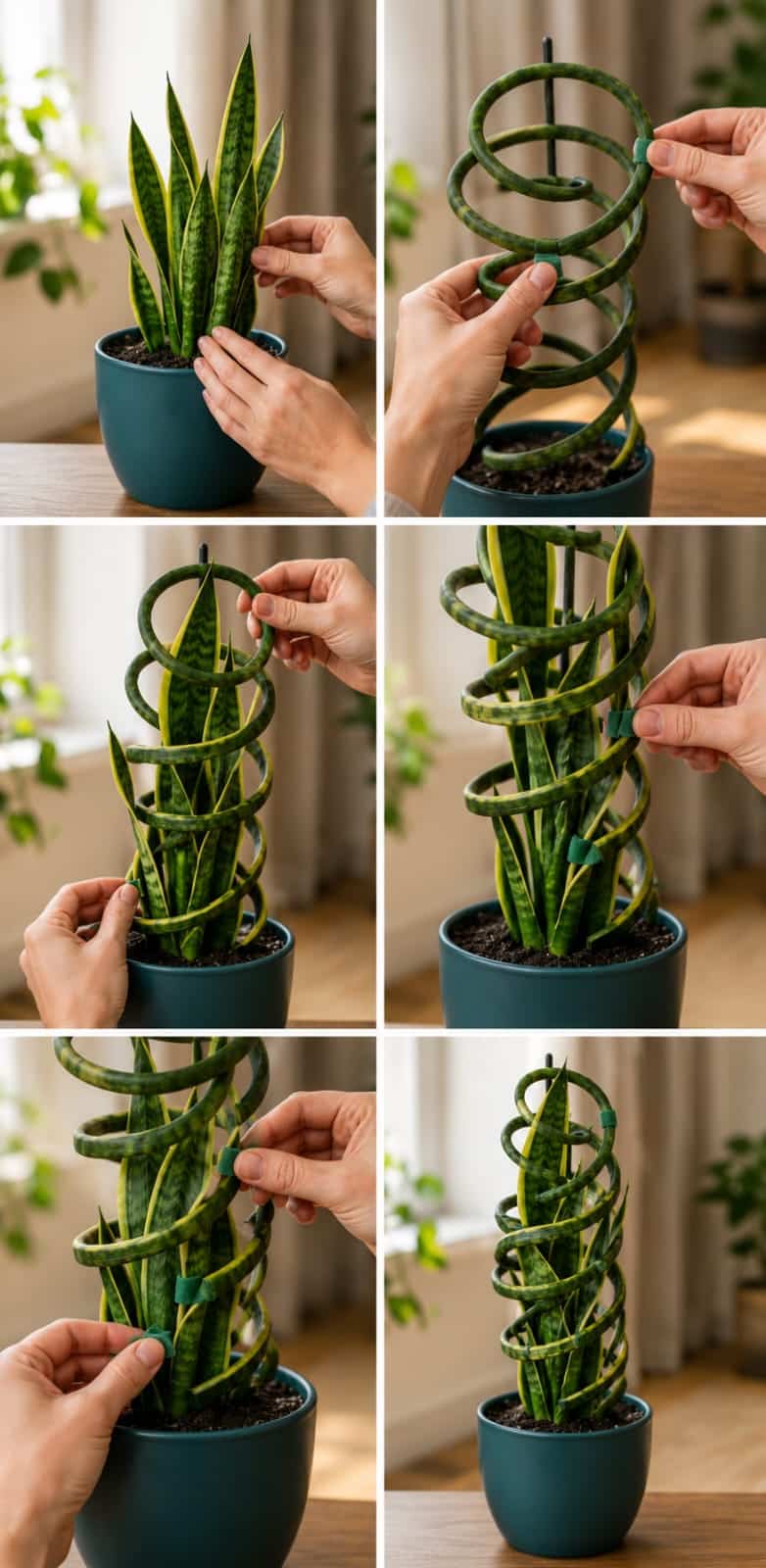
How to Maintain the Spiral Shape
Once the spiral shape is created, it needs regular checking. Leaves grow, ties shift, and the support may move slightly. Inspect the plant every few weeks. Loosen ties if they become tight. Adjust leaves gently if they slip out of place.
Clean the support if dust collects on it. Wipe leaves with a soft damp cloth. Dust can make the display look dull and reduce light absorption. A spiral snake plant should look polished and fresh.
As new leaves appear, decide whether to leave them upright or guide them into the design. Young leaves may be easier to position, but they should still be handled gently. Do not tie tiny new shoots too early.
Feeding a Spiral Snake Plant
Snake plants are light feeders. During spring and summer, a diluted cactus or balanced houseplant fertilizer can support healthy growth. Use a weak dose. Too much fertilizer can cause brown tips, salt buildup, and root stress.
Do not fertilize heavily to force faster spiral growth. The plant’s shape comes from support and slow guidance, not strong feeding. Overfeeding can create weak, stretched growth or root problems.
Do not fertilize during winter or low-light periods. A styled plant still follows the same seasonal rhythm as any other snake plant. Gentle care is enough.
Cleaning and Styling the Leaves
Snake plant leaves collect dust, especially in living rooms and bedrooms. Dust can dull the pattern and make the plant look tired. Wipe each leaf gently with a soft damp cloth. Support the leaf while wiping so it does not bend against the support.
Avoid oily leaf shine products. They can attract dust and make the plant look artificial. Plain water is enough. The natural green pattern and yellow edges are already decorative.
If ties become dusty or worn, replace them. Fresh clean ties make the display look intentional. Choose ties that blend with the leaf color or pot color for a more polished finish.
Indoor Decor and Styling Ideas
A spiral snake plant works beautifully as a statement plant. It can be placed on a coffee table, console table, plant stand, office desk, bedroom dresser, or bright shelf. The spiral shape creates movement, while the upright leaves keep the display structured and modern.
A teal pot gives the plant a fresh contemporary look. A white pot makes the spiral feel clean and minimal. A black pot creates strong contrast. A terracotta pot gives warmth. A stone-textured pot creates a premium natural effect.
Pair the spiral snake plant with softer trailing plants such as pothos, string of hearts, or philodendron to create contrast. It also looks beautiful beside ZZ plants, peace lilies, rubber plants, and small succulents. Keep the surrounding area uncluttered so the spiral shape remains the focus.
Common Mistakes With Spiral Snake Plants
One common mistake is forcing the leaves too quickly. This can crack or crease them. Another mistake is using tight wire ties that cut into the foliage. A third mistake is choosing a support that is too narrow for thick snake plant leaves.
A fourth mistake is forgetting normal plant care after styling. The plant still needs correct light, watering, and drainage. A fifth mistake is placing the plant in low light and expecting it to stay strong. A sixth mistake is overwatering because the decorative support makes the pot harder to check.
A seventh mistake is trying to train every leaf. Some leaves should remain upright inside the spiral. A natural mix of guided and upright leaves often looks better than a forced shape.
Better Ways to Create a Unique Snake Plant Display
If a full spiral feels too risky, there are safer styling options. You can use a wide circular support as a decorative frame without bending the leaves. You can group several snake plants of different heights in one pot. You can rotate the pot for balanced growth. You can use pebbles, a premium planter, or a plant stand to elevate the display.
You can also divide pups and create a fuller arrangement in a wider pot. This gives the plant a dramatic shape without bending leaves. A dense cluster of healthy upright snake plant leaves can look just as luxurious as a trained spiral.
The best design is one that respects the plant’s natural growth. A healthy snake plant always looks better than a damaged one, even if the shape is less dramatic.
Final Thoughts
Training a snake plant into a spiral display can create a unique, modern, and premium indoor look when it is done slowly and safely. The key is gentle guidance, a smooth wide support, soft ties, bright indirect light, fast-draining soil, drainage holes, and careful watering. The plant should never be forced, twisted sharply, or tied too tightly.
Snake plants are naturally upright plants, not flexible vines. A spiral display works best as a supported arrangement rather than a true climbing habit. Younger leaves may be guided more easily, while older stiff leaves should be respected. If a leaf resists, leave it natural. Healthy foliage matters more than a perfect curve.
With patient care and clean styling, a spiral snake plant can become a beautiful indoor statement for living rooms, bedrooms, home offices, apartments, bright windowsills, commercial interiors, luxury home staging, and premium plant displays. Strong leaves, firm rhizomes, tidy soil, soft ties, and balanced maintenance will always create a safer and more elegant result than forcing a rushed spiral shape.