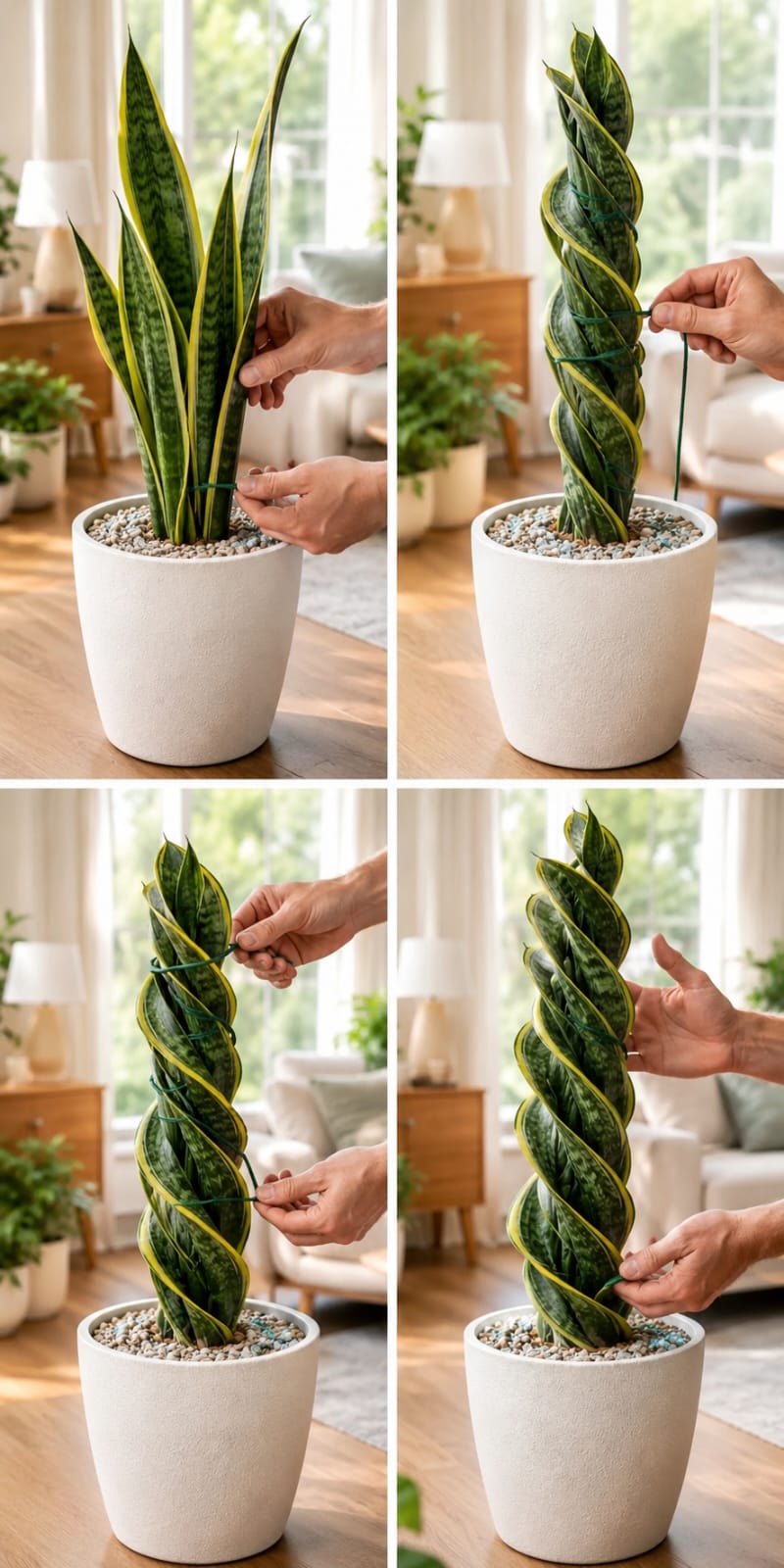
Snake plant is one of the most stylish indoor plants for homeowners who want bold upright leaves, strong architectural shape, low-maintenance care, and a clean decorative look that fits beautifully inside living rooms, bedrooms, home offices, apartments, bright corners, entryways, modern plant shelves, commercial interiors, luxury home staging, and premium indoor plant displays. Its tall sword-like leaves, deep green markings, yellow-edged variegation, and sculptural vertical growth make it one of the easiest plants to use as natural decor. Even without flowers, a healthy snake plant can look expensive, polished, and intentional in the right pot.
One creative idea that has become popular among indoor plant lovers is training a snake plant into a soft spiral or twisted column shape. Instead of letting every leaf stand naturally in different directions, the leaves are gently guided around the plant using soft ties, a flexible support, or a careful shaping method. The result can look like a living green sculpture, especially when the plant is placed in a clean ceramic planter with decorative stones on the soil surface. This method is not about forcing the plant aggressively. It is about slow, gentle shaping that respects the natural strength and limits of the leaves.
A snake plant spiral can bring a luxury indoor decor feeling to a room because it turns a common houseplant into a focal point. The upright shape saves space, the twist adds movement, and the patterned leaves create a dramatic column of green and yellow. However, this method must be done carefully. Snake plant leaves are firm but not flexible in the same way as vines. If they are bent too quickly, tied too tightly, or forced when old and rigid, they can crease, crack, bruise, or rot. The goal is gentle training over time, not instant twisting.
Understanding the Snake Plant’s Natural Shape
Snake plants grow from underground rhizomes and send up thick, vertical leaves. These leaves store water, which is why the plant tolerates dry conditions better than many tropical houseplants. Their strength is part of their beauty, but it also means they cannot be shaped like soft vines. A pothos stem can wrap around a support easily, but a snake plant leaf must be guided slowly and carefully.
The best candidates for shaping are healthy plants with upright leaves that are not brittle, mushy, deeply scarred, or severely bent already. Younger leaves may be slightly more cooperative than old rigid leaves, but even young leaves should never be forced sharply. A good spiral shape comes from arranging and supporting the leaves as a group, allowing their natural vertical form to create the twist.
If the plant is weak, overwatered, leaning from root damage, or sitting in poor light, shaping should wait. A decorative spiral looks best when the plant is healthy first. Strong roots, firm leaves, and steady growth are the foundation of the display. Training a stressed plant can make the stress worse and leave the plant looking damaged instead of elegant.
Choosing the Right Plant for Spiral Training
A compact but mature snake plant works well for this style because it has enough leaves to create a full column. A plant with only two or three leaves may look thin when tied. A plant with many leaves can create a layered twist with a stronger visual effect. Variegated snake plants with yellow edges are especially striking because the yellow margins create natural spiral lines as the leaves overlap.
The leaves should be firm and upright. Soft, wrinkled, mushy, or yellowing leaves should not be tied into shape. Brown damaged tips can be trimmed lightly for appearance, but if many leaves are damaged, the care routine should be corrected before styling. A healthy snake plant should have a stable base, firm rhizomes, and soil that does not smell sour.
The plant should also be growing in a pot that is heavy enough to support the tall shape. Once the leaves are gathered into a vertical spiral, the plant can appear taller and more top-heavy. A lightweight plastic pot may tip over easily. A ceramic, terracotta, or weighted decorative pot is usually better for this display.
Preparing the Pot and Soil
Before shaping the plant, make sure the pot has drainage holes. Snake plants dislike soggy soil, and decorative styling should never come before root health. If the pot does not drain, water may collect at the bottom and cause root rot. A beautiful spiral plant will not last if the roots are sitting in trapped water.
The soil should be loose, gritty, and fast-draining. A cactus or succulent mix blended with perlite, pumice, coarse sand, or fine bark can work well. The soil should not stay wet for many days after watering. Snake plant roots need air, and the plant grows best when the soil dries between watering.
Decorative stones on the soil surface can make the display look cleaner and more luxurious, but they should be used carefully. A thin layer is enough. A thick layer can hide soil moisture and make it harder to judge when the plant needs water. If stones are used, check moisture with a finger or wooden skewer below the stone layer before watering.
Choosing Safe Ties and Supports
Soft plant ties are best for training a snake plant. Flexible green garden wire with a soft coating, fabric plant ties, silicone ties, jute string used loosely, or soft twist ties can help hold the leaves without cutting into them. Hard wire, thin fishing line, tight zip ties, or rough string can damage the leaf surface. Any tie that creates pressure marks should be avoided.
The tie should guide, not squeeze. There should be enough space for the leaves to remain firm and healthy. If the tie leaves a dent, it is too tight. Snake plant leaves do not expand quickly like soft stems, but pressure can still bruise the tissue. Bruised areas may become weak spots and can sometimes develop rot if moisture collects there.
A central stake can be used if the plant needs support, but it should be placed carefully so it does not damage roots. In many cases, the leaves themselves form the column, and soft ties around the outside are enough. If a stake is used, choose a smooth bamboo stake or coated plant support and insert it near the edge of the root ball rather than directly through the crown.
How to Begin the Spiral Shape
Start by gently gathering the leaves toward the center. Do not pull hard. The purpose is to see which leaves naturally lean in a useful direction. Some leaves may already curve slightly to the left or right. Use that natural movement instead of fighting it. The spiral should follow the plant’s existing shape as much as possible.
Place the first soft tie low around the plant, above the soil line but not tight against the crown. This lower tie helps gather the base and create the beginning of the column. It should be loose enough that air can still move between leaves. The crown must not stay wet or compressed.
Then guide the leaves gently upward and around the plant. Add another tie slightly higher, turning the direction a little so the leaves begin to form a soft twist. The goal is not a perfect artificial rope shape. The goal is a natural spiral where the leaves overlap gracefully and the yellow edges create movement.
Training Slowly Over Time
The safest spiral training happens gradually. After the first shaping, leave the plant alone for a while and watch how it responds. If the leaves remain firm and no creases appear, the ties can be adjusted slightly later. Trying to create the full spiral in one session can break leaves. Slow shaping gives the plant time to settle into the arrangement.
Every few weeks, inspect the ties. If a tie has slipped, loosened, or begun pressing into a leaf, adjust it. If the plant produces new leaves, guide them gently into the spiral as they grow. New leaves are often easier to position than old leaves, so ongoing maintenance is part of the look.
Do not rotate the spiral too aggressively. A snake plant is not a braided money tree or a vine. Its beauty comes from firm vertical leaves. The spiral should look like a guided arrangement, not a forced twist. A gentle column is safer and often more elegant than an extreme tight spiral.
Light for a Strong Spiral Snake Plant
Bright indirect light helps the plant stay strong and upright. Snake plants can survive in low light, but low light often slows growth and may weaken the overall shape. A spiral display looks best when the leaves are firm, colorful, and full. Better light helps maintain variegation and supports new growth.
Place the plant near a bright window with filtered light. Gentle morning sun can be helpful if the plant is acclimated slowly. Harsh afternoon sun through glass can scorch the leaves, especially on yellow margins. If the leaves develop pale burned patches, the light is too strong. If the plant becomes floppy or stretches, the light may be too weak.
Because the plant is shaped into a column, rotate the pot occasionally so light reaches all sides. Do this gently and not too often. Balanced light helps prevent the plant from leaning heavily in one direction. A spiral snake plant near a bright window can become a beautiful living sculpture in a bedroom, living room, or home office.
Watering After Training
After tying or shaping the plant, avoid watering immediately if the soil is already moist. Snake plants prefer a dry-down cycle. Water only when the soil has dried well. When watering, water the soil directly and avoid pouring water into the center of the tied leaves. Moisture trapped between compressed leaves can increase the risk of rot.
Water thoroughly when needed and allow excess to drain from the bottom. Empty the saucer after watering. A tied plant should never sit in standing water. Because the leaves are closer together in a spiral shape, airflow around the center may be slightly reduced, making careful watering even more important.
If decorative stones cover the soil, check below them before watering. The top may look dry while the soil underneath still holds moisture. Overwatering is one of the fastest ways to ruin a snake plant display. The plant can tolerate being dry much better than being wet too often.
Feeding a Spiral Snake Plant
Snake plants are light feeders. They do not need frequent fertilizer. During spring and summer, a diluted cactus fertilizer or balanced houseplant fertilizer can be used occasionally. Too much fertilizer can cause brown tips, weak growth, and salt buildup in the soil. A plant trained into a decorative shape should be kept steady, not pushed with heavy feeding.
Do not fertilize a stressed plant. If the leaves are soft, yellowing, or damaged, check roots and watering first. Fertilizer cannot fix root rot. If the plant is in fresh potting mix, it may not need feeding for a while. A simple routine is often best for snake plants.
If slow-release fertilizer is used, apply it lightly and according to the label. Avoid piles of fertilizer near the crown. Strong fertilizer close to the rhizomes can burn roots. Gentle feeding supports growth, but the spiral shape comes from training and healthy leaves, not heavy nutrition.
Preventing Leaf Damage
Leaf damage is the main risk when shaping a snake plant. A crease, crack, or deep bend will not heal perfectly. The leaf may remain marked permanently. This is why gentle handling matters. Hold leaves with both hands when adjusting them and avoid sharp bends near the base.
If a leaf resists movement, do not force it. Let it remain slightly outside the spiral or guide it only a little. Natural variation can make the plant look more organic. A perfect tight twist is less important than keeping the leaves healthy.
If a tie causes a mark, remove or loosen it immediately. If a leaf becomes cracked or mushy, it may need to be trimmed or removed. Use clean scissors and cut close to the base if the entire leaf is damaged. Removing one damaged leaf can preserve the clean look of the display.
Continue to Page 2
Continue to page 2 for more details about this article and the key points many readers miss on the first page.