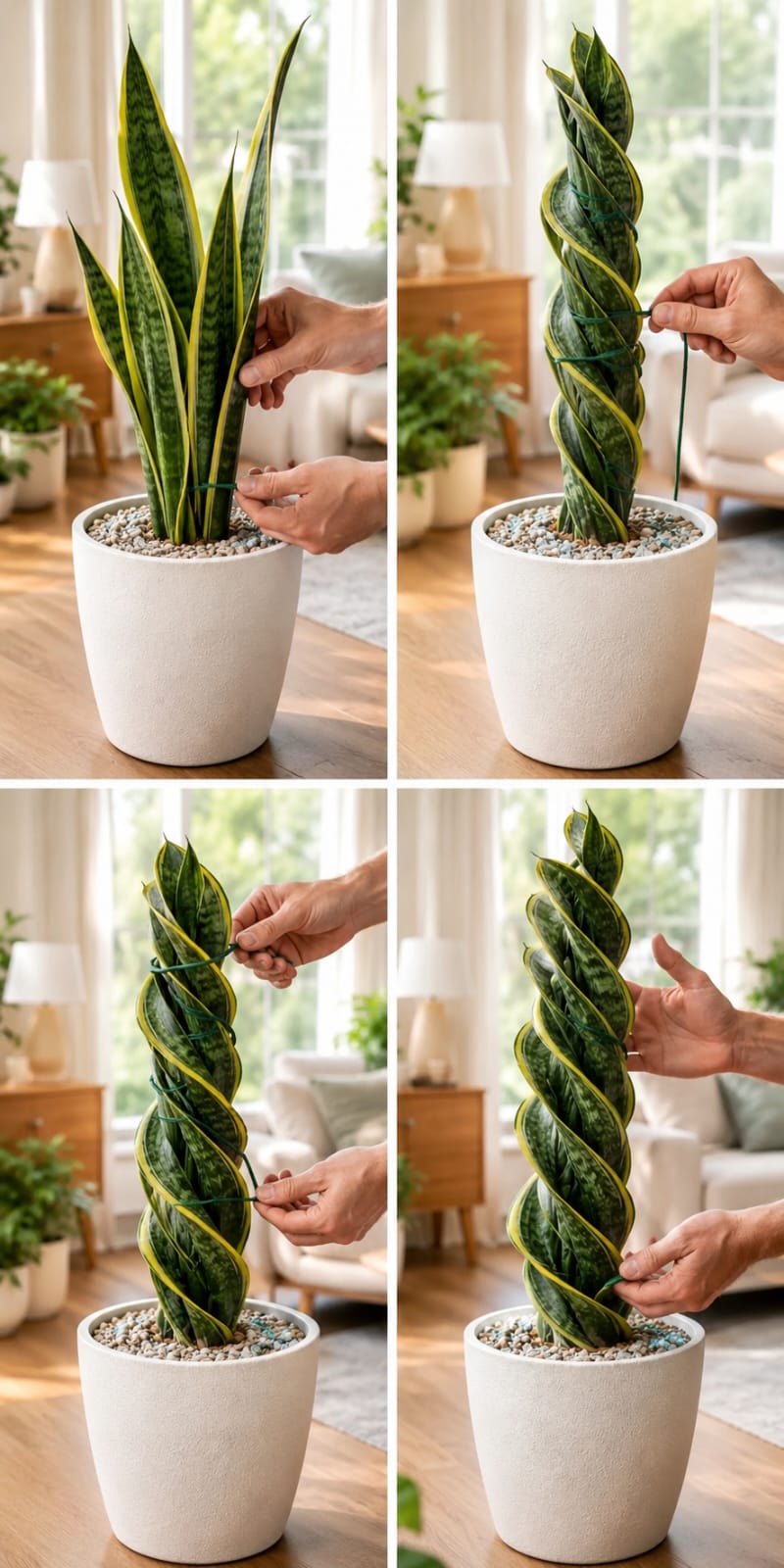
Airflow and Rot Prevention
When leaves are gathered together, airflow between them becomes more limited. This does not mean the method is unsafe, but it does mean the plant should not be kept wet. Avoid misting the leaves heavily. Snake plants do not need misting, and water trapped between tied leaves can lead to problems.
Keep the plant in a room with normal airflow. Avoid placing it in a damp, cold, stagnant corner. If the plant is near a window, protect it from cold drafts in winter. Cold plus wet soil is especially risky for snake plants. Warm, bright, dry conditions are safer.
Inspect the center of the plant regularly. If any leaf base looks dark, soft, or wet, loosen the ties and check the plant. Early action can prevent rot from spreading. A decorative shape should never hide health problems.
Maintaining the Spiral Look
A spiral snake plant needs occasional maintenance. The ties may need adjustment as the leaves settle. New leaves may grow straight upward and need gentle guidance. Old ties may fade, loosen, or collect dust. Replacing them with clean soft ties keeps the display polished.
Dust the leaves with a soft damp cloth. Because the leaves overlap, dust can collect in hidden areas. Clean leaves look glossier and absorb light better. Avoid oily leaf shine products because they can leave residue and make the plant look artificial.
If the plant begins leaning, adjust the pot position and check whether the ties are pulling unevenly. A heavy spiral column should remain balanced. If necessary, add a discreet support stake. The final look should be clean, upright, and elegant.
Decor Styling Ideas
A spiral snake plant looks especially beautiful in a simple white ceramic planter because the neutral pot lets the green and yellow foliage stand out. Decorative pebbles on the soil surface can create a luxury indoor plant display, especially in bright rooms with natural wood, cream fabrics, soft curtains, and modern furniture.
In a living room, the plant can be placed near a window, beside a sofa, on a low plant stand, or near a sideboard. In a bedroom, it can create a calm sculptural accent beside a dresser or reading chair. In a home office, it brings structure and greenery to the background without looking messy. Its vertical shape is useful in small apartments because it adds height without taking much floor space.
For luxury home staging and commercial interior design, a spiral snake plant can look more unique than a standard plant. It works well in reception areas, boutique corners, office spaces, apartment staging, salon interiors, and modern entryways. The key is keeping the plant healthy and the ties subtle. The display should look intentional, not overworked.
Common Mistakes With Spiral Training
One common mistake is tying the leaves too tightly. This can bruise or crease them. Another mistake is trying to twist the plant in one day. Snake plant leaves need slow guidance. A third mistake is using rough wire or thin string that cuts into the leaf surface. Soft ties are much safer.
A fourth mistake is watering into the center of the tied plant. Moisture trapped between leaves can cause rot. A fifth mistake is shaping a weak or overwatered plant. The plant must be healthy first. A sixth mistake is placing the plant in low light and expecting it to stay strong and upright. Bright indirect light is better for a full display.
A seventh mistake is hiding soil moisture under too many decorative stones. Stones can look beautiful, but they should not prevent proper watering checks. A thin layer is enough. A plant that looks decorative but has unhealthy roots will not last.
When to Remove the Ties
The ties can be removed if they begin to damage the leaves, if the plant outgrows the shape, or if the spiral no longer looks natural. Some leaves may hold their guided position for a while, while others may relax outward. Snake plants do not permanently train the same way soft vines do, so occasional retying may be needed.
If the plant produces many pups around the base, the spiral may become fuller and harder to maintain. At that point, the gardener can either allow a fuller natural shape or divide some pups and restart a cleaner spiral with selected leaves. Both choices can look beautiful.
Do not leave old tight ties hidden inside the plant for months without checking them. Regular inspection protects the leaves and keeps the display healthy. A well-maintained spiral is a living arrangement, not a one-time craft project.
Simple Recovery If Leaves Are Damaged
If a leaf cracks during shaping, stop adjusting the plant. Remove pressure from that area and let the plant rest. A small cosmetic crack may remain, but the leaf can sometimes continue functioning if the damage is not severe. If the leaf becomes soft, brown, or mushy, remove it with clean scissors.
If several leaves are damaged, release the spiral and allow the plant to return to a looser shape. Improve care and wait for new growth. Future leaves can be trained more gently. The plant’s health is more important than the design.
If the base becomes soft or smells bad, check the roots and rhizomes. This may indicate rot from overwatering or trapped moisture. Remove damaged sections, repot into dry well-draining mix, and reduce watering. Do not continue shaping until the plant is healthy again.
Final Thoughts
Training a snake plant into a spiral shape can turn a common houseplant into a dramatic indoor decor feature. The method works best when the plant is healthy, upright, mature, and growing in a stable pot with fast-draining soil. Soft ties, gradual shaping, bright indirect light, careful watering, and regular inspection are the keys to success.
The spiral shape should be gentle and natural. Snake plant leaves are firm, not flexible vines, so forcing them can cause permanent damage. A slow approach creates a cleaner and more elegant result. The ties should guide the plant, not squeeze it. The leaves should remain firm, dry, and healthy.
With patient care and thoughtful styling, a spiral snake plant can become a beautiful focal point for living rooms, bedrooms, home offices, bright windows, modern apartments, commercial interiors, luxury home staging, and premium indoor plant displays. Healthy roots, clean leaves, subtle support, and balanced maintenance will always create a stronger result than forcing the plant into a shape too quickly.