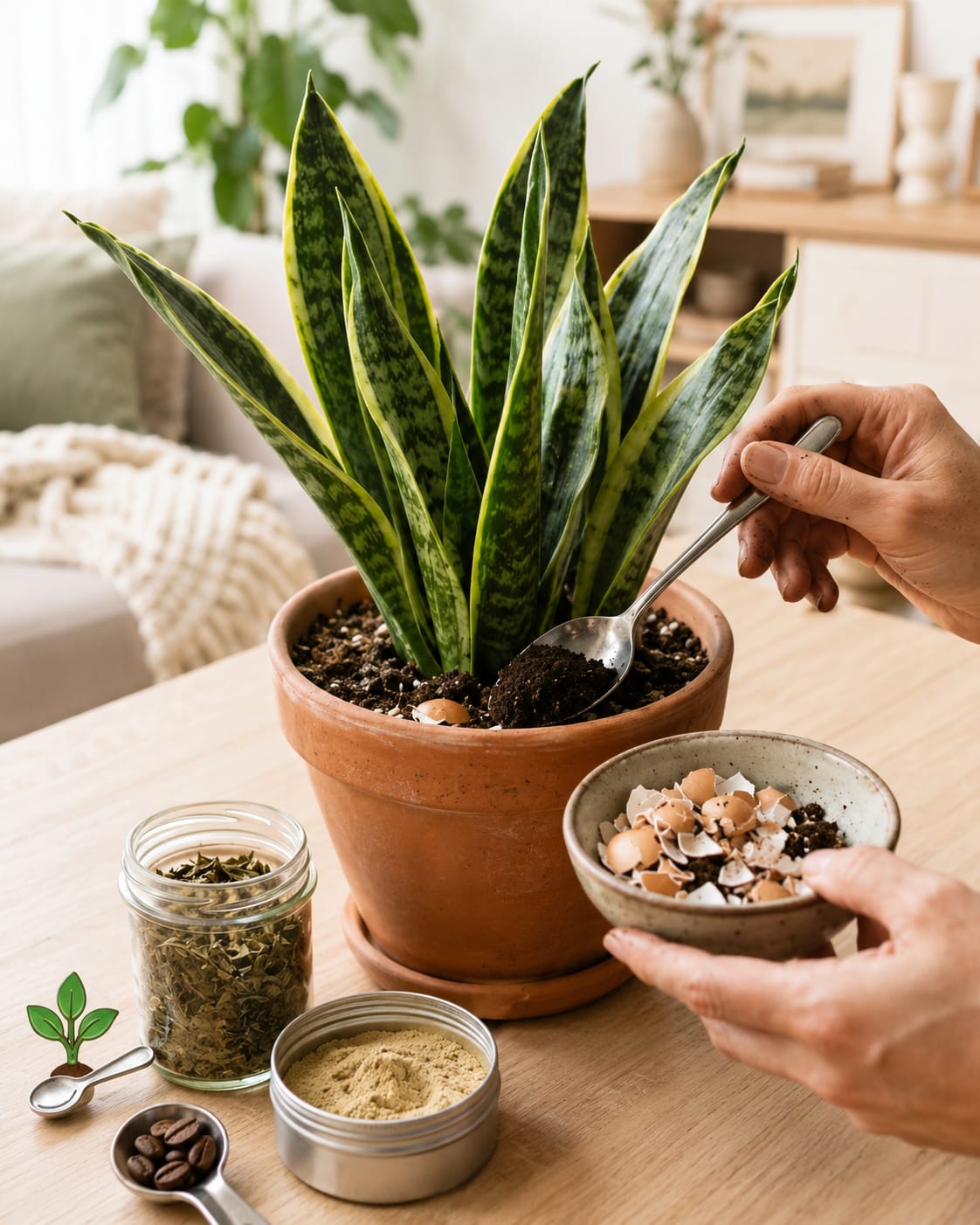
How to Avoid Mold
Mold on the soil surface usually means too much moisture, poor airflow, or too much organic material. Remove the moldy top layer and let the soil dry.
Improve airflow around the plant and avoid thick layers of coffee grounds, tea leaves, or compost.
Use less booster next time, or skip it entirely if your room is humid and low-light.
Cleaning Snake Plant Leaves
Dust can build up on snake plant leaves and reduce light absorption. Wipe the leaves gently with a damp cloth every few weeks.
Support each leaf while cleaning so it does not bend or crack. Do not use oily leaf shine products.
Clean leaves look better and help the plant use available light.
Decor Ideas for Snake Plants
Snake plants are excellent decor plants because of their upright shape. They look modern, sculptural, and tidy.
- Place one in a terracotta pot near a bright window.
- Use a white ceramic pot for a clean minimalist look.
- Style it on a wooden shelf with small natural jars.
- Group different snake plant varieties together.
- Use a woven basket cover for a warm boho style.
- Place it beside a sofa for vertical greenery.
- Use smaller snake plants on desks or windowsills.
The strong leaf shape makes the plant beautiful even without flowers.
Best Rooms for Snake Plants
Snake plants work well in living rooms, bedrooms, offices, hallways, kitchens, and bright bathrooms. They tolerate different conditions, but they look best with good light and dry soil.
Avoid cold windowsills in winter and dark corners where the soil stays wet too long.
If the room is darker, water much less often.
Common Mistakes to Avoid
- Adding too much coffee grounds
- Using wet organic material
- Watering right after adding a booster when soil is still damp
- Using a pot with no drainage holes
- Applying natural boosters to a sick plant with root rot
- Using heavy compost as the main soil
- Adding raw kitchen scraps
- Keeping the plant in low light and watering often
- Covering the crown with amendments
Snake plant care should stay simple and dry.
A Simple Natural Booster Routine
- Use only dry, clean ingredients.
- Apply a tiny amount during spring or summer.
- Mix it into the top inch of soil.
- Keep it away from the plant crown.
- Water only when soil is dry.
- Repeat every 2 to 3 months at most.
- Stop if mold, gnats, or yellowing appears.
- Focus on light, drainage, and root health first.
This gentle routine supports the plant without overwhelming the soil.
Final Thoughts
A natural soil booster can be a helpful way to refresh a snake plant pot, but it must be used with care. Snake plants do not need heavy feeding or wet organic layers. They need bright indirect light, dry periods, fast-draining soil, and a pot with drainage holes.
Crushed eggshells, a tiny amount of dried used coffee grounds, mature compost, worm castings, or dried tea leaves can be useful when applied lightly. The safest method is to keep everything dry, use a small amount, and mix it gently into the top layer of soil.
Do not treat natural ingredients as a miracle cure. If the plant is yellowing, mushy, or drooping, check the roots and watering first. With balanced care, your snake plant can stay upright, green, strong, and beautiful for years.