Product and Tool Guide
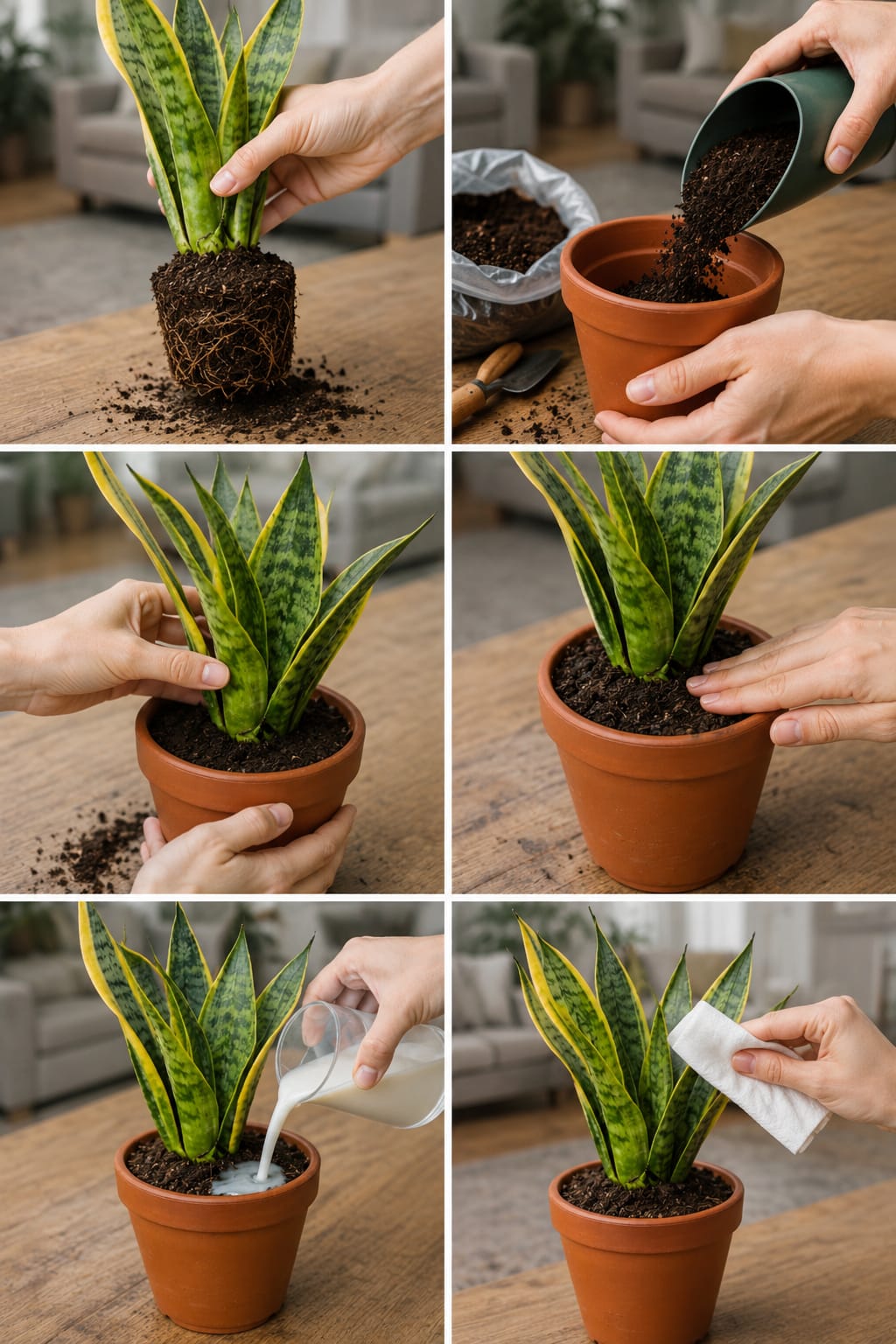
Helpful materials for snake plant care include a terracotta pot with drainage holes, cactus and succulent mix, perlite, pumice, a moisture meter, a narrow-spout watering can, clean scissors, a soft cloth, a small hand trowel, and a diluted cactus and succulent fertilizer. A grow light can help if the plant is kept in a darker room.
If milk water is used, a measuring spoon and plenty of clean water are important for dilution. The liquid should be fresh and extremely weak. However, milk water is not a necessary tool. Plain water and a proper fertilizer routine are safer for most plant owners.
These tools create a more reliable care routine than guessing. Snake plant success comes from the basics. Good soil, drainage, bright indirect light, and controlled watering will always matter more than homemade liquid experiments.
Care Timeline After Repotting and Milk Water
During the first 24 hours after repotting, the plant should be placed in bright indirect light and checked to make sure the crown is clean. If milk water was used, the soil should drain fully and any residue on leaves should be wiped away. The plant should not be watered again immediately.
During the first week, the soil should be watched for smell, mold, fungus gnats, or dampness that lasts too long. If any warning signs appear, milk water should be stopped. The plant should be allowed to dry properly. If the smell is strong, repotting into clean soil may be needed.
After two to four weeks, a healthy repotted snake plant should remain firm and stable. Do not expect dramatic growth right away. After one to two months, the plant may begin settling into the new pot. Long-term success depends on dry-friendly soil, careful watering, and avoiding repeated organic liquid buildup.
Professional Styling Note
In high-end indoor horticulture, snake plant is valued because it offers strong architectural structure with very little visual clutter. It fits luxury interior architecture, premium home staging, modern apartment decor, commercial office styling, and property presentation. Its vertical leaves can make a simple space look cleaner and more designed.
However, premium styling depends on cleanliness. A snake plant pot should not smell sour or show residue from homemade liquids. Milk water may sound natural, but if it creates odor, pests, or mold, it damages both plant health and presentation. In professional plant styling, all care methods should be invisible, controlled, and clean.
A beautiful snake plant display needs firm leaves, breathable soil, a draining pot, clean surfaces, and a planter that fits the room. The best care routine is simple and consistent. A plant that is not overwatered and not overloaded with organic treatments will usually look better for longer.
Final Thoughts
Milk water can be used around a snake plant only with great caution, and it is not necessary for healthy growth. If used at all, it should be very diluted, fresh, odor-free, applied rarely, and kept away from the crown and leaves. Undiluted milk, spoiled milk, sweetened milk, or frequent dairy-based watering can attract pests, create mold, smell bad, make the soil sticky, and increase root rot risk.
The real foundation of snake plant care is not milk water. It is a fast-draining potting mix, a pot with drainage holes, controlled watering, bright indirect light, and occasional light feeding with a proper fertilizer during active growth. Repotting into a terracotta pot can support healthier drying, but the plant still needs careful watering and clean soil.
With clean care and the right presentation, snake plant can remain a strong decorative accent for living rooms, bedrooms, home offices, entryways, modern apartments, commercial interior landscaping, luxury home staging, premium terracotta planters, and polished property presentation. Healthy roots, firm leaves, and a clean pot will always create a better result than heavy homemade liquid treatments.