Leaf and Flower Cleaning
Clean leaves are important for Anthurium because the plant is valued for its glossy surface. Dust can make the plant look dull. A soft damp cloth can be used to wipe leaves gently. The spathes can also be cleaned carefully if they are dusty, but they should not be rubbed harshly because they can mark easily.
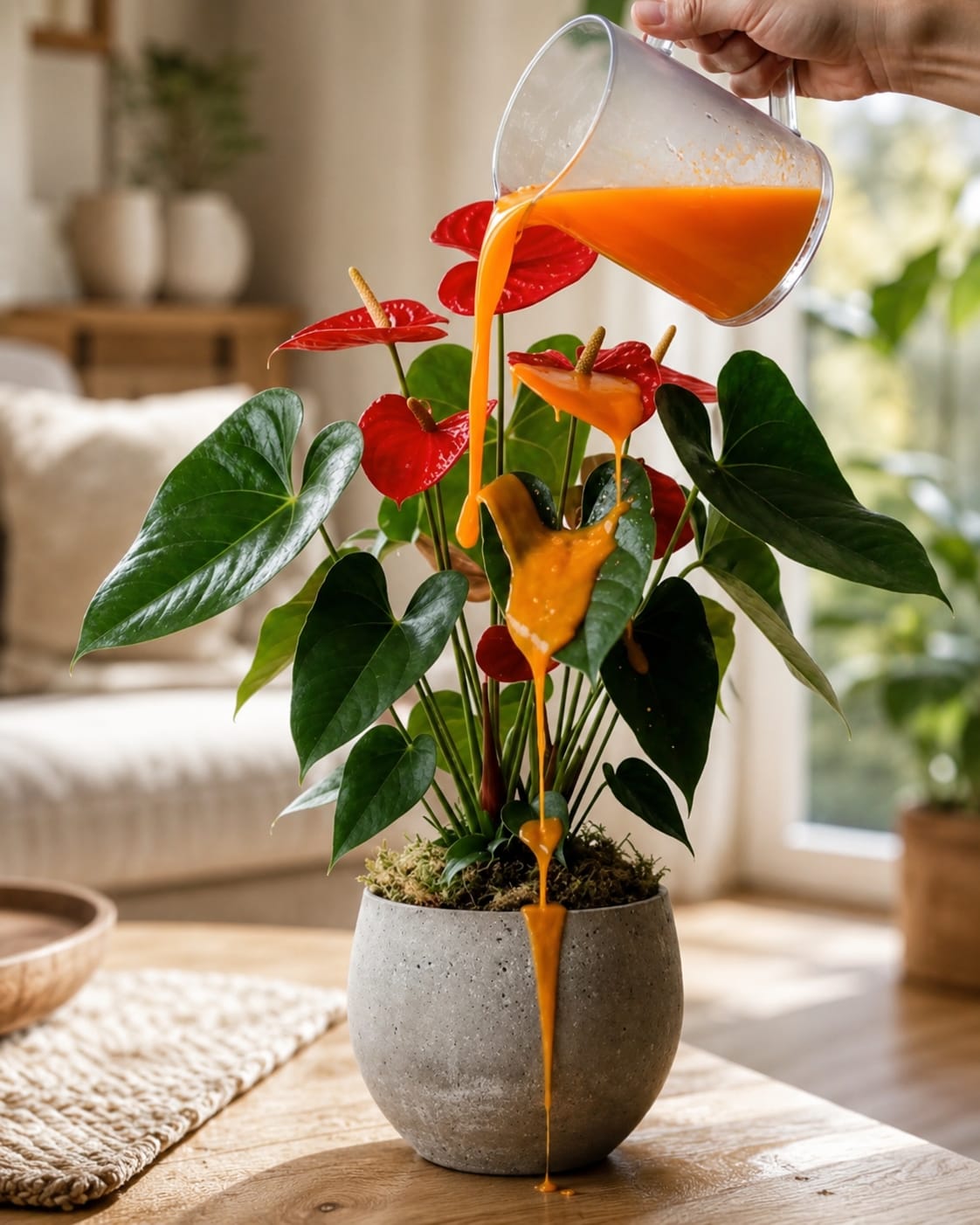
Orange liquid, fertilizer splash, or mineral residue should not be allowed to dry on the plant. Residue can leave stains and reduce the polished look. If a liquid touches the leaves or spathes, it should be wiped away quickly. Clean surfaces are part of both plant health and decorative value.
Leaf shine products are usually unnecessary. Anthurium leaves already have a natural shine when healthy. Heavy shine sprays can leave residue or block the leaf surface. A simple wipe with clean water is usually enough for a premium indoor plant display.
Indoor Decor Value
Anthurium has strong indoor decor value because it combines glossy foliage with long-lasting color. The red spathes can create a luxurious focal point in neutral rooms, while the green leaves add softness and depth. It works well on side tables, plant stands, office desks, console tables, bedroom corners, and bright indoor shelves.
A stone-effect planter can make Anthurium look modern and natural. A white planter creates a clean bright style. A black planter makes red spathes look more dramatic. A terracotta pot gives a warmer garden-inspired look. The right container can change the entire mood of the plant display.
The plant looks best when the pot surface is tidy, the leaves are clean, and the flowers are free from stains. Thick liquids, visible residue, sticky soil, or fruit flies can ruin the premium look. For indoor styling, care methods should stay clean, controlled, and invisible.
Room-by-Room Styling
In the living room, Anthurium can sit on a plant stand, side table, or console near bright filtered light. Its red spathes add color without needing cut flowers. It pairs well with neutral furniture, soft curtains, wood surfaces, and stone planters.
In the bedroom, Anthurium creates a calm but elegant tropical accent. A cream, gray, or white planter can match soft bedding and natural textures. The plant should not be overwatered in lower bedroom light. If the room is dim, a grow light may help support blooming.
In a home office, Anthurium gives a polished and professional look. It can improve desk styling or a video-call background. The plant should stay clean and residue-free because glossy leaves and bright spathes show marks easily.
In an entryway, Anthurium can make a strong decorative impression if the space has enough light. A flowering plant near the entrance can make the home feel more welcoming. If the entryway is dark, the plant should be rotated to a brighter location regularly.
Office and Commercial Styling
Anthurium is valuable in commercial interior landscaping because it provides color without requiring constant flower replacement. It can be used in reception areas, hotel-style interiors, boutique spaces, wellness rooms, executive offices, waiting areas, and property staging. Its glossy leaves and bright spathes give a premium tropical feeling.
For professional spaces, feeding methods must be clean and odor-free. Thick homemade liquids should not be visible on the plant or soil surface. Pests, mold, and sticky residue are unacceptable in commercial displays. A controlled fertilizer routine is usually better for professional plant maintenance.
A healthy Anthurium in a premium planter can look elegant and expensive. A stressed plant with stained flowers, soggy soil, or fruit flies can damage the entire presentation. In commercial styling, simple predictable care is better than risky homemade tricks.
Product and Tool Guide
Helpful materials for Anthurium care include a chunky aroid potting mix, orchid bark, perlite, coco chips, a pot with drainage holes, a decorative cachepot, a narrow-spout watering can, clean pruning scissors, a moisture meter, a diluted indoor plant fertilizer, and a soft cloth for leaf cleaning. A humidifier can help in dry rooms, and a grow light can support blooming where natural light is weak.
If any homemade liquid is used, a fine strainer is important. The liquid should be free from pulp and residue. A measuring cup can help avoid overuse. Clean water should always be available for normal watering and possible soil flushing. The plant should never be fed with a liquid that smells spoiled.
These tools create a safer and more polished care routine. Anthurium responds well to stable care, not dramatic treatments. Clean tools, controlled watering, and good light are more important than colorful liquids.
Care Timeline After Using Orange Liquid
During the first 24 hours, the plant should be checked for residue on the flowers, leaves, crown, and soil surface. Any liquid sitting on the spathes should be wiped away. The soil should be allowed to drain fully. The plant should not be watered again immediately.
During the first week, the plant should be watched for mold, fruit flies, fungus gnats, sour smell, drooping, yellow leaves, or sticky soil. If the plant remains clean and stable, no extra action may be needed. If pests or odor appear, the soil surface should be cleaned and watering should be paused until the mix dries slightly.
After two to four weeks, a healthy Anthurium should remain firm and glossy. Old flowers may naturally fade, but new growth should look clean. If the plant begins to decline, the potting mix and roots should be checked. Long-term success depends on careful watering, bright indirect light, and avoiding thick organic liquids.
Professional Styling Note
In high-end indoor horticulture, Anthurium is valued because it offers glossy foliage and long-lasting color in a compact elegant form. It works beautifully in luxury interior styling, premium home staging, modern apartment decor, hotel-style plant displays, and commercial reception areas. The plant can look like a living floral arrangement when kept clean and healthy.
However, the premium look depends on clean presentation. Pouring thick orange liquid over the flowers can make the plant look messy and can damage the spathes. In professional plant styling, any feeding method should be invisible, controlled, and odor-free. The plant should look polished from every angle.
A beautiful Anthurium display needs bright indirect light, healthy roots, clean leaves, fresh spathes, breathable soil, and a planter that matches the room. Simple care usually creates better results than dramatic homemade tricks. The safest routine protects the plant while keeping the display elegant.
Final Thoughts
An orange liquid may look like a powerful homemade plant food, but it should be used around Anthurium only with caution. Thick fruit juice, citrus liquids, sugary blends, fermented mixtures, and pulpy homemade solutions can attract pests, create mold, damage roots, stain flowers, and make the potting mix unhealthy. Anthurium is beautiful but sensitive, so clean and controlled care is essential.
The safest method is to avoid pouring any unknown liquid over the flowers or leaves. If a homemade liquid is used, it should be thin, strained, heavily diluted, applied only to the soil, and used rarely. A balanced indoor flowering plant fertilizer is usually more reliable for supporting healthy growth and longer-lasting blooms.
With proper care, Anthurium can remain a stunning accent for living rooms, bedrooms, home offices, entryways, modern apartments, commercial interior landscaping, luxury home staging, premium ceramic planters, and polished property presentation. Healthy roots, bright indirect light, careful watering, clean leaves, and a breathable potting mix will always matter more than the color of any homemade liquid.