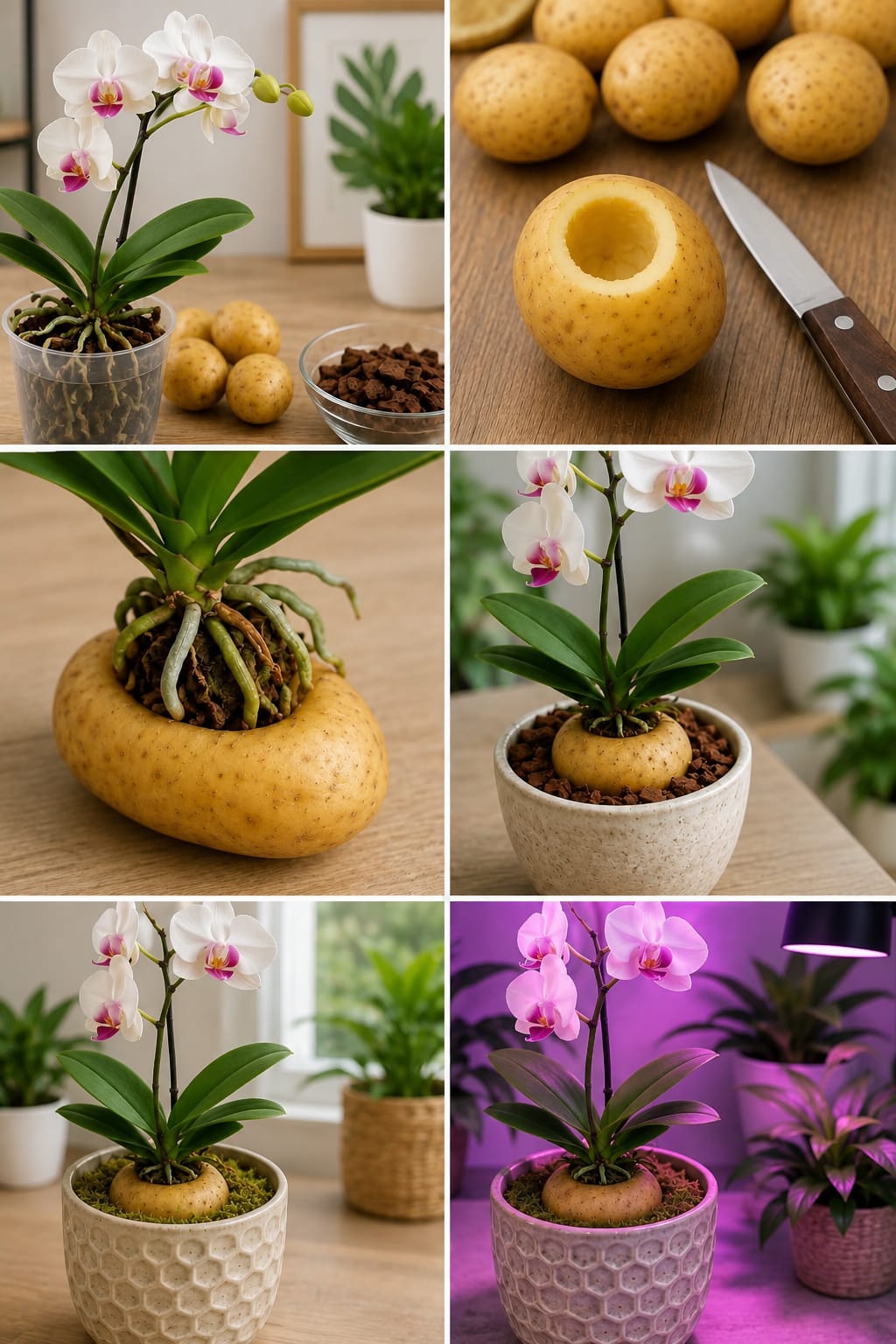
Best Orchid Potting Mix for This Method
The potato trick works best only when surrounded by airy orchid mix. Use chunky bark as the main material. You can add a small amount of sphagnum moss if your home is very dry, but do not pack moss tightly around the crown. Too much moss can hold water against the roots and cause rot.
A simple mix can include orchid bark, perlite, and a little charcoal. This type of mix allows water to pass through while keeping enough moisture for the roots. The potato should never be used as the main growing medium.
How to Keep the Display Clean and Elegant
Orchids look most beautiful when their potting setup is clean. Choose a pot that suits the flower color. White orchids look elegant in cream ceramic, pale stone, or clear glass-style outer pots. Pink orchids pair beautifully with warm clay, beige ceramic, or soft textured planters. Purple orchids look dramatic in charcoal, deep green, or matte black containers.
For a more expensive-looking display, cover the top of the orchid mix with a thin layer of decorative bark or clean moss. Do not cover the crown. Keep the surface airy and natural. Add a slim black support stake and discreet clips to guide the flower spike. Avoid colorful plastic clips if you want a luxury look.
Place the orchid on a wooden tray, stone saucer, or simple plant stand. A clean tray protects furniture and makes the whole arrangement feel intentional.
Where to Place the Orchid After Repotting
After using the potato support or repotting the orchid, place the plant in bright indirect light. Avoid harsh direct sun, especially through hot windows. Direct sun can burn leaves. A spot near an east-facing window or a bright room with filtered light is usually ideal.
Do not place the orchid next to cold drafts, heaters, air conditioners, or open windows during chilly nights. Orchids prefer stable conditions. Sudden stress can cause buds to drop.
How to Tell If the Orchid Is Adjusting Well
A healthy orchid should keep firm leaves and firm roots. The leaves should not become limp or wrinkled. The roots should not become mushy. If the plant is blooming, flowers may last for weeks when care is steady.
New root tips are a very good sign. They often appear green and fresh. New leaves also show that the plant is actively growing. If the orchid seems stable after several weeks, continue with normal orchid care and avoid experimenting too often.
Warning Signs After Using Potato
Watch carefully for warning signs. If you notice a sour smell, white fuzzy mold, fungus gnats, soft brown roots, yellowing leaves, or a soft crown, stop the method immediately. Remove the potato, refresh the bark, and let the plant dry slightly.
If roots are damaged, remove the plant from the pot and inspect them. Trim only rotten roots with sterilized scissors. Repot into fresh orchid bark. Keep the plant in bright indirect light and water carefully until it recovers.
How to Support Blooming Naturally
To encourage orchid blooms, focus on the basics. Give the plant bright indirect light. Water deeply but infrequently. Let the pot drain fully. Use orchid fertilizer at a weak strength during active growth. Keep roots airy. Provide a slight temperature difference between day and night when possible.
After flowers fade, do not panic. Orchids naturally rest between bloom cycles. Continue caring for the leaves and roots. A strong plant can bloom again when conditions are right.
Why This Trick Works Best as a Styling Idea
The potato orchid trick is visually charming because it creates a natural, rustic centerpiece. The round potato shape can look like a small organic base, especially when surrounded by bark, moss, and a textured ceramic pot. For plant styling, it can create a unique conversation piece.
However, for long-term orchid health, the plant still needs proper orchid care. Think of the potato as a temporary decorative support or a short natural experiment, not the main reason the orchid survives.
Indoor Decor Ideas With Orchids
Orchids are perfect for soft luxury decor. Place one blooming orchid on a console table, bathroom shelf with bright filtered light, kitchen windowsill, or bedroom plant stand. Keep the pot simple so the flowers remain the focus.
For a spa-like look, use white orchids with a cream pot and natural stones. For a warm organic look, use terracotta, bark chips, and a wooden tray. For a modern look, choose a clear inner pot inside a matte black outer pot. For a romantic look, pair pink orchids with soft beige ceramics and a small candle nearby.
Always leave space around the orchid. Crowding too many objects around the plant can reduce airflow and make the display look messy. A single healthy orchid with clean leaves often looks more elegant than many neglected plants together.
Balcony Styling With Orchids
If your balcony has bright shade and protection from strong wind, orchids can look beautiful outdoors during mild weather. Place them on a shaded table, plant shelf, or hanging corner where they receive filtered light. Avoid direct hot sun and heavy rain.
Use natural materials like clay pots, wooden shelves, bamboo screens, and neutral trays. Orchids look especially refined when paired with ferns, pothos, or small leafy plants. Keep the orchid slightly raised so water can drain freely.
Common Mistakes With the Potato Orchid Trick
- Leaving the potato in the pot too long.
- Using a large potato that holds too much moisture.
- Burying the orchid crown inside the potato.
- Using ordinary soil instead of orchid bark.
- Watering too often after adding potato.
- Ignoring mold or sour smell.
- Expecting instant flowers without proper light.
- Using cooked or old potato.
A Safer Weekly Orchid Routine
Once a week, check the orchid roots and potting mix. If the roots look silvery and the bark is dry, water thoroughly and let it drain. If the roots are still green and the bark feels damp, wait. Wipe dust from leaves with a soft damp cloth. Remove faded flowers only when they are fully spent.
Once a month during active growth, use a weak orchid fertilizer or a very diluted homemade rinse. Keep homemade tricks gentle. Orchids prefer consistency over dramatic treatments.
Final Thoughts
The potato orchid trick can be a creative way to support, style, and refresh an orchid display, but it must be used carefully. The safest method is temporary, clean, and light. The potato should never become a soggy permanent base, and the orchid should always remain in airy bark with excellent drainage.
For real orchid success, focus on healthy roots, bright indirect light, careful watering, and clean presentation. The potato trick can add charm, but the true beauty comes from balanced care. When roots are firm, leaves are glossy, and the display is tidy, an orchid can look luxurious even in a simple pot.
Use this method as a gentle experiment, watch the plant closely, and keep the setup clean. With patience and proper care, your orchid can become a graceful centerpiece that brings elegance, freshness, and natural beauty into your home.