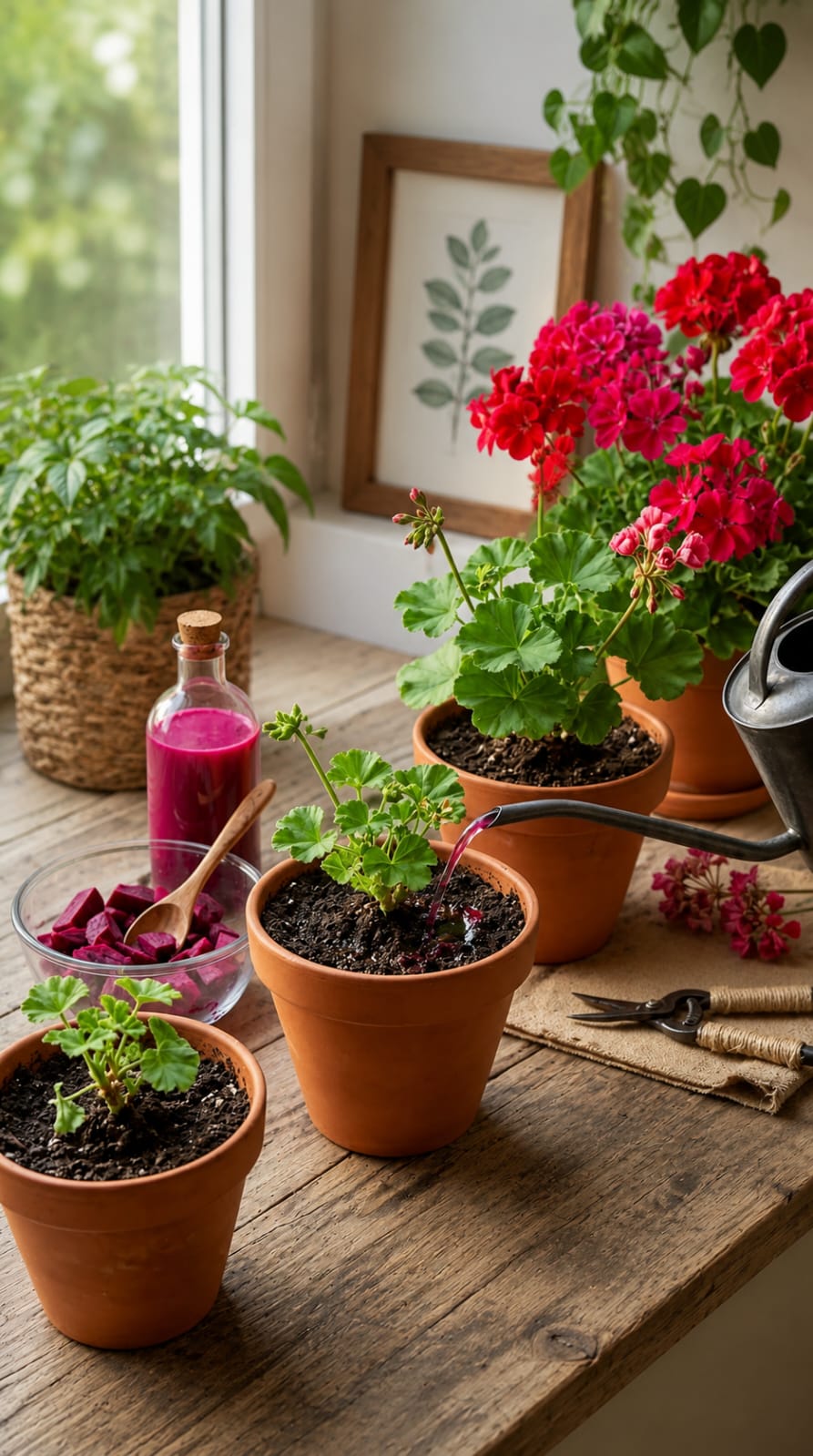
Houseplants and flowering pots often lose their fresh, lively look when their roots are tired, the soil becomes poor, or watering becomes inconsistent. Leaves may turn pale, blooms may appear smaller, and the whole plant can look dull even when it is still alive. This is why many home gardeners love simple natural plant-care tricks that help refresh the soil, support root activity, and make indoor or windowsill plants look greener, cleaner, and more decorative.
One charming homemade method is the beetroot elixir, a light plant tonic made from beetroot pieces soaked or blended in water, then heavily diluted before use. Beetroot is naturally rich in color and contains plant-friendly organic compounds, but the secret is not to pour thick beet juice directly into the pot. The safest way is to make a weak, watery solution that supports a gentle watering routine without overwhelming the soil.
This trick works best when used as a monthly refresh for flowering houseplants, balcony flowers, geraniums, peace lilies, anthuriums, and other leafy plants that enjoy steady moisture. It should be used carefully, lightly, and only when the plant is actively growing. The goal is to support natural vitality, not force instant blooms or replace balanced fertilizer.
Why Beetroot Water Became a Favorite Plant-Care Trick
Beetroot has a deep red-purple color that makes it feel like a powerful garden ingredient. When mixed with water, it creates a rich-looking liquid that many gardeners call a homemade elixir. The appeal is simple: it is inexpensive, easy to prepare, and gives plant care a natural, old-fashioned feel.
But the real benefit of this trick is not magic. It encourages a more intentional watering routine. Instead of randomly pouring water whenever the plant looks tired, you prepare a mild tonic, check the soil, water slowly near the roots, and observe how the plant responds. That attention alone can improve plant health because most houseplant problems come from inconsistent care, poor drainage, or forgotten feeding.
Used correctly, beetroot water can become a gentle soil-refreshing ritual. Used incorrectly, it can stain surfaces, attract pests, or make the potting mix sour. That is why dilution is the most important part of the method.
How to Make a Safe Beetroot Elixir for Plants
To prepare a simple beetroot plant tonic, cut a few small cubes of fresh beetroot and place them in a cup of clean water. Let the pieces soak for several hours until the water becomes lightly pink. For a stronger extract, you can blend a small amount of beetroot with water, then strain it very well through a fine cloth or sieve.
The liquid should always be diluted before watering plants. A safe ratio is:
- 1 tablespoon beetroot extract
- 1 liter clean water
This creates a very light tonic that is easier for the soil to handle. The water should look lightly tinted, not thick, dark, or syrupy. Thick beet liquid can leave organic residue in the pot and may attract fungus gnats or mold if the soil stays wet.
Use the mixture fresh. Do not store it for many days, because homemade plant liquids can ferment. Fresh, diluted tonic is cleaner and safer.
How Often to Use It
Use beetroot elixir only occasionally. Once every three to four weeks during the growing season is enough for most houseplants and flowering pots. During winter, when many plants slow down, reduce or stop using it.
Too much homemade tonic can cause problems. Plants need balance. If the soil receives too much organic liquid, it may become sticky, sour, or attractive to insects. A light monthly use is safer than frequent heavy watering.
Always check the soil first. If the soil is still wet, wait. Never add beetroot water to a soggy pot. Roots need air as much as they need moisture.
Best Plants for This Trick
Beetroot elixir is best for plants that enjoy moderate moisture and active growth. It can be used carefully on:
- Geraniums
- Peace lilies
- Anthuriums
- Begonias
- Impatiens
- Kalanchoe
- Outdoor flowering pots
- Leafy houseplants with healthy drainage
Be careful with succulents, cactus, orchids, and plants grown in very airy bark mixes. These plants are more sensitive to extra moisture and organic residue. If you want to try it on orchids, use an extremely diluted version and avoid soaking the crown or leaving liquid around the roots for too long.
How to Apply Beetroot Elixir Correctly
Pour the diluted tonic slowly around the base of the plant. Keep it on the soil, not on the flowers and leaves. Beetroot liquid can stain light surfaces, pale pots, and petals, so apply it carefully with a small watering can or cup.
Use only enough to lightly moisten the soil. The goal is not to flood the pot. If liquid drains into the saucer, empty the saucer after 10 to 15 minutes. Standing water can suffocate roots and create root rot.
For small pots, a few tablespoons may be enough. For medium pots, use a small cup. For large outdoor containers, use more diluted tonic, but keep the mixture weak.
Why This Trick Should Be Gentle
Many plant-care tricks fail because people use too much. A natural ingredient does not automatically mean it is safe in large amounts. Beetroot contains organic matter, and organic matter can break down in soil. A little can be part of a gentle routine, but too much can create odor, pests, and poor soil texture.
The safest version of this method is light, strained, and diluted. Never pour thick beetroot pulp into houseplant soil. Pulp can sit on the surface and rot. If you want to use the leftover beetroot pieces, add them to an outdoor compost pile instead of indoor pots.
Signs Your Plant Likes the Routine
If the plant responds well, you may notice fresher leaves, stronger stems, and a cleaner overall look after a few weeks. Flowering plants may hold their blooms better when the watering routine becomes more consistent. The soil should remain fresh-smelling and loose.
Do not expect overnight transformation. Plants improve slowly. The beetroot elixir is a support routine, not an instant solution. The best results come when it is combined with proper light, drainage, pruning, and regular feeding.
Signs You Should Stop
Stop using the tonic if you notice mold, sour smell, fungus gnats, sticky soil, yellowing after watering, or wilting. These signs may mean the soil is too wet or the mixture is too strong.
If this happens, return to plain water. Let the soil dry slightly, improve airflow, and remove any stained or crusty soil from the surface. If the problem continues, repot the plant into fresh, well-draining mix.
Beetroot Elixir and Flowering Plants
Flowering plants need energy to produce blooms. A beetroot tonic alone will not make flowers appear if the plant lacks sunlight or nutrients. For blooms, light is essential. Most flowering plants need bright indirect light, and many outdoor flowers need several hours of sun.
To encourage more flowers, combine the beetroot routine with deadheading. Remove faded blooms so the plant does not waste energy making seeds. Trim yellow leaves, rotate the pot, and keep the soil evenly moist. These habits matter more than any single homemade mixture.
For geraniums and patio flowers, use the tonic as a monthly refresh, then continue normal care. For peace lilies and anthuriums, keep the solution weak and avoid overwatering. These plants prefer moisture, but they still need oxygen around their roots.
How to Use It for a Cleaner Indoor Display
Because beetroot liquid can stain, presentation matters. Place a tray under the pot before watering. Wipe the pot rim immediately if any drops spill. Use a dark saucer or washable surface if you are working near a windowsill.
For a polished look, pair green plants with terracotta, cream ceramic, or matte black pots. A red or burgundy-toned plant tonic can feel rustic and beautiful, but the finished display should look clean, not messy. After watering, remove soil crumbs, fallen leaves, and old petals from the area.
A tidy windowsill with healthy plants, clean pots, and colorful blooms can look more expensive than a crowded plant shelf full of neglected containers.
Decor Styling With Beetroot-Toned Flower Pots
The deep beetroot color pairs beautifully with flowering plants. Pink geraniums, red pelargoniums, purple petunias, white peace lilies, and green foliage all look elegant near warm natural textures. Use wooden trays, clay pots, woven baskets, or neutral ceramic planters to create a cozy natural display.
For a cottage-style windowsill, combine terracotta pots with flowering plants in red, pink, and white. For a modern look, use white pots and keep the plants evenly spaced. For a rustic kitchen-garden feeling, place a small glass bottle of the diluted tonic beside your watering can, but keep it sealed and use it fresh.
The decor trick is simple: healthy leaves make the room feel alive, while clean containers make the setup feel intentional.
Do Not Replace Fertilizer Completely
Beetroot elixir is not a complete fertilizer. Plants need a balanced supply of nutrients, including nitrogen, phosphorus, potassium, and trace minerals. A homemade tonic may support a routine, but it cannot replace a proper plant food forever.
For flowering plants, use a balanced fertilizer or bloom-support fertilizer according to the label. Use beetroot elixir separately and occasionally. Do not combine it with strong fertilizer in the same watering, because too much at once can stress roots.
A smart schedule could look like this: plain water as needed, fertilizer once or twice a month during active growth, and beetroot elixir once monthly as a light refresh. Adjust based on the plant’s reaction.
Continue to Page 2
Continue to page 2 for more details about this article and the key points many readers miss on the first page.