Flowering plants can completely change the feeling of a balcony, patio, porch, or sunny garden corner. A simple pot full of pink, purple, red, yellow, and white blooms can make an outdoor space look softer, happier, and more expensive without needing complicated decorations. But many home gardeners notice the same problem after a few weeks: the flowers look tired, the leaves lose their deep green color, and the whole container begins to look flat instead of full.
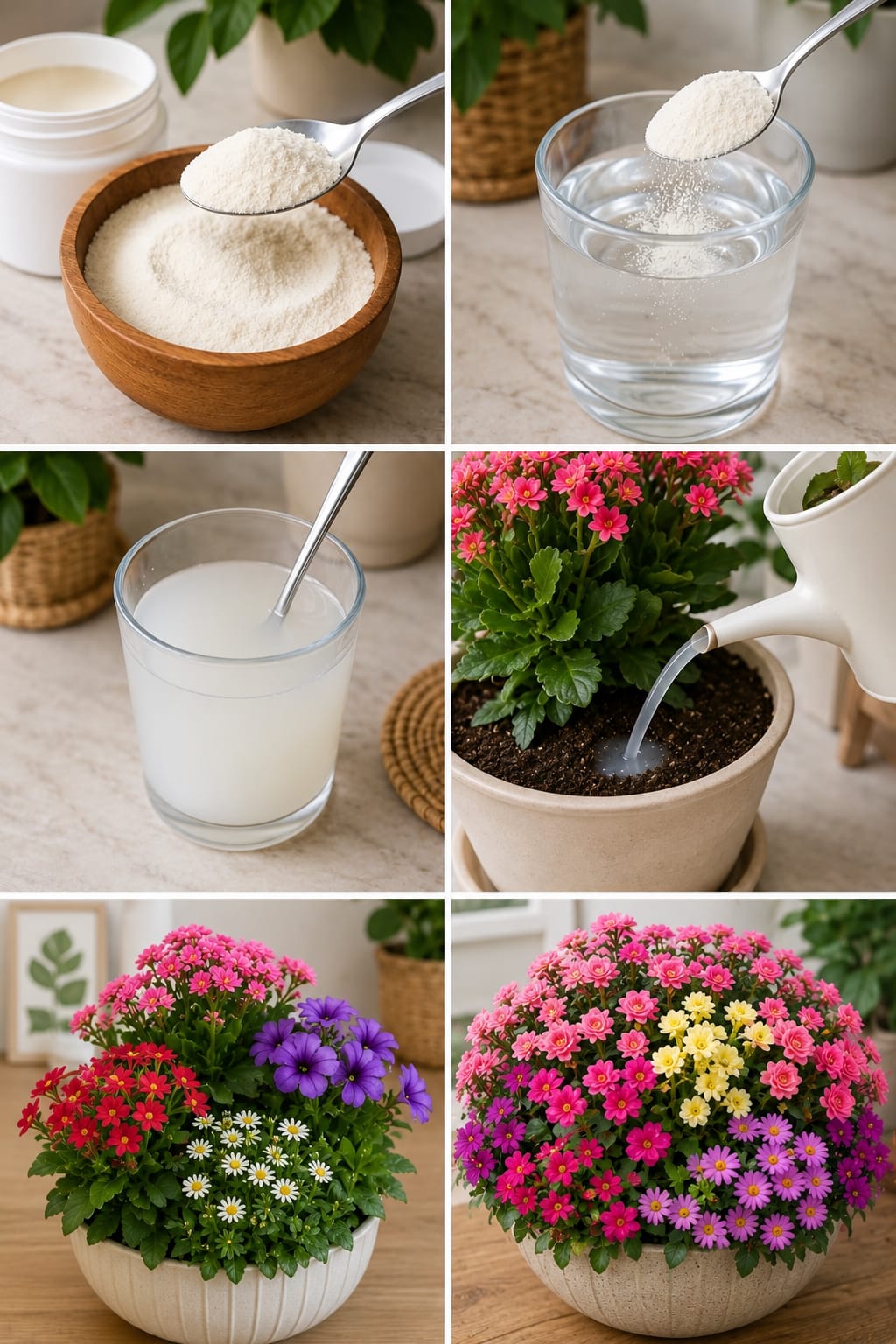
One easy plant-care idea that many people like to try is a light white-powder watering mix. The idea is simple: dissolve a very small amount of a gentle kitchen-style powder, such as rice flour or finely ground rice powder, in clean water, stir it well, and use it as an occasional root-zone drink for flowering plants. This is not a miracle fertilizer and it should not replace balanced plant food, sunlight, drainage, or regular care. But when used carefully and lightly, it can become part of a cleaner, more thoughtful flowering-plant routine.
The real value of this trick is not about forcing flowers overnight. It is about giving the plant a mild, diluted support drink while also encouraging the gardener to water more carefully. Many flowering plants decline not because they lack strange secret ingredients, but because they are watered unevenly, left in compacted soil, or kept in pots where the roots cannot breathe. A light, well-diluted mix can be used as a reminder to slow down, check the soil, water at the base, and keep the container looking fresh.
The Simple White-Powder Watering Idea
The basic method is very easy. Add a small spoonful of rice flour or finely ground rice powder to a glass of clean water, stir until the water becomes lightly cloudy, then dilute it further before watering the soil around flowering plants. The mixture should look thin and watery, not thick like paste. Thick mixtures can clog the soil surface, attract pests, and create an unpleasant smell.
For a safe home-garden approach, use about one small teaspoon of rice flour in one liter of water. Stir well and let it sit for a few minutes. If any heavy sediment sinks to the bottom, avoid pouring the thick layer into the pot. Use only the light cloudy water. This keeps the method gentle and reduces the chance of residue building up on the soil.
This type of trick works best for outdoor flowering containers, balcony pots, patio planters, and mixed flower bowls. It should be used occasionally, not every day. Once every three to four weeks during active growth is enough for most plants. More is not better. Plants need balance, and too much organic residue in the soil can cause problems.
Why Flowering Plants Need Balanced Root Care
Flowering plants spend a lot of energy producing buds, petals, stems, and fresh leaves. When the root system is healthy, the plant can absorb water and nutrients more efficiently. When the roots are stressed, the flowers are usually the first thing to suffer. Buds may dry before opening, petals may fade quickly, and leaves may turn yellow or limp.
A healthy flowering container starts with drainage. The pot should have holes at the bottom so extra water can escape. The soil should feel loose enough to allow air movement. If the potting mix becomes hard, sour-smelling, or constantly wet, roots may struggle. A light watering tonic cannot fix poor drainage, so always correct the basic growing conditions first.
The white-powder trick should be viewed as a mild seasonal support, not the main solution. The real flower-building routine includes sunlight, proper watering, regular deadheading, occasional feeding, and enough space for roots. When these basics are in place, small care tricks can help the plant look more refreshed.
Best Flowers for This Gentle Tonic
This trick is most suitable for common flowering plants that enjoy regular watering and active growth. Plants such as kalanchoe, petunias, geraniums, daisies, impatiens, begonias, marigolds, and mixed patio flowers may respond well to careful root-zone watering. These plants often grow in containers and benefit from consistent moisture without being left soggy.
It is better to avoid using this mixture on cactus, succulents, orchids, or plants that require very airy root systems unless the formula is extremely diluted and used with great care. Succulents and orchids can dislike residue around their roots. Their potting mixes are different, and they are more sensitive to excess moisture.
For flowering balcony bowls, the trick can be especially useful because mixed containers often dry out quickly. A light drink at the base can help refresh the soil while giving the plant owner a chance to inspect the container, remove old flowers, and tidy the surface.
How to Prepare the Mixture Correctly
Start with clean water at room temperature. Avoid very cold water because it can shock warm roots, especially during summer. Add one small teaspoon of rice flour or finely ground rice powder to one liter of water. Stir until the water looks lightly milky. Let the mixture rest for five minutes, then stir again.
If the mixture feels thick, add more water. It should pour like normal water. The goal is a light tonic, not a creamy sauce. Thick liquid can sit on the soil surface and create a crust. A thin mixture moves through the soil more easily and is less likely to cause buildup.
Use the mixture the same day. Do not store it for many days because organic mixtures can ferment. Fresh preparation is cleaner and safer. If you only need a small amount, make a small batch instead of keeping leftovers.
How to Apply It to Flowering Pots
Water the soil, not the leaves and flowers. Pour the mixture slowly around the base of the plant, keeping it away from petals. Wet petals can spot, collapse, or become more attractive to fungal problems. The roots are the target, so keep the watering focused on the potting mix.
Apply only enough to lightly moisten the soil. If water begins running heavily from the bottom, stop. The pot should drain, but the plant should not be flooded. For a small pot, a few tablespoons may be enough. For a medium container, use more, but still keep the amount moderate.
After applying, check the saucer. If extra liquid collects underneath the pot, empty it after 10 to 15 minutes. Standing water can suffocate roots and invite mosquitoes. A beautiful flowering display depends on clean moisture habits.
Why Dilution Matters So Much
The biggest mistake with homemade plant tricks is using too much. A spoonful may sound harmless, but when powders are added too heavily, they can change the soil texture. They may also attract ants, fungus gnats, or mold if the pot stays damp. Dilution keeps the method gentle.
Think of this tonic as a very light seasonal rinse. The water should remain the main ingredient. The powder is only a small addition. If the soil surface becomes sticky, white, crusty, or smelly after using it, stop immediately and flush the pot with plain water during the next watering.
Plant care works best when small changes are tested slowly. Try the mixture on one pot first. Watch the plant for two weeks. If the plant stays healthy and the soil remains clean, you can use the method occasionally on similar plants.
The Decor Benefit: A Fuller Flower Pot Looks More Expensive
A healthy flowering container is one of the easiest ways to upgrade outdoor decor. A pot full of colorful blooms can make a plain balcony look like a styled garden corner. The secret is not only the flowers themselves, but also how the container is presented.
Use a pot that complements the flower colors. Terracotta gives a warm cottage-garden feeling. White ceramic looks clean and elegant. Stone-effect bowls feel more expensive and suit mixed flowers beautifully. Dark charcoal planters create contrast with pink, purple, and yellow blooms.
When the plant looks full, the pot looks more luxurious. Remove dead flowers, trim yellow leaves, and rotate the container weekly so all sides receive light. A simple flower bowl can look like a professional patio arrangement when it is clean, balanced, and well maintained.
How to Combine the Trick With Normal Feeding
The white-powder water trick should not replace real fertilizer. Flowering plants usually need nutrients such as nitrogen, phosphorus, potassium, and trace minerals. A balanced liquid fertilizer made for flowering plants is still more reliable for long-term blooming.
Use the homemade tonic separately from fertilizer. Do not mix everything together in one watering can. For example, you can use balanced fertilizer once or twice a month according to the label, then use the gentle white-powder tonic only occasionally in between. This prevents overloading the soil.
If your plant already receives regular fertilizer and looks healthy, you may not need this trick often. Sometimes the best care is consistency, not extra products. Use the tonic only as a light support, especially when the plant is actively growing and flowering.
Sunlight: The Real Secret Behind More Blooms
No watering trick can replace light. Flowering plants need enough brightness to produce buds. If a plant receives too little light, it may grow leaves but produce few flowers. The stems may stretch, the foliage may look weak, and the blooms may be smaller.
Most flowering patio plants enjoy bright light. Some prefer morning sun and afternoon shade, especially in hot climates. Others, like petunias and geraniums, often bloom best with several hours of direct sunlight. Shade-loving flowers such as impatiens and begonias need softer light but still require brightness.
Before blaming nutrients, check the light. Move the pot to a brighter spot if the plant is not blooming. A healthy root tonic works best when the plant also receives the energy it needs from light.
Watering With Care for Cleaner Roots
Flowering plants like consistent moisture, but they do not like being drowned. The top layer of soil can dry slightly between waterings for many container flowers. Always touch the soil before watering. If it is still very wet, wait.
Water slowly and deeply when needed. Fast watering often runs down the sides of the pot without reaching the roots. Slow watering allows the soil to absorb moisture evenly. This is especially important in hanging baskets and large flower bowls.
If the soil pulls away from the sides of the pot, it may be too dry. In that case, water gradually in stages. Add a little water, wait a few minutes, then add more. This helps rehydrate the soil without flooding it.
Deadheading for More Flowers
One of the most powerful flowering tricks is deadheading. This means removing faded flowers before the plant spends energy making seeds. Many flowering plants respond by producing more buds.
Use clean fingers or small scissors to remove old blooms. Cut back to a leaf joint when possible. Do this every few days during peak flowering. A clean plant not only blooms better but also looks more polished in the garden.
Deadheading pairs beautifully with the white-powder watering routine. On the day you apply the light tonic, also remove faded flowers, yellow leaves, and dry stems. This turns one simple watering moment into a complete refresh session.
How to Keep Mixed Flower Pots Looking Balanced
Mixed flower containers can become uneven over time. One plant may grow faster than the others, or one side may receive more sun. To keep the pot attractive, rotate it weekly and trim overly long stems lightly.
Place taller plants toward the center or back, trailing plants near the edges, and compact flowers in the middle. This creates a layered look. If one plant starts crowding the others, prune it gently to restore balance.
For a luxury look, choose a color palette. Pink, purple, and white create a soft romantic style. Red, yellow, and orange feel warm and energetic. White and green look elegant and minimal. A planned color mix makes even simple flowers look more expensive.
Signs the Trick Is Working Well
If the plant responds positively, you may notice fresher leaves, steady new growth, and a cleaner-looking pot. The flowers may hold better because the plant is being cared for more consistently. The soil should not smell bad, and there should be no sticky layer on top.
Healthy results are usually gradual. Do not expect dramatic changes in one day. Plants work slowly. A good routine may show visible improvement over several weeks, especially when combined with proper light, deadheading, and normal feeding.
The best sign is balance: the plant looks green, the flowers keep opening, the soil drains well, and the container remains clean.
Continue to Page 2
Continue to page 2 for more details about this article and the key points many readers miss on the first page.