❌ Common Orchid Mistakes to Avoid
Many orchid problems come from the same few errors. The natural powder will not fix these – only proper care will.
Frequent Mistakes
Mistake Why It’s Harmful Correct Approach
Overwatering Roots rot, leaves yellow Water only when bark is almost dry.
Compacting bark mix Suffocates roots, reduces airflow Use fresh, chunky orchid bark.
Using heavy soil instead of orchid bark Roots cannot breathe Always use orchid‑specific bark mix.
Applying thick organic layers Blocks airflow, traps moisture Use light dusting only.
Feeding too frequently Salt buildup, root burn Fertilize lightly every 2–4 weeks in spring/summer.
Orchid roots need oxygen. If airflow stops, blooming declines. The natural powder can help with surface mold, but it cannot fix poor drainage or overwatering.
🪴 What Actually Helps Orchids Bloom Longer? (Beyond the Powder)
Forget the shortcuts – focus on these proven fundamentals. The natural powder is at best a small supplement; these factors matter far more.
Proven Conditions for Orchid Blooms
Factor Ideal Condition Why It Matters
Light Bright, indirect (east or north‑east window) Supports spike development and flower count
Growing medium Airy orchid bark mix (never soil) Prevents root rot, allows airflow
Watering Deep but infrequent – water when bark is almost dry Keeps roots oxygenated
Feeding Light, balanced orchid fertilizer (diluted) during growth season Encourages blooms
Humidity Moderate (50–70%) – use pebble tray Extends flower life
Temperature 65–85°F (18–29°C); slight night drop Triggers blooming
Healthy roots = stronger flower spikes. If your orchid isn’t blooming, check light and roots first – not the powder.
How to Use Cinnamon Powder on Orchids – A Simple Plan
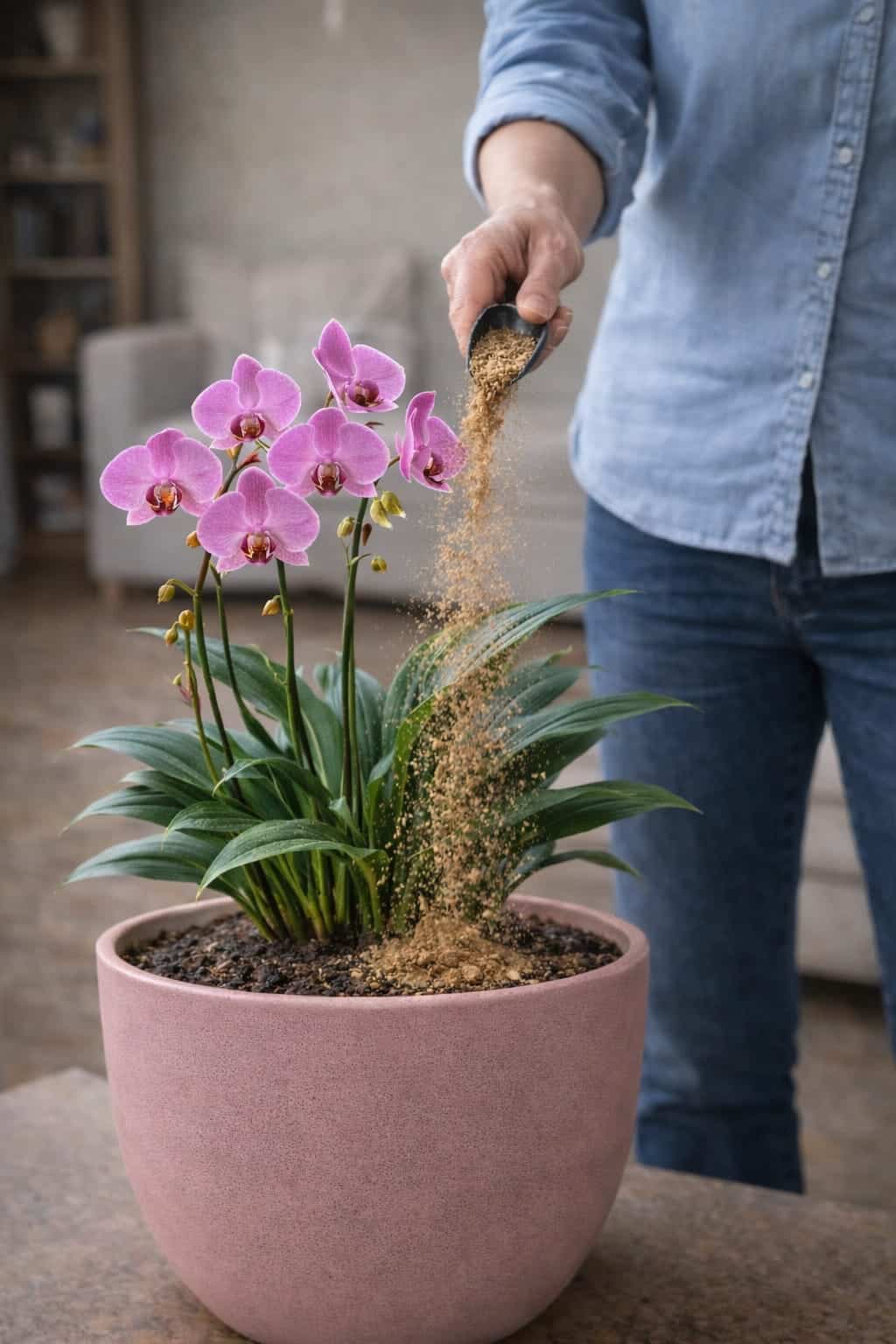
If you want to use cinnamon as a natural antifungal, follow this safe routine.
- Use Ceylon cinnamon – it’s milder than Cassia and less likely to irritate.
- Apply only when bark is slightly moist – not wet, not bone dry.
- Dust a tiny amount on the bark surface, especially if you see white mold.
- Do not water immediately – let it sit for a few hours.
- Use once a month at most – only when needed.
Pro tip: Cinnamon is also useful on cut orchid stems or roots after pruning. Dust the cut end to prevent infection.
Troubleshooting – Common Orchid Problems & Solutions
Problem Likely Cause Solution
White mold on bark surface Poor airflow, overwatering Increase air circulation; light cinnamon dusting.
Roots turning brown or mushy Root rot from overwatering Trim rotten roots; repot in fresh bark; reduce watering.
No flower spike Insufficient light Move to brighter indirect light.
Flowers dropping early Temperature swings or dry air Stabilize temperature; increase humidity.
Leaves turning yellow Overwatering or nutrient deficiency Check roots; adjust watering; feed lightly.
Powder forming a crust Applied too thickly Remove excess; use less next time.
Frequently Asked Questions (FAQs)
Q: Can natural powder replace orchid fertilizer?
A: No – it is not a complete nutrient source. It provides no significant nitrogen, phosphorus, or potassium. Use a balanced orchid fertilizer during the growing season.
Q: Why are my orchid roots turning brown?
A: Possible overwatering or poor airflow. Check if the bark is staying wet too long. Healthy roots are green or silvery; brown, mushy roots indicate rot.
Q: Should orchids grow in soil?
A: No – use orchid bark mix. Regular soil suffocates orchid roots.
Q: How often should I fertilize orchids?
A: Light feeding during active growth season (spring and summer). Use a diluted balanced orchid fertilizer every 2–4 weeks. Stop in fall and winter.
Q: Does light affect bloom count?
A: Yes – strong indirect light increases blooming. Low light = few or no flowers.
Q: Why are flowers falling early?
A: Stress from temperature changes, drafts, or inconsistent watering. Keep conditions stable once buds appear.
Q: Can I use cinnamon on orchids?
A: Yes – light surface use only. Never apply thick layers. Cinnamon is antifungal but can clog bark if overused
Q: Should I mist orchids?
A: Light misting may help humidity, but airflow matters more. Avoid misting flowers directly.
Q: When should I repot orchids?
A: Every 1–2 years when bark breaks down, or when roots outgrow the pot. Repot in spring.
Q: What’s the biggest mistake people make with orchids?
A: Overwatering combined with poor drainage. This is the #1 killer of orchids.
Printable Orchid Care Checklist (with Natural Powder)
☐ Use an east or north‑east window for bright indirect light
☐ Plant in chunky orchid bark mix – never soil
☐ Use a pot with drainage holes and ventilation slots
☐ Water only when bark is almost dry (check with finger)
☐ Water thoroughly, then drain completely
☐ Maintain humidity 50–70% (pebble tray or humidifier)
☐ Keep temperature 65–85°F, avoid drafts
☐ Fertilize with diluted orchid fertilizer every 2–4 weeks in spring/summer
☐ Optional: light dusting of cinnamon on bark surface if mold appears – once a month max
☐ Do not use thick layers of any powder
☐ Repot every 1–2 years
Final Thoughts – Gentle Support, Strong Orchids
The “natural powder” trend is not magic. A light dusting of cinnamon can help prevent surface mold and support a clean root environment. But it will never replace the fundamentals: bright indirect light, airy bark mix, proper watering, good airflow, and light feeding.
If your orchid isn’t blooming or looks unhealthy, don’t reach for a powder first. Check the light, the roots, and your watering routine. Once those basics are right, a little cinnamon can be a gentle supplement – but it’s never the cure.
With patience and the right care, your orchids will reward you with spectacular blooms that last for weeks.
Now it’s your turn! Have you tried cinnamon or another natural powder on your orchids? What results did you see? Drop a comment below – I’d love to hear your experience.
And if you found this guide helpful, share it with a friend who loves orchids. Pin it for later, and subscribe to our newsletter for more practical plant care.
Stay bright, stay airy, and watch your orchids thrive. 🌸✨