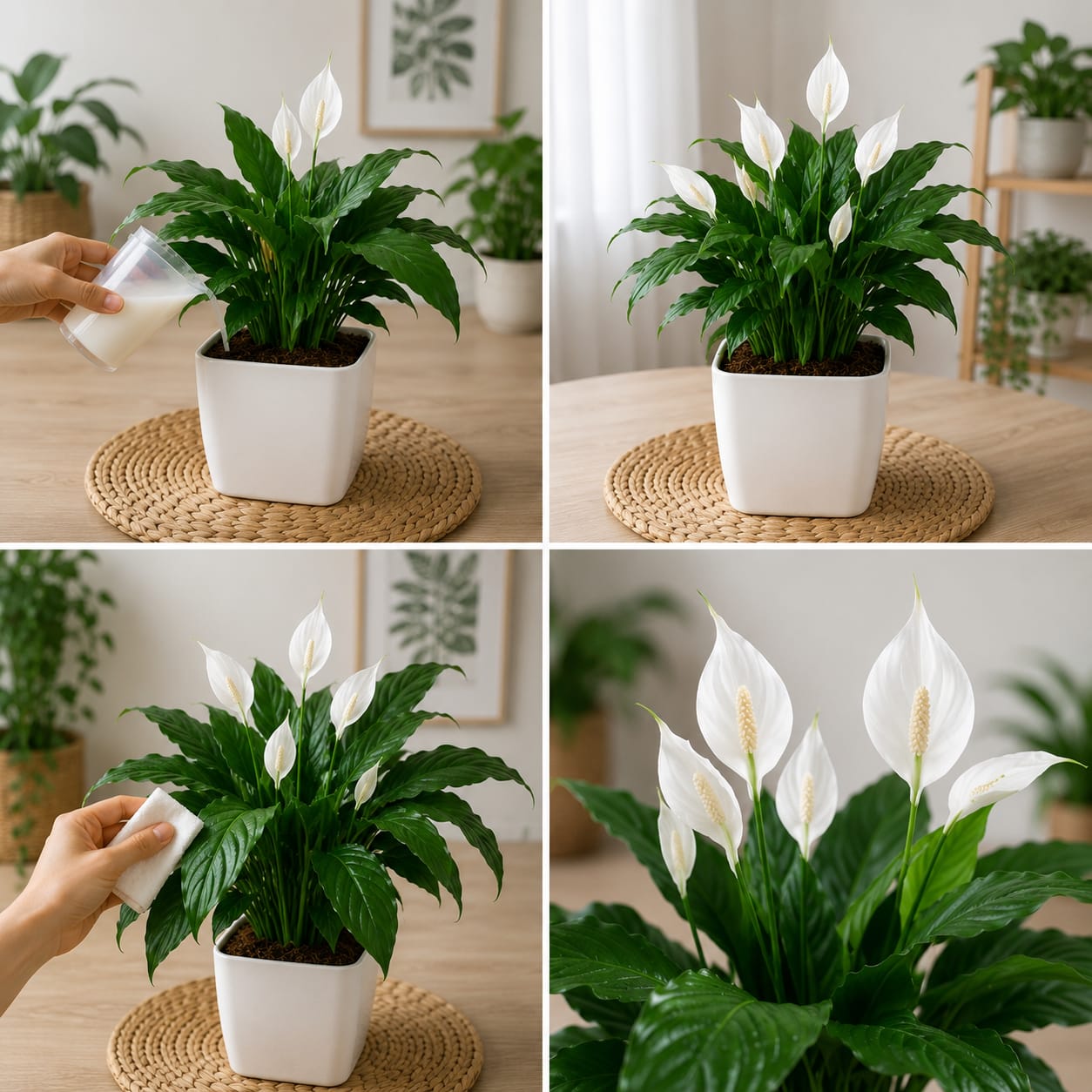
Peace lilies are among the most beautiful indoor plants for anyone who wants a clean, calm, and elegant home. Their glossy green leaves, soft white blooms, and graceful shape make them look expensive even when they are placed in a very simple pot. But many plant lovers notice the same problem: the peace lily looks healthy for a while, then the leaves start drooping, the shine disappears, yellow edges appear, and the plant stops producing white flowers.
That is why many homeowners like using a gentle “1 cup” care routine to refresh the soil, support cleaner root activity, and help the plant look fuller again. This trick is not about forcing the plant to bloom overnight. A peace lily blooms best when its roots are healthy, the soil is not waterlogged, and the plant receives bright indirect light. The idea is to give the plant a light, careful boost while keeping the display clean and decorative.
The safest version of this trick is a mild rice-water style tonic or a very diluted natural root rinse used occasionally. It can be helpful because it adds a small amount of organic matter to the soil and encourages a regular watering rhythm. However, peace lilies are sensitive plants, so the key is to keep everything light. Too much liquid, too much homemade fertilizer, or repeated use can create sour soil, fungus gnats, or root problems.
Why Peace Lilies Stop Blooming Indoors
A peace lily may look like a simple houseplant, but it reacts quickly to its environment. When something is wrong, the leaves show it almost immediately. Drooping, yellowing, brown tips, and weak flower production usually come from one of five causes: poor light, inconsistent watering, compacted soil, weak roots, or lack of nutrients.
The most common reason peace lilies stop blooming is low light. They can survive in shade, but survival is not the same as flowering. To produce those clean white blooms, the plant needs bright, indirect light. A spot near a window with filtered light is ideal. Direct afternoon sun can burn the leaves, but a dark corner may keep the plant green without encouraging flowers.
Watering is the second major issue. Peace lilies like evenly moist soil, but they do not like standing water around the roots. When the pot has no drainage or the soil stays wet for too long, the roots become weak. Weak roots cannot support strong leaves or blooms. On the other hand, if the soil becomes completely dry too often, the plant droops dramatically and spends its energy recovering instead of growing.
Another problem is old soil. Over time, potting mix can become dense. When this happens, water does not move through the pot evenly. Some areas stay too wet while others become dry. A gentle 1 cup routine can help refresh the watering habit, but it cannot replace good soil. If the plant has been in the same pot for years, repotting may be more important than any homemade tonic.
The Gentle 1 Cup Peace Lily Tonic
For a safe indoor routine, use a mild liquid that is closer to a soft soil refresh than a strong fertilizer. One of the simplest options is rice water. Rice water is made by rinsing plain uncooked rice in clean water, then using the cloudy water lightly around the soil. It should not be thick, fermented, salty, oily, or cooked with seasoning. The liquid should look pale and milky, not heavy.
To make it, place two tablespoons of plain rice in a cup or bowl. Add one cup of room-temperature water. Stir gently for about thirty seconds, then strain the liquid. This gives you a very light cloudy water. For peace lilies, dilute it again with another cup of clean water. This makes the tonic mild enough for sensitive roots.
Use only one cup of the diluted liquid for a medium peace lily. Pour it slowly onto the soil, not over the leaves and not directly into the crown of the plant. The crown is the central area where stems emerge from the soil. Keeping this area too wet can cause rot. The best method is to pour in a circle around the inner edge of the pot, letting the liquid sink naturally into the root zone.
This routine should be used only once every four to six weeks during the active growing season. It should not be used every week. Peace lilies do not need constant feeding, and too much homemade liquid can create buildup in the soil. Between these treatments, use normal water only.
How to Use the 1 Cup Method Correctly
Before using any tonic, check the soil. Push your finger about two centimeters into the potting mix. If the top layer feels very wet, wait. Adding more liquid to already wet soil is one of the fastest ways to harm a peace lily. The plant should be ready for watering before you use the cup method.
Next, check the pot. A peace lily should ideally be in a container with drainage holes. If the pot is decorative and has no holes, use a nursery pot inside the decorative cover pot. After watering, remove any extra liquid that collects at the bottom. Roots sitting in stagnant water will eventually decline.
When the soil is slightly dry on top, pour the diluted cup slowly. Do not flood the pot. The goal is not to soak the plant heavily; it is to moisten the root area evenly. After pouring, wait ten minutes and check the saucer. If water drains out, empty it. This keeps the root zone fresh and reduces the chance of sour smell, fungus gnats, and root rot.
After using the tonic, place the peace lily in bright indirect light. A refreshed plant still needs the correct environment to respond well. A dark room will limit results. A softly lit window, a bright hallway, or a living room with filtered daylight is much better.
What This Trick Can Actually Do
A gentle 1 cup routine can support a cleaner watering habit and help the soil feel more alive, but it should be understood realistically. It may help leaves look fresher when the plant is slightly tired from inconsistent watering. It may support root comfort when used lightly. It may also encourage better growth when combined with proper light and drainage.
However, it does not magically make peace lilies bloom nonstop. Flowering depends on maturity, light, temperature, nutrition, and root health. If the plant is too young, too shaded, or badly root-bound, one cup of any liquid will not solve everything. The trick works best as part of a complete care routine.
Think of it as a gentle refresh, not a miracle cure. The biggest improvement usually comes when the plant owner becomes more attentive: watering slowly, checking the soil, cleaning the leaves, moving the pot to brighter light, and avoiding overwatering. The cup method gives structure to that routine.
Best Light for More Peace Lily Flowers
Peace lilies are often sold as low-light plants, but low light usually means fewer flowers. For elegant white blooms, place the plant where it receives bright but indirect light. A north-facing or east-facing window is often ideal. If the light is strong, use a sheer curtain to soften it.
If the plant is sitting far from a window and only producing leaves, move it gradually closer to natural light. Do not move it suddenly into harsh sun. Peace lily leaves can burn, especially if they are used to shade. A slow transition over one or two weeks is better.
You can tell the light is good when the leaves stay upright, glossy, and deep green without scorching. If leaves become pale or develop crispy patches, the sun may be too direct. If leaves stretch, lean, and the plant never blooms, the light may be too weak.
Watering Rules That Keep Peace Lilies Beautiful
A peace lily prefers consistent moisture. The best routine is to water when the top layer of soil begins to feel dry. Do not follow a strict calendar without checking the plant. Indoor temperature, pot size, soil type, and season all affect how fast the soil dries.
Use room-temperature water whenever possible. Very cold water can shock the roots. Pour slowly until the soil is evenly moist. If the pot has drainage holes, let extra water escape, then empty the saucer. This simple habit prevents many common problems.
Drooping does not always mean the plant needs a large amount of water. Peace lilies droop when thirsty, but they can also droop when roots are damaged from too much moisture. Always check the soil first. If it is dry, water. If it is wet and the plant is drooping, the roots may need air, better drainage, or fresh soil.
Soil Mix for Clean Root Growth
Peace lilies grow best in a potting mix that holds some moisture but still drains well. A heavy garden soil is not ideal indoors because it can compact and suffocate the roots. A better mix includes indoor potting soil with added perlite, fine bark, or coco chips for air movement.
A good peace lily soil should feel light, not muddy. When you water, the liquid should move through gradually. If water sits on top for a long time, the soil may be too dense. If water rushes through immediately and the plant dries out too fast, the mix may be too loose or the root ball may be hydrophobic from becoming overly dry.
Repotting every one to two years can keep the plant healthy. Choose a pot only slightly larger than the current one. A very large pot holds extra moisture and can increase the risk of root rot. Peace lilies often bloom better when they are comfortable, not drowning in oversized soil volume.
How to Clean Leaves for a More Expensive Look
One of the easiest ways to make a peace lily look more luxurious is to clean the leaves. Dust blocks light and makes the plant look tired. Wipe the leaves gently with a soft damp cloth every two weeks. Support each leaf from underneath so it does not tear.
Avoid heavy leaf shine products. They can clog the leaf surface and create an artificial look. Clean water is enough. For a slightly polished finish, wipe with a damp cloth and then dry gently with a second soft cloth. The leaves will look naturally glossy.
Remove yellow or damaged leaves at the base using clean scissors. Do not leave dead leaves sitting on the soil because they can attract pests and fungus. A clean plant always looks healthier and more decorative.
When to Feed Peace Lilies
Peace lilies are not heavy feeders, but they do benefit from light nutrition during active growth. Use a balanced houseplant fertilizer at half strength once every six to eight weeks in spring and summer. Do not overfeed. Too much fertilizer can burn the roots and create brown leaf tips.
The 1 cup homemade tonic should not be used on the same week as commercial fertilizer. Choose one gentle method at a time. If you fertilize regularly, use the rice-water style tonic less often or skip it completely. The goal is balance.
In autumn and winter, reduce feeding because growth slows down. If the plant is not actively growing, it does not need much extra nutrition. During colder months, focus more on correct watering and light.
Continue to Page 2
Continue to page 2 for more details about this article and the key points many readers miss on the first page.